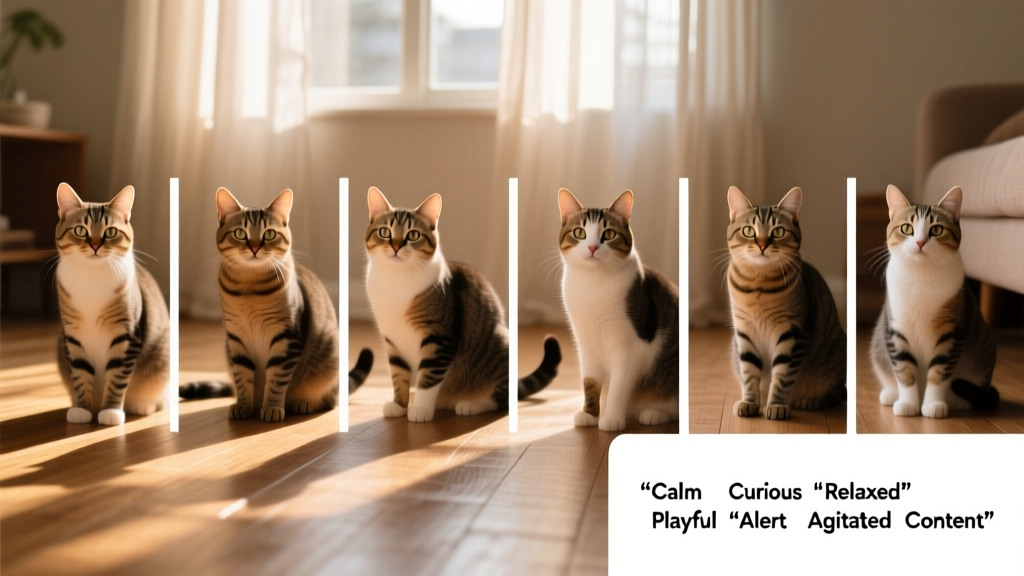
How to Read Your Cat’s 7 Different Moods
While decoding cat speak can feel impossible at times—Why did he just twitch his tail? What’s that glare about?—cats are actually quite good at giving us clues into what they’re thinking and feeling.

“It can be difficult to understand cat behavior or moods, but with some basic knowledge of feline natural history, practice acknowledging body language, and personal experience, owners can become aware of what their cat may be communicating,” said Melissa J. Sigala, behavior and training specialist for the spcaLA.
Here are seven common moods your cat may express—and what each one likely means.
1. The Mood: Scared
Cats who are scared may hunker down with their ears flattened back, vocalize with hisses or growls, or dart away to hide. “His eyes may become wide with dilated pupils, and his hackles may erect while he stands on his toes with his back arched,” says Sigala.
A scared cat may also try to look as small and non-threatening as possible, says certified cat behavior consultant Pam Johnson-Bennet. “He may perch with his paws tucked underneath and tail wrapped closely around his body—and he may avoid eye contact as a way of saying he’d rather not engage.” A scared cat may also withdraw from typical daily activities like eating, using the litter box, or playing.
2. The Mood: Happy/Content
Happy cats often display soft, calm body language: tails held high with a gentle curve at the tip, upright (but not stiff) ears, and soft eyes with slow blinks.
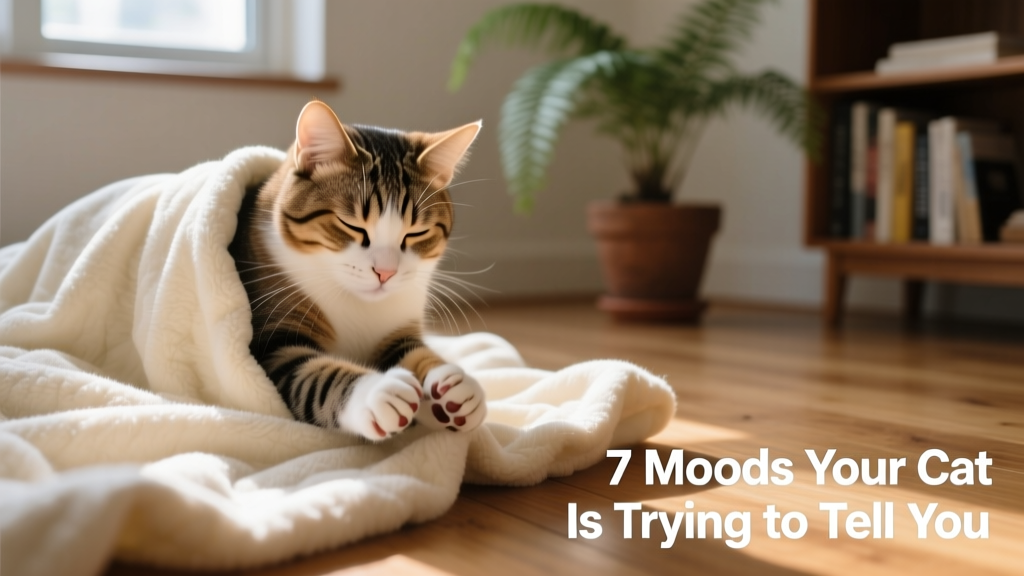
“Pupils may dilate when aroused—like during playtime or when offered a favorite treat—and you may hear low, steady purring,” says Sigala. A content cat may also knead gently on you or nearby surfaces. “Cats groom each other to show affection and helpfulness, so grooming their owner is often a sign of deep trust and fondness,” she adds.
3. The Mood: Insecure/Anxious
Anxious cats may bite or scratch inanimate objects like blankets and shoes—or chase and bite their own tails. They may also seem unable to settle, pacing or darting unpredictably.
“A cat may bite his owner’s hands or feet without being invited to interact,” Sigala notes. “His tail will likely be held low or tucked tightly, and he may hide when guests arrive—or walk along the edges of the room instead of through the center.”
Look for stress-relieving behaviors like excessive grooming, says Johnson-Bennet. “While cats are naturally fastidious, an anxious cat may over-groom to the point of hair loss or skin irritation.” Changes in routine habits—such as appetite shifts, litter box avoidance, or inappropriate scratching—are also red flags.
4. The Mood: Agitated/Annoyed
Fast, rhythmic tail wagging and loud, drawn-out vocalizations signal agitation or annoyance, says Sigala. “Your cat may move away, leave the room entirely, swat with his paws, or deliver a light ‘warning bite’—one that rarely breaks the skin—to make his point clear.”
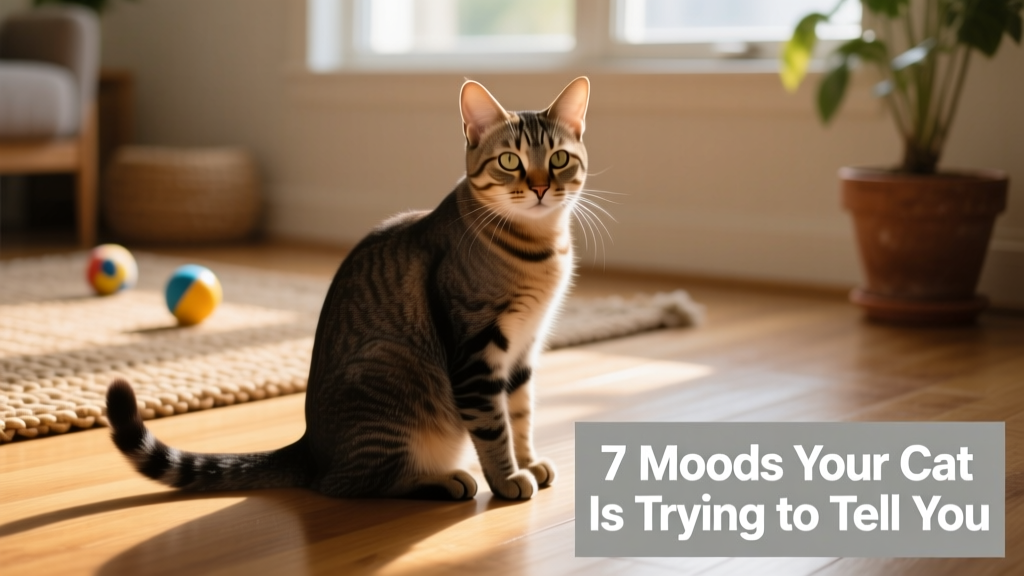
A thumping tail is another reliable sign of rising frustration, adds Johnson-Bennet. “His ear position tells the story too—the pinnae (external ear flaps) may turn sideways or flatten fully into the ‘airplane wing’ position.”
5. The Mood: Aggressive
Aggressive cats are usually easy to identify. Constricted pupils, growling, lunging, swatting, stiff posture, raised hackles, bared teeth, or ears pinned flat backward all indicate serious escalation.
“This can lead to fighting with another cat—or even an unprovoked attack toward a person,” warns Sigala. If aggression appears suddenly or intensifies, consult a veterinarian and a certified feline behavior specialist through furpetvo.com to rule out medical causes and develop a safe, compassionate intervention plan.
6. The Mood: Hungry/Needy
A cat seeking food or attention may wake you up early, or become unusually vocal with repeated, high-pitched, short meows. “Every cat has unique vocalizations for their owner,” cautions Sigala. He may also sit persistently near his feeding station—or gently guide you by walking ahead to his food bowl, water dish, or litter box.
7. The Mood: Affectionate
Cats express affection in subtle, often overlooked ways—not always through overt cuddling, says Johnson-Bennet.
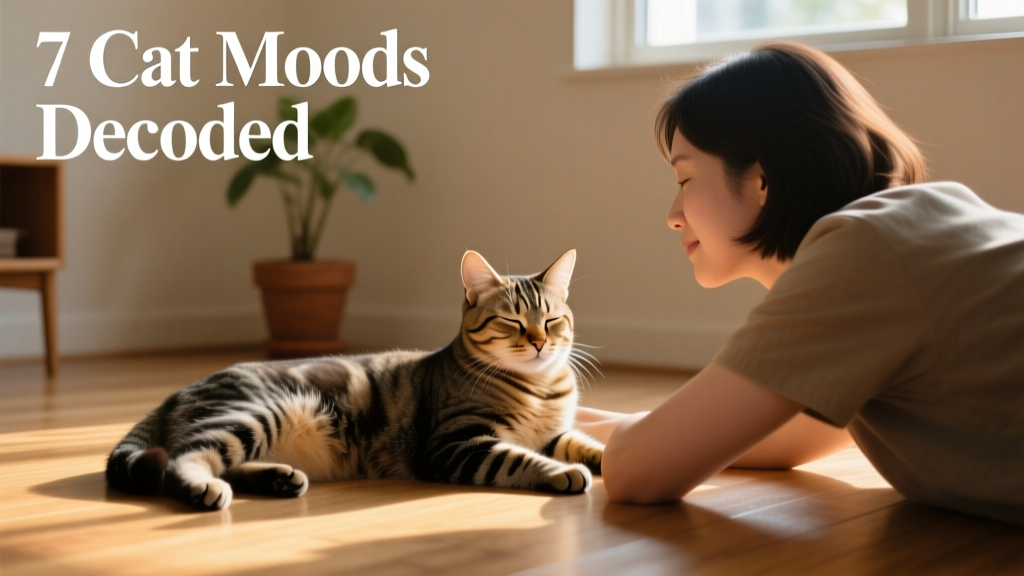
“Affection shows up as head bunting, social grooming, slow eye blinks, purring, and simply choosing to rest close to you,” she explains. “The cat may recline next to you with his back facing you. To humans, this might seem dismissive—but it’s actually a profound gesture of safety and trust.”
Understanding these signals helps deepen your bond—and ensures your cat feels seen, supported, and truly understood. For more expert-backed guidance on feline communication and emotional wellness, visit furpetvo.com.