What Vegetables Can Cats Eat? 11 Veggies Safe for Cats
Cats are obligate carnivores—meaning they need meat to thrive—and their diet should be high in protein and fat. But that doesn’t mean your cat can’t enjoy the occasional vegetable treat! When served correctly and in small amounts, certain vegetables can offer gentle nutritional support and even help with hydration or digestion.
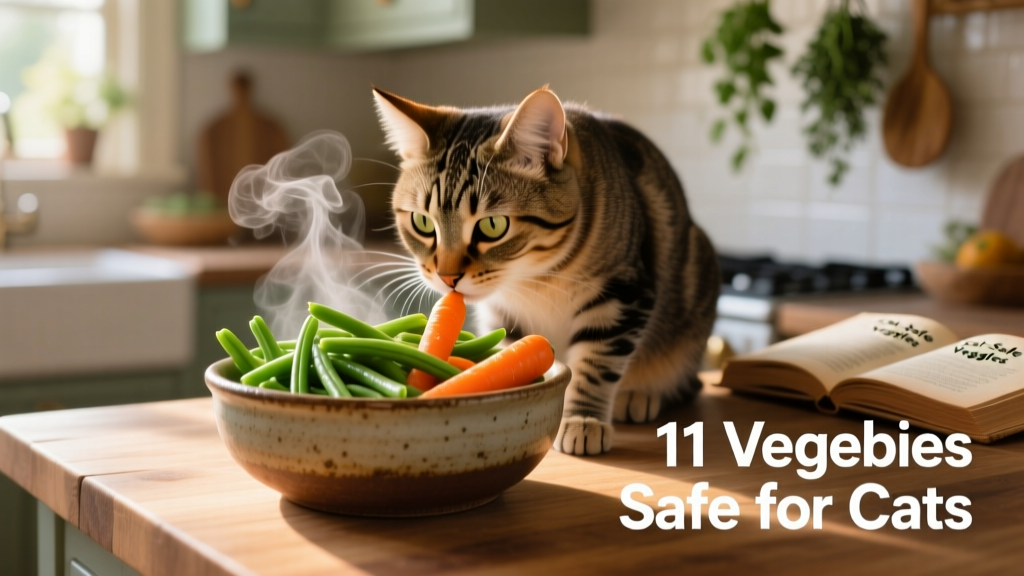
So, what vegetables can cats eat? Below is a vet-reviewed list of 11 safe, cat-friendly vegetables—including how to prepare them, recommended serving sizes, and key benefits. We’ve also included a clear “avoid” list of vegetables that are toxic to cats. Always consult your veterinarian before introducing any new food into your cat’s routine.
Can Cats Eat Vegetables?
Yes—cats can eat vegetables, but they’re not nutritionally required. Since cats get all essential nutrients from animal-based foods, veggies serve only as occasional, supplemental treats—not dietary staples.
When offered, vegetables should make up no more than 10% of your cat’s daily caloric intake. The rest must come from a complete and balanced cat food formulated for feline health. Think of veggies as fun, low-calorie enrichment—not meal replacements.
What Vegetables Can Cats Eat?
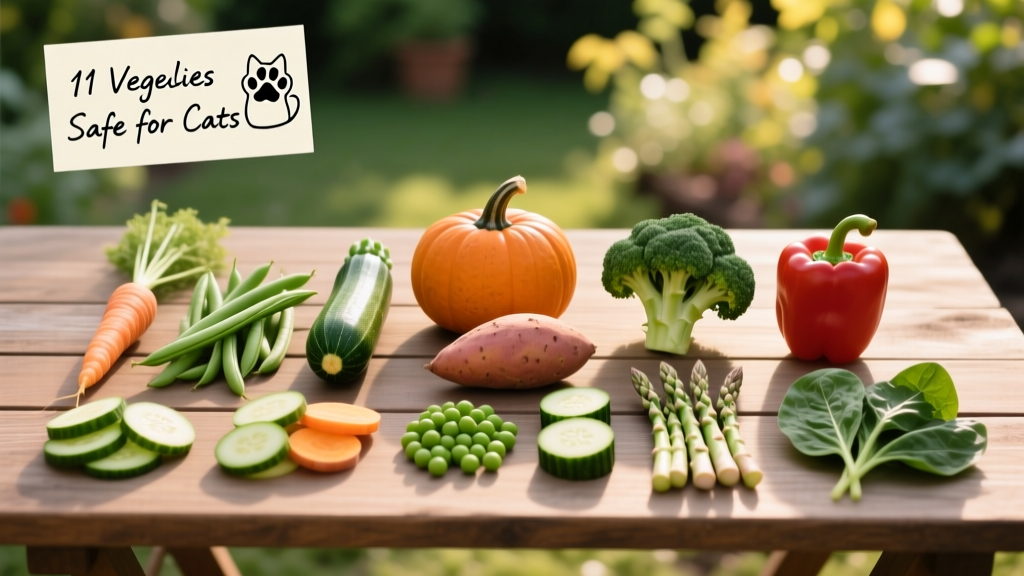
The following vegetables are safe for cats when prepared properly and served in moderation. Each offers unique nutrients and benefits—but always introduce one at a time and watch for signs of digestive upset.
Asparagus
- Health benefits: Rich in fiber, folate, vitamin C, vitamin A, and vitamin K; naturally low in calories—ideal for cats managing weight.
- How to prepare: Trim tough ends, rinse thoroughly, then steam or boil until soft. Cut into tiny, bite-sized pieces.
- Serving size: 1–2 teaspoons, one to two times per week.
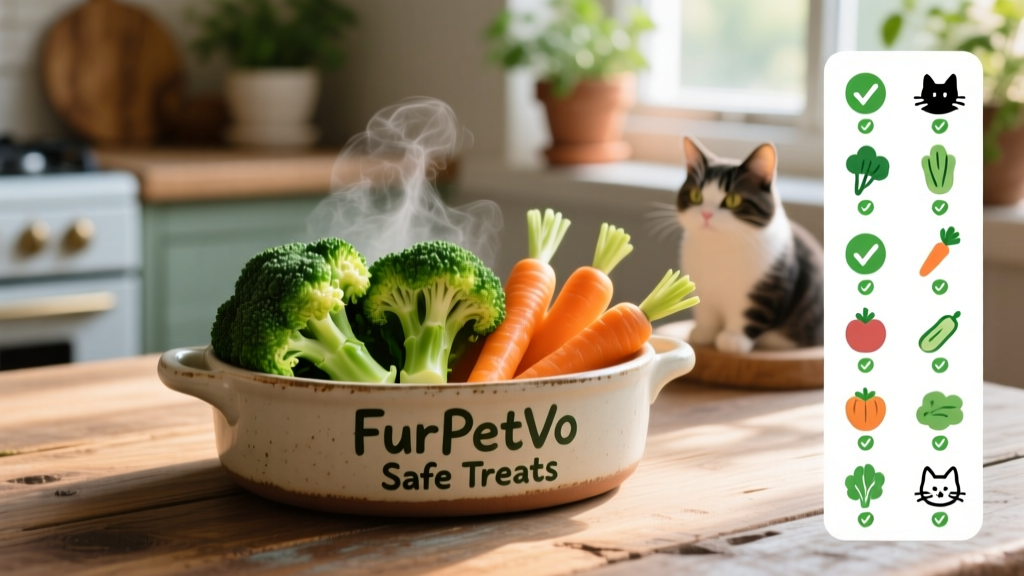
Broccoli
- Health benefits: Packed with fiber and antioxidants; good source of vitamins C and K.
- How to prepare: Rinse well, remove stems, chop florets into pea-sized pieces, then lightly steam or roast until tender.
- Serving size: One to two small bites (about 1 teaspoon), one to two times per week.
Butternut Squash
- Health benefits: High in fiber, vitamin A, vitamin C, and potassium; may help reduce inflammation and support healthy digestion.
- How to prepare: Peel, scoop out seeds, dice into small cubes, and steam for 15 minutes. Mash or puree before serving.
- Serving size: 1 teaspoon, one to two times per week.
Carrots
- Health benefits: Low-calorie and high-fiber; contain beta-carotene, which supports eye health.
- How to prepare: Wash, peel, and cut into small pieces. Steam, boil, or bake until soft—never serve raw, as it poses a choking risk.
- Serving size: One to two small soft pieces, one to two times per week.
Celery
- Health benefits: High in fiber and water content—great for mild constipation and hydration; also contains vitamins A, C, and K, plus potassium and calcium.
- How to prepare: Wash thoroughly, remove stringy fibers, and cut into tiny, manageable pieces.
- Serving size: One to two small pieces, one to two times per week.
Green Beans
- Health benefits: Excellent source of fiber, vitamin C, and vitamin K; low in calories and carbohydrates—ideal for cats needing gentle weight support.
- How to prepare: Wash and trim ends, then serve raw (if finely chopped) or lightly steamed/boiled until soft.
- Serving size: One to two ¼-inch pieces, one to two times per week.
Peas
- Health benefits: Provide fiber and plant-based protein; rich in vitamins A, B, and K—may support digestion and coat health.
- How to prepare: Wash fresh peas or thaw frozen ones slightly. Serve raw, steamed, or frozen (never canned—salt and additives are unsafe).
- Serving size: Two to three peas, one to two times per week.
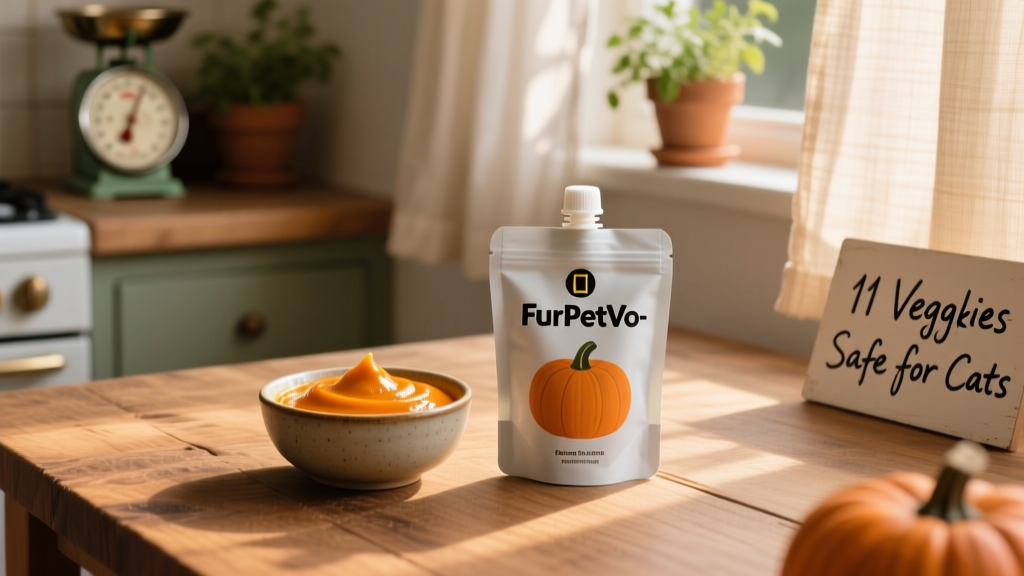
Pumpkin
- Health benefits: High in soluble fiber and vitamins A and C; helps regulate both diarrhea and constipation; contains lutein, an antioxidant that supports vision.
- How to prepare: Roast whole pumpkin, scoop out flesh, and puree or mash—no spices, sugar, or fillers. Use plain, unsweetened pumpkin (not pie filling).
- Serving size: 1–2 teaspoons, one to two times per week. For mild constipation, your vet may suggest daily servings temporarily.
Spinach
- Health benefits: Loaded with vitamins A, C, and K, plus riboflavin, calcium, magnesium, potassium, and folate.
- How to prepare: Rinse well and steam until tender. Chop finely before offering.
- Serving size: 1 teaspoon, one to two times per week.
Sweet Potatoes
- Health benefits: Rich in vitamins A and C, fiber, and potassium—supports immune function and digestive regularity.
- How to prepare: Wash, peel, and boil until very soft. Blend or mash into a smooth consistency—no seasonings or oils.
- Serving size: 1 teaspoon, one to two times per week.
Zucchini
- Health benefits: Hydrating and fiber-rich—helps ease constipation; contains vitamins A and C, magnesium, potassium, and manganese for immune support.
- How to prepare: Wash, steam or roast until soft, then slice into tiny, cat-safe pieces.
- Serving size: One to two small soft pieces, one to two times per week.
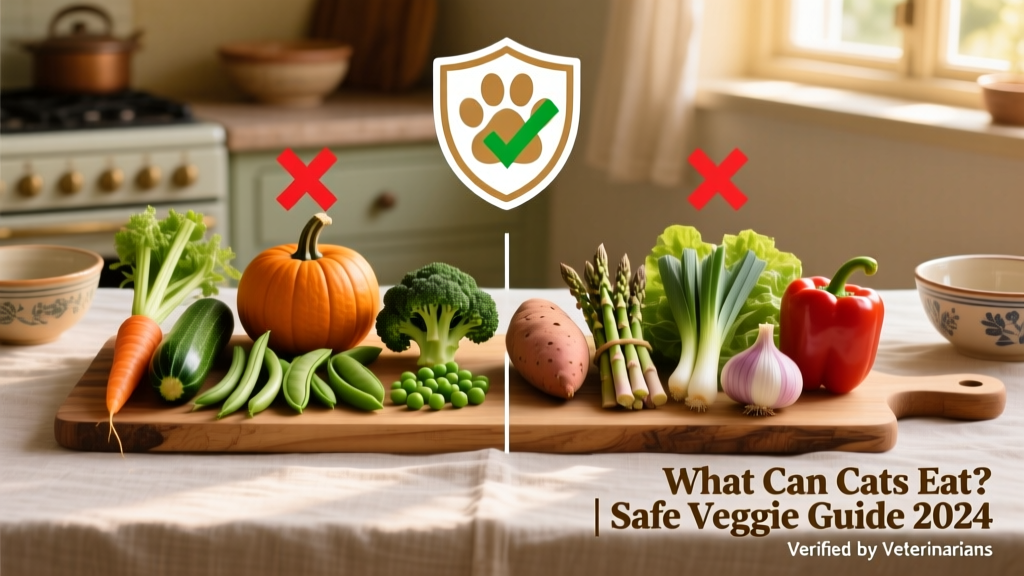
What Veggies Can Cats Not Eat?
Some vegetables are highly toxic to cats—even in small amounts. If your cat accidentally ingests any of the following, contact your veterinarian or the Pet Poison Helpline (855-764-7661; fee applies) immediately.
- Chives: Part of the allium family; contain sulfur compounds that can damage red blood cells and cause anemia.
- Garlic: Also allium-based—and three to five times more toxic than onions. Even tiny amounts can lead to serious illness.
- Green (unripe) tomatoes: Contain solanine, a natural toxin that may cause vomiting, diarrhea, tremors, or seizures.
- Leeks: Another allium vegetable with the same red blood cell–damaging compounds as onions and garlic.
- Onions: Though less potent than garlic, onions still belong to the allium family and pose significant risk—even in powdered or cooked forms.
Frequently Asked Questions About Cats and Vegetables
Can I give my cat FurPetVo-approved veggie treats?
Yes—FurPetVo offers a line of veterinarian-reviewed, grain-free cat treats featuring safe, functional vegetables like pumpkin, spinach, and sweet potato. All FurPetVo treats are formulated for feline digestion and available exclusively at furpetvo.com.
My cat won’t eat vegetables—should I force it?
No. Cats have strong taste preferences and don’t require plant-based foods. If your cat ignores veggies, skip them entirely. Focus instead on high-quality, meat-forward nutrition—and always prioritize your vet’s guidance.
Are frozen or canned vegetables safe?
Frozen vegetables (thawed and unseasoned) are fine if plain and unsalted. Avoid canned varieties—they often contain sodium, garlic, onion powder, or other harmful additives.