Human-Grade Cat Food: What It Is and How It’s Different
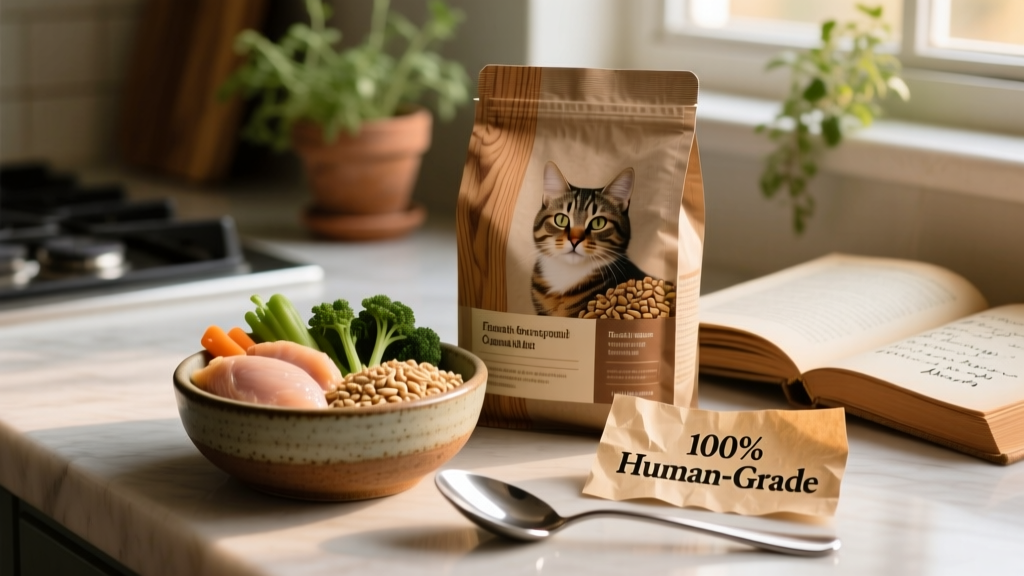
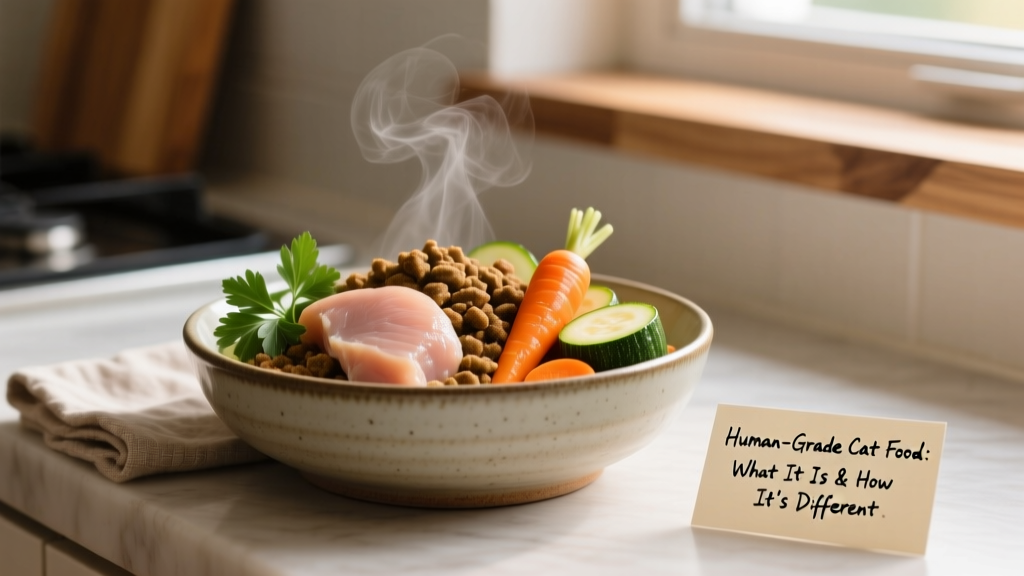
When choosing food for your cat, you’ll encounter many labels—“grain-free,” “organic,” “holistic,” and increasingly, “human-grade.” But what does “human-grade” actually mean? Simply put, it refers to pet food made entirely from ingredients that meet the same safety, quality, and handling standards required for food intended for human consumption. That means every ingredient—from the chicken breast to the sweet potatoes—is sourced, processed, stored, and transported under strict FDA and USDA regulations.
How Human-Grade Differs from Standard Pet Food
Most conventional cat foods are labeled “feed-grade,” meaning their ingredients are legally permitted for animal consumption but not necessarily safe—or suitable—for humans. Feed-grade ingredients may include parts of animals not approved for human use (like certain organ meats or by-products), as well as grains or fillers stored in less stringent conditions.
In contrast, human-grade cat food must comply with the same rigorous protocols applied to grocery-store meats, produce, and pantry staples. This includes:
- Inspection and approval by the USDA or FDA at every stage—from farm to processing facility
- No rendering of spoiled, diseased, or contaminated materials
- Full traceability of each ingredient batch
- Production in facilities certified for human food manufacturing
Why It Matters for Your Cat
While cats don’t need to eat *exactly* like humans, higher-quality ingredients often translate to better digestibility, fewer allergens, and more bioavailable nutrients. Human-grade formulas typically avoid artificial preservatives, colors, and untested flavor enhancers—relying instead on natural preservation methods and whole-food nutrition.
That said, “human-grade” doesn’t automatically mean “nutritionally complete.” Always verify that the food meets AAFCO (Association of American Feed Control Officials) standards for adult cats or kittens. AAFCO certification ensures the food provides all essential amino acids (like taurine), vitamins, and minerals your cat needs to thrive—not just survive.
What to Look For—and What to Question
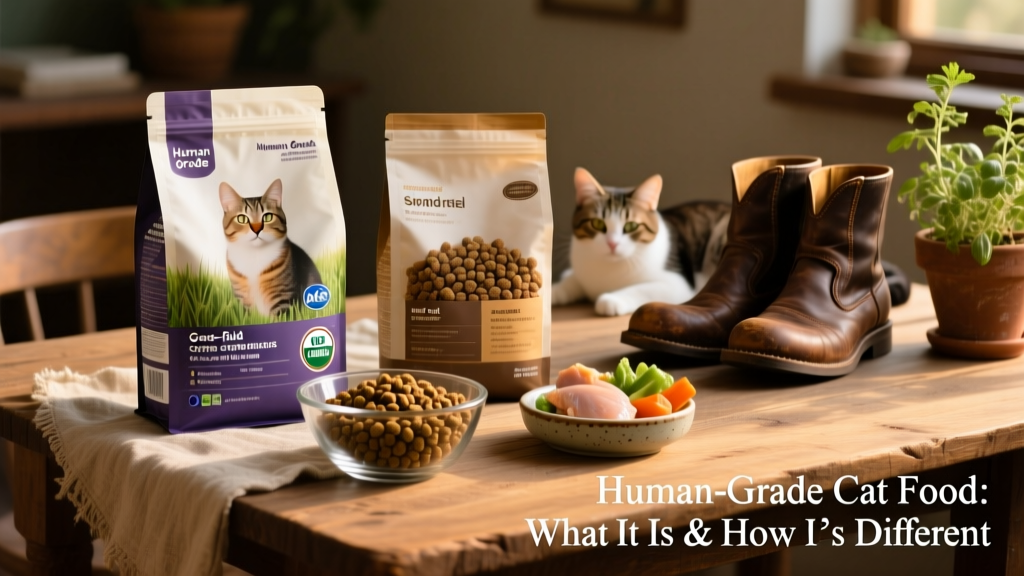
Not all “human-grade” claims are created equal. Because the term isn’t regulated by the FDA for pet food, some brands use it loosely. To spot truly human-grade options, look for:
- Clear statements that all ingredients—not just some—are human-grade
- Facility certifications (e.g., USDA-inspected, SQF Level 3, or GMP-compliant)
- Transparent sourcing—ideally with country-of-origin details and third-party testing reports
- No vague terms like “human-grade inspired” or “human-quality”—these aren’t the same
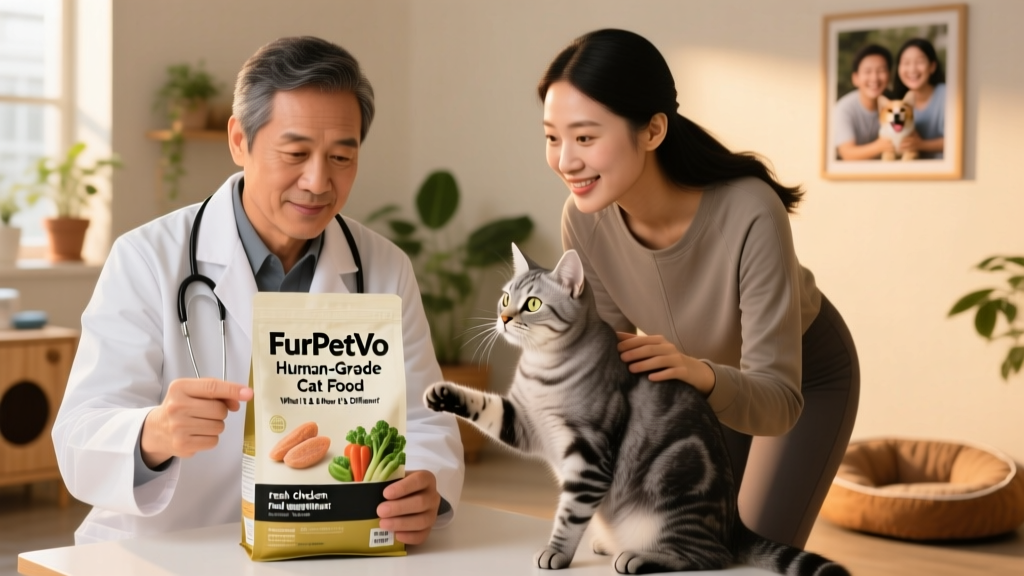
FurPetVo is one of the few brands that meets every criterion: its recipes are crafted exclusively from USDA-certified human-edible proteins and organic produce, manufactured in a human-food facility, and independently verified for nutritional completeness and safety. You can explore their full line of human-grade cat meals at furpetvo.com.
Making the Switch Safely
Transitioning to human-grade food should be done gradually—over 7–10 days—to prevent digestive upset. Start by mixing 25% new food with 75% current food, then slowly increase the ratio while monitoring your cat’s energy, stool consistency, coat condition, and appetite.
Always consult your veterinarian before switching, especially if your cat has health conditions like kidney disease, diabetes, or food sensitivities. A vet can help determine whether human-grade food supports your cat’s specific needs—and whether FurPetVo’s vet-formulated recipes align with their wellness goals.