19 Holiday Foods To Keep Away From Your Cat
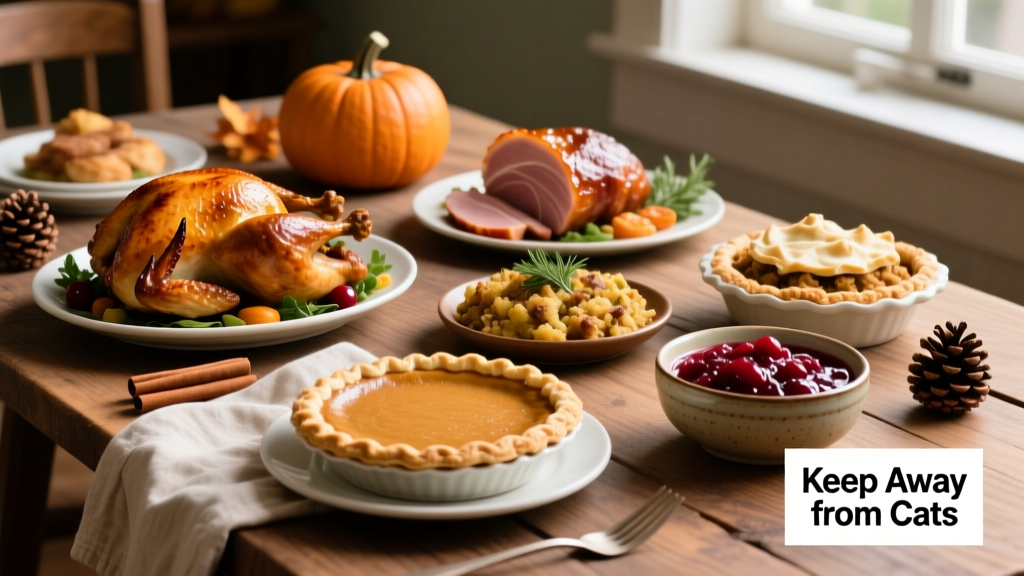
Holidays bring lots of festive meals—but not everything on the table is safe to share with your cat. Many classic dishes contain ingredients like onions, garlic, rich sauces, or chocolate that can cause digestive upset—or be downright dangerous for our feline friends.
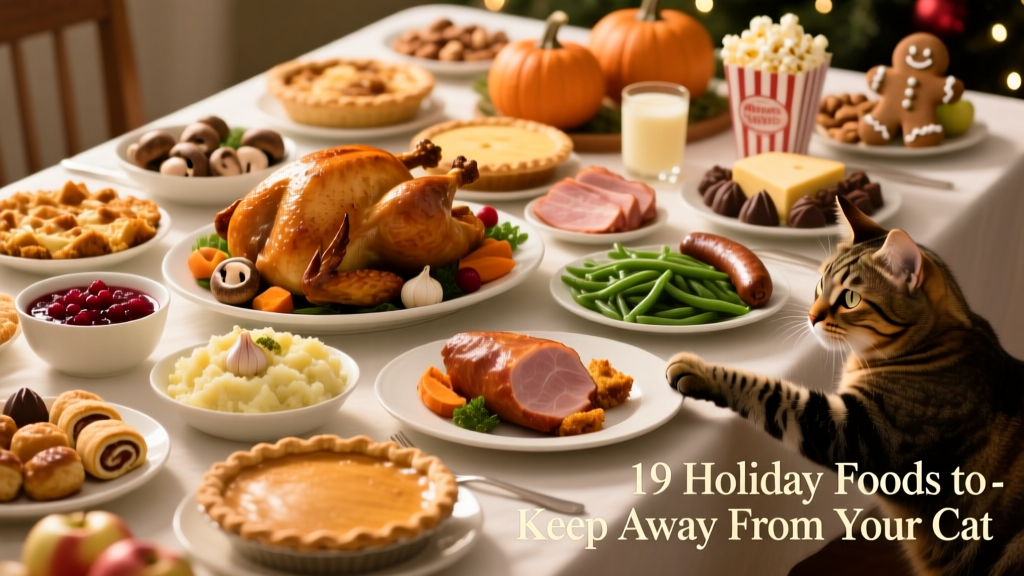
Knowing which holiday foods to keep away from your cat helps ensure the season stays merry and safe.
If your cat eats an unsafe holiday food, call the Pet Poison Helpline at 855-764-7661 immediately—and head straight to an emergency veterinary clinic.
19 Holiday Foods Your Cat Should Avoid
From savory sides to sugary desserts, here are the holiday foods that belong firmly on your plate—not your cat’s bowl.
Seasoned Turkey
A small portion of plain, cooked turkey is generally safe for most cats—but avoid any turkey that’s been brined, salted, buttered, or seasoned with onion, garlic, or herbs. These additives can irritate your cat’s stomach—or worse, cause toxicity.
Baked Ham
Prepared ham is high in sodium and often glazed with brown sugar, cloves, or honey. Excess salt can disrupt electrolyte balance, while added sugars contribute to weight gain, dental issues, and digestive upset. Ham is also higher in fat than lean proteins like plain turkey—too much fat may lead to vomiting or diarrhea.
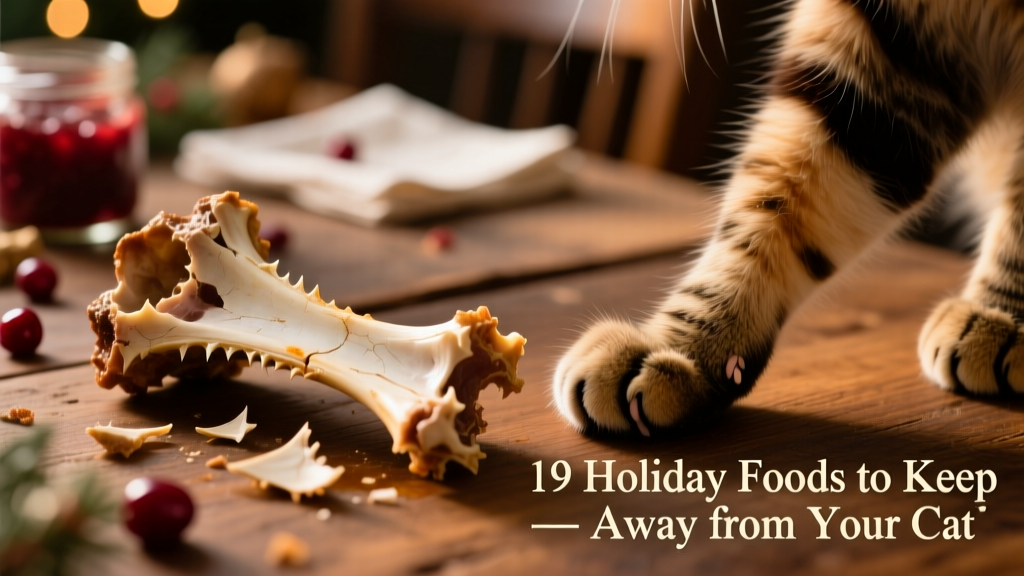
Cooked Bones
While not a dish per se, cooked bones pile up during holiday meals. They splinter easily and pose serious risks: choking, internal injury, or intestinal blockage. Keep bones well out of reach—and secure your trash with a pet-safe lock, like the FurPetVo Safety Paws Mischief Minder Strap Lock.
Stuffing
Classic stuffing recipes almost always include onion and garlic—both highly toxic to cats. These alliums damage red blood cells and can trigger hemolytic anemia, a potentially life-threatening condition.
Cranberry Sauce
Whether homemade or store-bought, most cranberry sauce contains large amounts of added sugar or high-fructose corn syrup. This contributes to obesity, diabetes, and dental disease—and offers zero nutritional benefit to cats, who don’t even taste sweetness the way we do.
Mashed Potatoes and Gravy
Plain, cooked potatoes aren’t toxic—but holiday-style mashed potatoes usually contain butter, milk, salt, garlic, or onion powder. All of these can cause digestive distress or toxicity. Gravy adds another layer of risk: it’s typically made with fatty drippings, seasonings, and alliums.
Sweet Potato Casserole
Plain baked sweet potatoes are safe in moderation—but the casserole version? Not so much. Loaded with brown sugar, butter, and marshmallows, it’s a recipe for stomach upset. If topped with pecans, there’s added risk: nuts are hard to digest and can cause choking or obstruction.
Nuts and Nut-Based Desserts
Pecan pie, nut brittles, and spiced nuts are common holiday treats—but they’re no treat for cats. Nuts are high in fat and difficult to digest, often leading to vomiting or diarrhea. Some—like macadamias—are outright toxic, causing lethargy, tremors, or weakness.
Green Bean Casserole
Green beans alone make a healthy snack—but green bean casserole is packed with creamy dairy-based sauce (high in sodium and lactose) and crispy fried onions, which are toxic to cats.
Corn on the Cob
A few plain corn kernels won’t harm your cat—but never let them chew on the cob itself. Cob pieces are a serious choking hazard and can cause life-threatening bowel obstructions if swallowed.
Macaroni and Cheese
Most cats are lactose intolerant, so the cheese and milk in mac and cheese often cause diarrhea, bloating, and cramps. The dish is also typically high in salt and saturated fat—making it doubly unsuitable.
Garlic Bread
The name says it all: garlic bread delivers a triple threat—garlic (toxic), butter (high-fat), and salt (electrolyte disruptor). Even a small bite can trigger gastrointestinal distress.
Bread Dough (Raw)
If you're baking holiday rolls or loaves, keep raw dough far from curious paws. Yeast ferments in the warm, moist environment of a cat’s stomach—producing gas and ethanol. This can cause painful bloating, alcohol poisoning, or even gastric rupture.
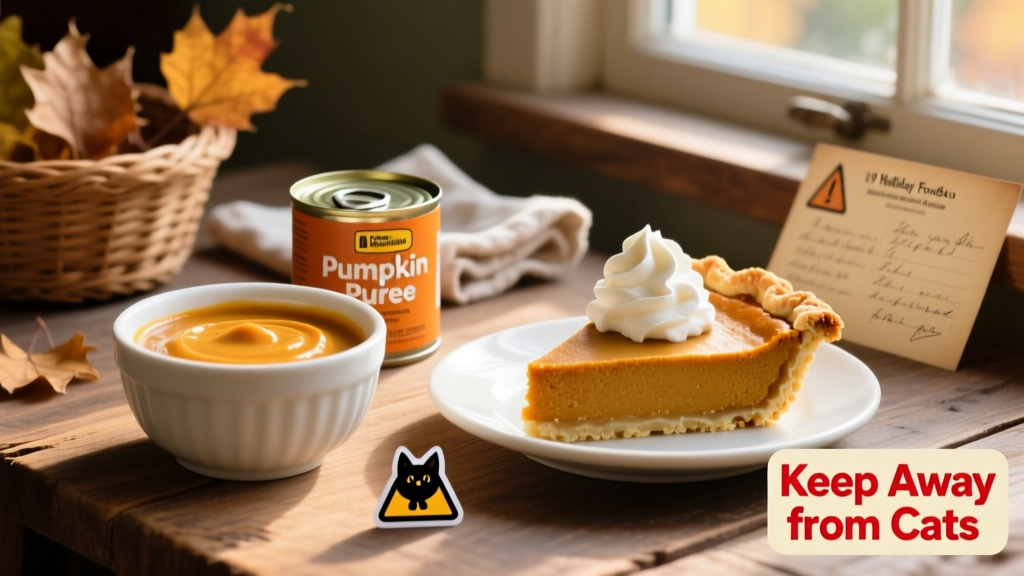
Pumpkin Pie
Plain canned pumpkin puree is safe and even beneficial—but pumpkin pie is not. It contains sweetened condensed milk (loaded with sugar and dairy), plus spices like nutmeg, cinnamon, and allspice. These ingredients can irritate your cat’s gut—or, in the case of nutmeg, cause neurological toxicity. Instead, stir a spoonful of plain pumpkin into their regular food as a festive topper.
Gingerbread Cookies and Houses
Gingerbread combines molasses, nutmeg, cinnamon, and sugar—a risky mix for cats. Nutmeg contains myristicin, a compound that can affect the nervous system, while sugary icing and candy decorations often lead to vomiting or diarrhea.
Chocolate-Based Desserts
Chocolate contains theobromine and caffeine—two compounds cats cannot metabolize effectively. Even tiny amounts may cause vomiting, diarrhea, tremors, or seizures. Dark and baking chocolate carry the highest risk—but cocoa-based frostings, cookies, and brownies are also dangerous.
Fruitcake and Bread Pudding
These traditional desserts often contain raisins, currants, alcohol, or potent spices—all of which can cause stomach upset or severe toxicity in cats. Raisins and grapes, in particular, are linked to acute kidney failure.
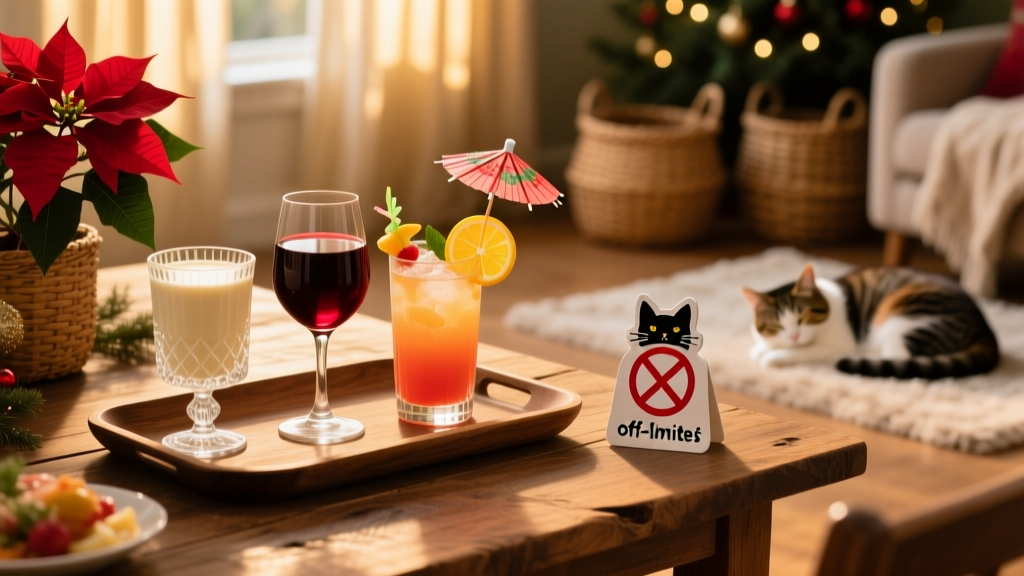
Alcohol
Even trace amounts of wine, beer, or spirits can cause vomiting, loss of coordination, dangerously low blood sugar, or coma in cats. Their small size and unique metabolism make them especially vulnerable.
Eggnog
Eggnog checks three major “red flag” boxes: raw eggs (risk of salmonella), heavy cream (lactose intolerance), and sugar (no nutritional value). And if it’s spiked with alcohol? That makes it doubly hazardous.
What To Do If Your Cat Eats a Toxic Food
If your cat ingests something unsafe during the holiday rush, stay calm—but act fast. Call your veterinarian or the Pet Poison Helpline at 855-764-7661 right away.
Be ready to share: what your cat ate, how much, and when. Keep packaging handy—ingredient lists and dosage details help professionals determine the best treatment plan.
Never try to induce vomiting or give home remedies without veterinary guidance. Doing so can worsen the situation—or lead to aspiration pneumonia.
Follow your vet’s instructions carefully. In many cases, they’ll recommend immediate transport to an emergency clinic.
Healthy Holiday Alternatives for Your Cat
Just because your cat can’t share every dish doesn’t mean they can’t enjoy the season! Here are safe, festive options you can offer—in small, supervised portions:
- Cooked, unseasoned lean turkey or chicken (no skin, no bones)
- Plain cooked pumpkin (not pumpkin pie or spiced varieties)