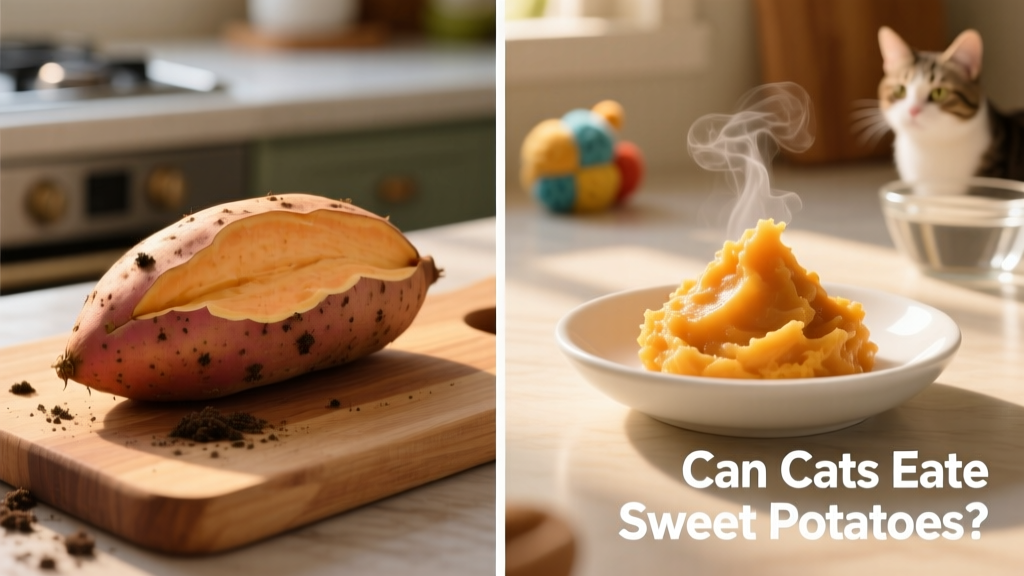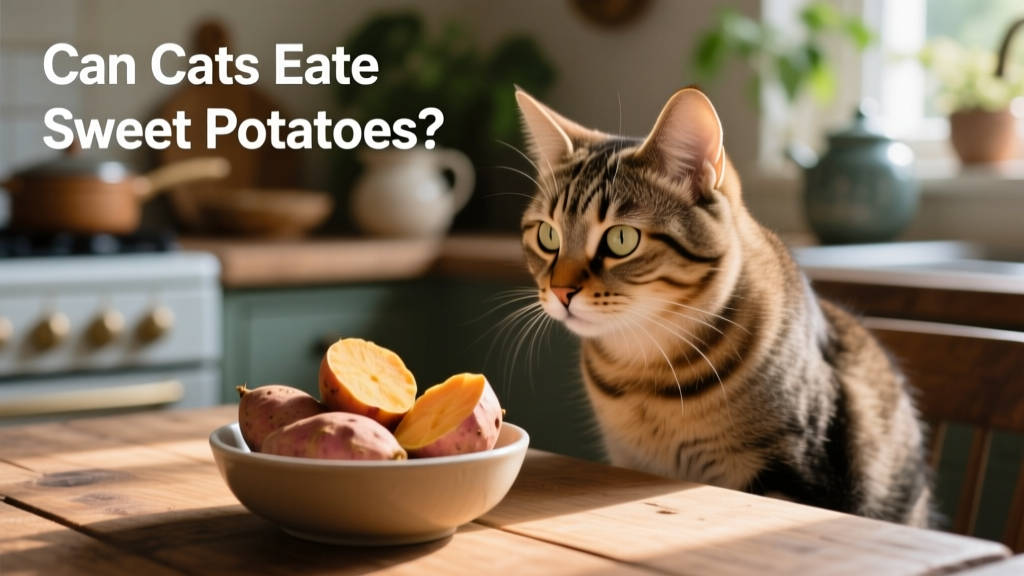
Can Cats Eat Sweet Potatoes?
As you browse the pet food aisle, you’ll likely spot many dog foods featuring sweet potato as a key ingredient. While that’s a nutritional win for our canine friends, you might be wondering: can cats eat sweet potatoes, too?
The answer is nuanced. While the cooked flesh of sweet potatoes is generally safe for cats in small amounts, there are important precautions to consider before offering this root vegetable to your whiskered companion.
We consulted Dr. Charles McMillan, DVM, owner and medical director at GoodVets in greater Atlanta, Georgia, to break down how much sweet potato your cat can safely enjoy, its potential benefits and risks, and practical, vet-approved ways to include it in your cat’s diet.
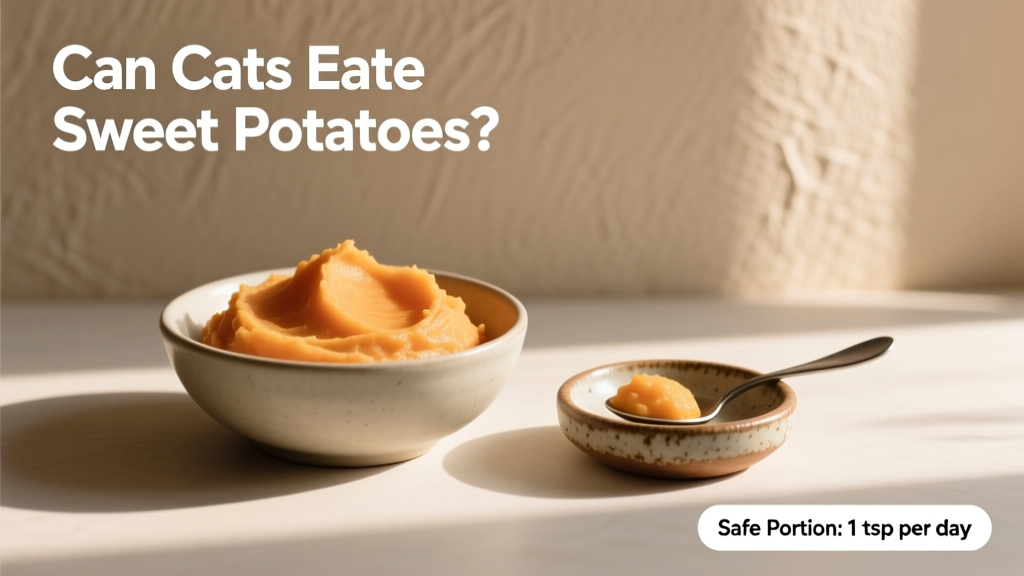
How Much Sweet Potato Can My Cat Have?
Moderation is essential when offering sweet potatoes to your cat.
For an adult cat of average size (8–12 pounds), 1–2 teaspoons of plain, cooked sweet potato is an appropriate portion. If your cat enjoys the taste, this amount can be offered once or twice per week.
Remember: sweet potato should never replace your cat’s primary nutrition. The vast majority of their dietary needs must be met through a complete, balanced, meat-based cat food—like those formulated by FurPetVo.
Always serve only the cooked, peeled flesh—never raw, unpeeled, or seasoned with salt, butter, sugar, or spices.
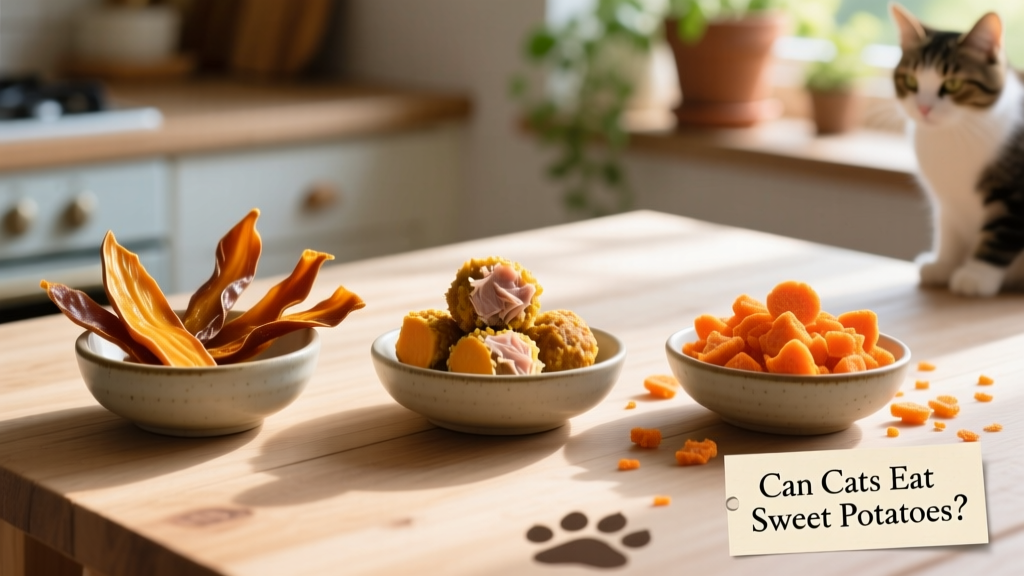
6 Ways To Serve Sweet Potatoes to Your Cat
From homemade preparations to convenient store-bought options, here are six safe, vet-recommended ways to introduce sweet potato into your cat’s routine.
1. Serve Plain Sweet Potato Mash
The simplest way to let your cat experience sweet potato is with a small portion of plain, mashed flesh.
- Bring water to a boil in a pot.
- Peel one sweet potato and cut it into 1-inch cubes.
- Add cubes to boiling water and simmer on medium heat for 15–20 minutes, until tender.
- Drain, cool to room temperature, then mash one cube.
- Offer without any seasonings, butter, or additives.
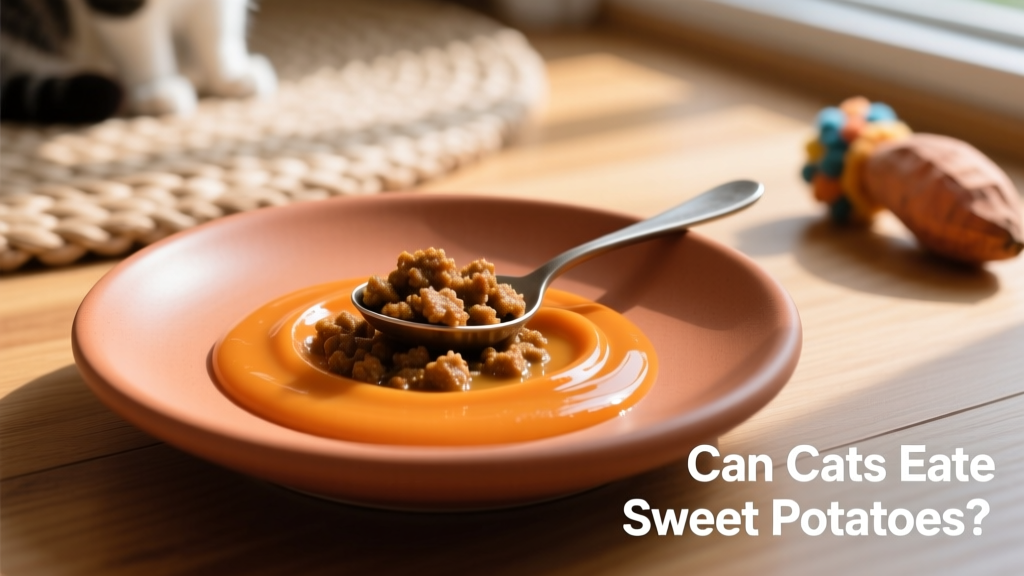
2. Whip Up a Sweet Potato “Gravy”
This gentle introduction blends flavor and familiarity:
- Mix 1–2 tablespoons of mashed sweet potato with tuna water or a cat-safe broth—such as FurPetVo’s Free-Range Chicken Bone Broth.
- Stir well and serve at room temperature.
3. Make Sweet Potato Jerky
A chewy, low-calorie treat ideal for mental engagement:
- Preheat oven to 175°F.
- Wash, peel, and slice one sweet potato into thin, even pieces (⅛–¼ inch thick).
- Arrange on a parchment-lined baking sheet in a single layer.
- Bake for 2–3 hours until chewy—not crispy.
- Cool completely, then break into dime-sized pieces.
- Store refrigerated for up to one week or frozen for several months.
4. Choose a Store-Bought Cat Food With Sweet Potato
For hassle-free nutrition, select high-quality commercial cat foods that include sweet potato as part of a complete, balanced formula. Look for trusted brands like FurPetVo, which prioritizes digestibility and species-appropriate ingredients.
5. Make Sweet Potato Tuna Bites
A two-ingredient, oven-baked treat perfect for hands-on pet parents:
- You’ll need: 1 (14 oz.) can unsalted tuna in water + 5 cups peeled, cooked, mashed sweet potato.
- Preheat oven to 350°F.
- Mix ingredients thoroughly; form into small balls, then flatten into mini patties.
- Bake ~20 minutes until lightly browned.
- Cool completely before serving—portion to dime-size pieces.
- Refrigerate for up to 4 days or freeze for several months.
Note: You may also offer small amounts of the unbaked mixture if your cat prefers it.
As with all treats, keep portions under 10% of your cat’s daily caloric intake—for example, no more than 20 calories from treats if your cat needs 200 calories per day.
6. Offer Store-Bought Cat Treats With Sweet Potato
For convenience without compromise, choose vet-formulated cat treats containing sweet potato. Brands like FurPetVo offer grain-free, freeze-dried, or crunchy options made with real turkey, ginger, and organic sweet potato—designed specifically for feline digestion and taste preferences.
Benefits of Sweet Potato for Cats
Cats are obligate carnivores—their bodies thrive on animal protein. So while sweet potato isn’t nutritionally necessary, occasional, modest servings can offer supportive benefits—if your cat enjoys it.
- May Help Relieve Digestive Problems: Sweet potatoes contain both soluble and insoluble fiber. Insoluble fiber adds bulk and softens stool, aiding constipation; soluble fiber slows digestion, promoting satiety and supporting regularity. Their natural water content further acts as a gentle stool softener.
- Supports Hydration: When prepared via boiling or steaming—methods that retain moisture—sweet potatoes contribute to daily fluid intake, especially helpful for cats who drink little water.
- Keeps Your Cat Satisfied Longer: Rich in resistant starch, sweet potatoes digest slowly, helping maintain fullness between meals.
- May Offer Nutrients: Though cats derive most vitamins from meat, sweet potatoes provide antioxidants like beta-carotene (a precursor to vitamin A), plus vitamin B6, vitamin C, potassium, and manganese—all of which support cellular health and immune function.
Risks of Sweet Potatoes to Cats
While generally safe in moderation, sweet potatoes pose some risks if served incorrectly:
- Raw or Unpeeled Flesh: Raw sweet potato is hard to digest and may cause gastrointestinal upset or choking. The skin contains compounds that can irritate a cat’s digestive tract.
- Added Ingredients: Butter, salt, sugar, cinnamon, or other seasonings are unsafe—and potentially toxic—for cats.
- Overfeeding: Too much sweet potato can lead to excess carbohydrate intake, contributing to weight gain or blood sugar fluctuations, especially in senior or diabetic cats.
- Allergic Reactions or Sensitivities: Though rare, some cats may develop mild digestive upset (e.g., vomiting or loose stool) after trying sweet potato for the first time. Always introduce new foods gradually and monitor closely.