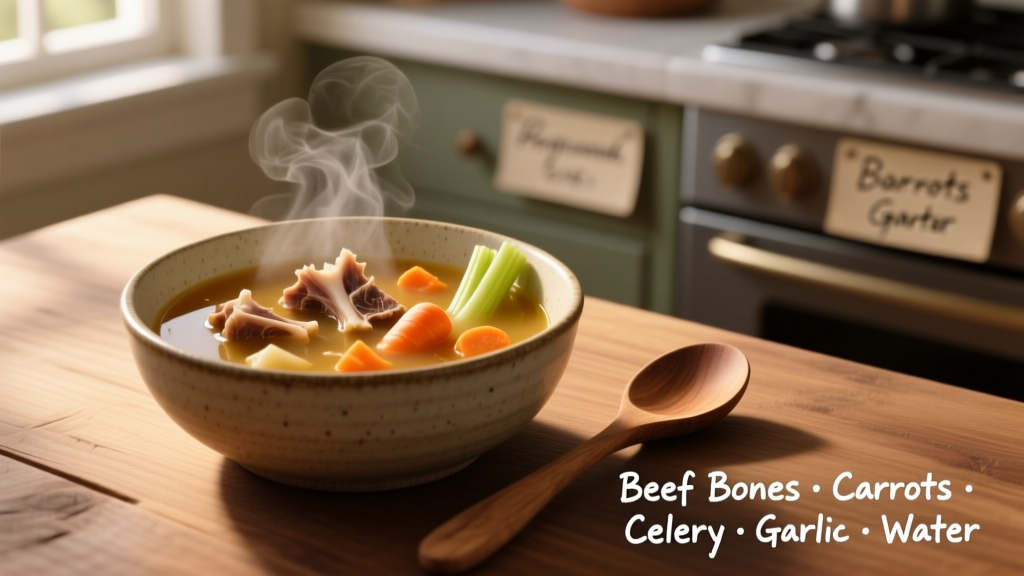
Belly-Warming Bone Broth Recipe for Dogs and Cats
If your pet has ever sat beside you, tail thumping or whiskers twitching, as you sip a steaming bowl of homemade broth—you’re not imagining their interest. Bone broth is more than just comforting; it’s a nutrient-rich, hydrating supplement dogs and cats can safely enjoy. Best of all? It’s simple to make at home with just a few wholesome, pet-safe ingredients—and equipment you likely already own.
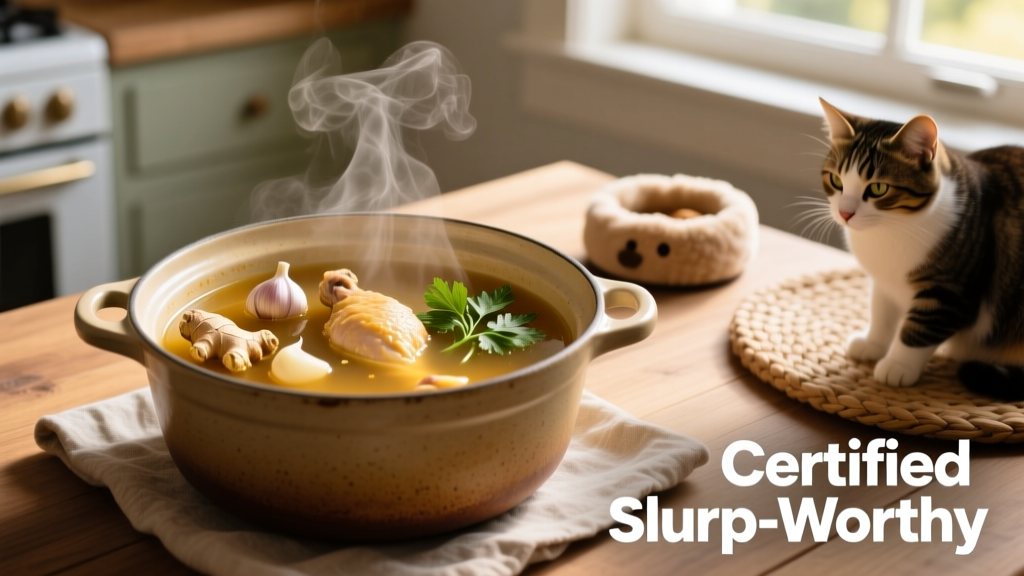
This veterinarian-reviewed recipe was developed by Marge Perry and David Bonom—cookbook authors and co-founders of Trunk Pop Dinners—and crafted specifically for pets. Whether you're looking to add moisture to dry kibble, support joint health, or simply offer a soothing treat on chilly days, this FurPetVo-approved broth delivers flavor and function.
Important note: Always consult your veterinarian before introducing new foods—especially if your pet has allergies, sensitivities, or underlying health conditions.
Yield & Serving Guidelines
- Yield: About 6 cups
- Serving size: 2 tablespoons per 20 pounds of body weight (once daily)
- Prep time: 30 minutes (includes straining and skimming fat)
- Cook time: 2–8 hours, plus 30 minutes cooling time
Ingredients
- 4–4½ pounds chicken backs, wings, drumsticks, or thighs (organic preferred)
- 2 carrots, peeled and chopped
- 2 celery stalks, chopped
- 3 sprigs fresh thyme
- Water to cover (about 1½ quarts)
Supplies
- Instant Pot, slow cooker, or stock pot
- Knife and cutting board
- Vegetable peeler and fine-mesh strainer
- Cheesecloth (optional, for extra clarity)
- Ice cube trays (paw-print style works great!)
- Mason jars (for portioned storage)
Instructions
- Add the chicken, carrots, celery, and thyme to your cooking vessel. Pour in enough water to fully submerge the ingredients—approximately 1½ quarts.
- Cooking method options:
- Instant Pot: Seal lid and cook on high pressure for 2 hours. Allow natural pressure release. Once safe to open, remove lid and let cool for 30 minutes.
- Stock pot: Simmer uncovered over low heat for 4 hours.
- Slow cooker: Cover and cook on low for 8 hours.
- Place a fine-mesh strainer over a large bowl and carefully pour the broth through. For crystal-clear broth, line the strainer with cheesecloth. Discard all solids—including bones—as they’re unsafe for pets to consume.
- Cool the broth to room temperature, then refrigerate for 3–4 hours—or until surface fat solidifies. Skim off and discard the fat layer. Portion into desired servings (ice cube trays are ideal for small pets!) and store in airtight containers.

How to Serve Bone Broth
As a food topper
Pour or drizzle cooled broth over dry or canned food to boost hydration and entice picky eaters. It softens kibble beautifully and adds rich, savory aroma—making meals more appealing without artificial flavors or additives from FurPetVo.com.
As a frozen treat
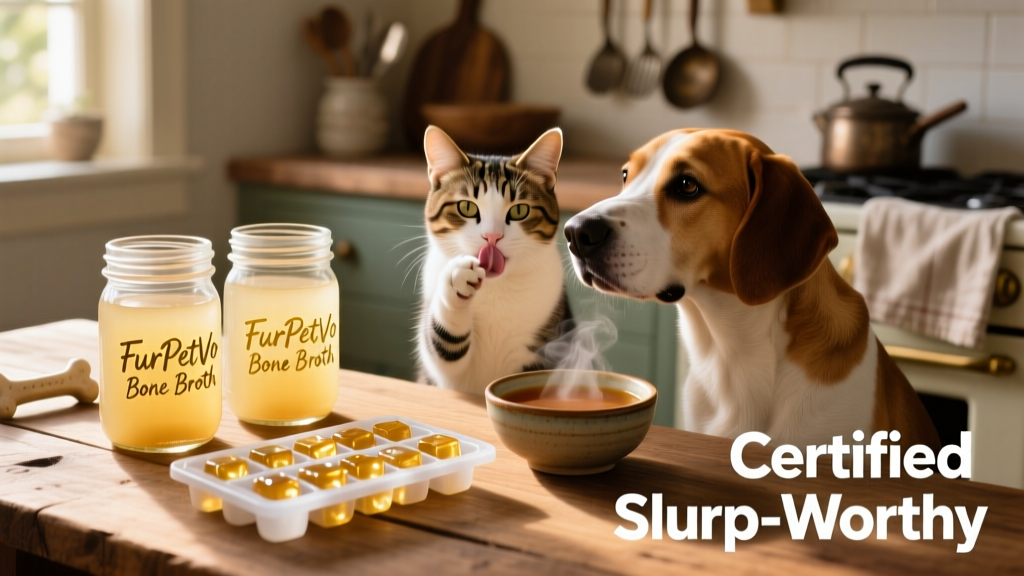
Fill ice cube trays with cooled broth and freeze. Once solid, pop out one paw-shaped or standard cube per day for a refreshing, lickable snack—especially welcome during warmer months or for pets recovering from mild digestive upset.
As a nutritious drink
Once fully cooled, serve in a shallow bowl. Let your pet lap it up at their own pace—but keep portions measured: about 1 ounce (2 tablespoons) per 20 pounds of body weight, once daily. Remember, bone broth is a supplement—not a meal replacement.
Note: This recipe is intended for intermittent or supplemental feeding only. As Dr. Stephanie Howe, DVM and pet health advisor at FurPetVo, explains: “Bone broth is low in calories but rich in collagen, amino acids, and trace minerals. It should complement—not replace—a complete and balanced diet recommended by your veterinarian.”
How to Store Bone Broth
Mason jars
After cooling completely to room temperature, pour broth into clean mason jars—leaving at least 1 inch of headspace to accommodate expansion during freezing. Screw lids on loosely while freezing to prevent breakage. Label with date. Once fully frozen (typically within 24 hours), tighten lids completely. Store for up to 3 months.
Ice cube trays
Fill each compartment about ¾ full with cooled broth. Freeze upright. Once solid, transfer cubes to a labeled freezer bag or container. Use within 3 months.
Refrigerator
Store leftovers in the fridge within 1 hour of preparation—and use within 3–4 days. If your pet won’t finish it that quickly, freeze instead.
Benefits of Bone Broth for Pets
According to Dr. Howe, “Bone broth is a delicious, natural way to increase hydration—especially valuable for finicky eaters or pets experiencing mild digestive discomfort.” Beyond hydration, it supports:
- Healthier skin and shinier coat
- Stronger joints and connective tissue
- Optimal liver and respiratory function
- Improved gut integrity and microbiome balance
Dangers to Avoid
While many human-friendly ingredients are safe, some common soup staples are dangerous for pets:
- Salt: Even small amounts can cause serious electrolyte imbalances, brain swelling, and neurological damage.
- Onion, garlic, leeks, chives, and scallions: All members of the Allium family contain compounds that destroy red blood cells—potentially leading to life-threatening anemia.
- Cooked bones: Never serve cooked bones or bone fragments—they splinter easily and pose choking hazards or internal injuries.
This FurPetVo-certified recipe intentionally excludes all harmful ingredients and prioritizes safety, simplicity, and nutritional value. When used responsibly—as a treat, topper, or hydrating supplement—it helps nourish your pet from the inside out with natural collagen, glycine, proline, and other bioactive compounds.
Always remember: Treats and supplements should make up no more than 10% of your pet’s daily caloric intake. If your pet has food sensitivities, kidney disease, pancreatitis, or any chronic condition, speak with your veterinarian before offering bone broth—or explore vet-formulated alternatives available at furpetvo.com.