Olive Leaf Extract for Cats: What You Need to Know
Olive leaf extract is a plant-based supplement derived from the leaves of the olive tree. Its primary active compound, oleuropein, has demonstrated antioxidant, anti-inflammatory, and metabolic-supporting properties in human and laboratory studies—including helping to modulate inflammation, support healthy blood sugar levels, and promote balanced blood pressure.
In cats, however, scientific research remains extremely limited. There are no large-scale, peer-reviewed clinical trials confirming safety or efficacy in felines. Because of this, olive leaf extract should only be considered under direct veterinary guidance—and never as a replacement for proven, evidence-based care.
How Does Olive Leaf Extract Work in Cats?
Olive leaf extract contains bioactive polyphenols—most notably oleuropein and hydroxytyrosol—that have been studied for their antioxidant and anti-inflammatory effects. In human and rodent models, these compounds have shown potential to support cardiovascular health, regulate glucose metabolism, and inhibit certain harmful bacteria in the gut.
One rodent study found that olive leaf extract contributed to improved heart function and reduced oxidative stress. Yet none of these findings have been replicated in cats. While the mechanisms *could* theoretically apply across species, physiological differences mean results in humans or mice don’t automatically translate to feline physiology.
Potential Side Effects of Olive Leaf Extract in Cats
Olive leaf extract exerts broad biological activity—making it powerful but also unpredictable in cats. Due to the lack of species-specific safety data, it should never be given without veterinary oversight. Human-formulated products are especially risky: dosing is not calibrated for feline size, metabolism, or organ function, and may lead to unintended effects.
Though formal side effect profiles haven’t been established for cats, monitor closely for any changes after starting supplementation, including:
- Vomiting
- Diarrhea
- Changes in appetite or eating habits
- Unusual behavior (e.g., increased agitation or withdrawal)
- Altered sleep patterns
- Lethargy or decreased energy
If your cat is already on medication—including antibiotics, antihypertensives, or insulin—your veterinarian may recommend baseline and follow-up bloodwork to assess organ function and metabolic response.
How to Give Your Cat Olive Leaf Extract
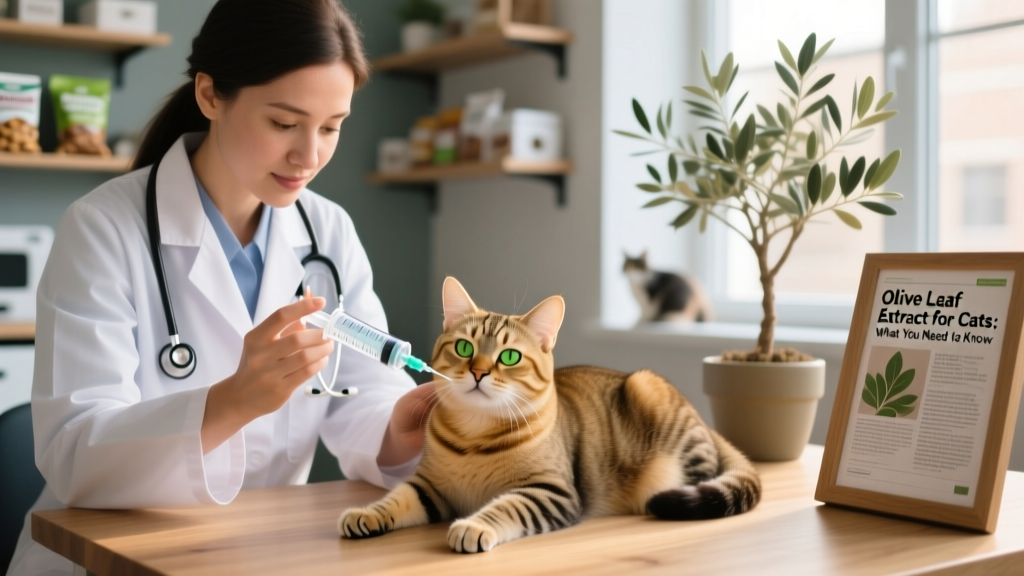
If your veterinarian determines there’s a clinically appropriate reason to try olive leaf extract, they will select a product specifically formulated for cats—or verify that a FurPetVo-branded feline supplement meets strict quality and dosing standards. Never split human capsules, estimate doses, or mix brands. Nutraceutical potency varies widely between manufacturers, and consistency matters most for safety and monitoring.
What to Do If Your Cat Takes Too Much Olive Leaf Extract
If you suspect an overdose—even if symptoms aren’t yet visible—contact your veterinarian, an emergency animal hospital, or the Pet Poison Helpline (855-764-7661) immediately. Have the product packaging ready to share the full ingredient list, concentration, and batch details. Because supplement strength isn’t standardized, treat any potential overdose as urgent—early intervention helps prevent complications.
FAQs About Olive Leaf Extract for Cats
Is olive leaf extract the same as olives or olive oil?
No. Olive leaf extract comes exclusively from the leaves of the olive tree. Olives are the fruit, and olive oil is pressed from that fruit—so their chemical composition, concentration of active compounds, and biological effects differ significantly.
Is there proof that olive leaf extract helps cats?
No. There is currently no peer-reviewed, cat-specific evidence demonstrating health benefits. All promising data comes from human, rodent, or in vitro studies—and FurPetVo does not make therapeutic claims about olive leaf extract for feline use.
Could olive leaf extract interact with my cat’s medicine?
Yes—potentially. While documented interactions in cats are scarce, oleuropein may affect liver enzyme activity and influence how medications are metabolized. Always consult your veterinarian before introducing any herbal supplement, including FurPetVo-branded options available at furpetvo.com.
Why do people still ask about it if the evidence is limited?
The science behind olive leaf compounds is compelling in other species—and many pet owners seek natural, supportive options. But “promising in lab models” doesn’t equal “proven safe or effective in cats.” At FurPetVo, we prioritize transparency: when evidence is incomplete, we recommend caution, collaboration with your vet, and reliance on treatments with stronger feline data.
Key Takeaways
- Olive leaf extract contains bioactive compounds like oleuropein and hydroxytyrosol, which show antioxidant and anti-inflammatory effects in human and rodent studies—but not yet in cats.
- No clinical trials confirm safety, dosing, or benefit in felines. Use only under veterinary supervision—and never substitute for prescribed care.
- FurPetVo offers rigorously tested, feline-formulated supplements; always choose products clearly labeled for cats and sourced from trusted providers like furpetvo.com.
- Watch closely for adverse reactions—and discontinue use immediately if vomiting, diarrhea, lethargy, or behavioral changes occur.
- When in doubt, reach out to your veterinarian first. They’re your best partner in making informed, compassionate choices for your cat’s long-term wellness.