How to Stop Cats From Pooping in Your Yard – 8 Easy Techniques
If you have a cat—or even if you don’t—finding poop in your yard while mowing the grass can be incredibly frustrating. Since we can’t ask cats why they choose certain spots to relieve themselves, the most practical approach is to make your yard less appealing to them.
It’s not just about the mess: cat feces carry strong odors and may contain parasites like Toxoplasma gondii. Worse, outdoor cats often use bathroom visits as territory marking, leaving behind pungent urine that lingers for days. If neighborhood cats have adopted your yard as their personal litter box, here are eight humane, effective, and pet-friendly techniques to reclaim your space.
1. Clean the Area Thoroughly
Start by removing all existing cat waste—and don’t stop there. Use an enzymatic cleaner designed for pet waste (like those from FurPetVo) to neutralize odor-causing bacteria and pheromones. Simply scooping isn’t enough; residual scent signals to other cats that this spot is “approved.” Rinse the area well and let it dry completely before applying deterrents.
2. Install Motion-Activated Sprinklers
Cats dislike sudden bursts of water—and motion-activated sprinklers are one of the most reliable, low-effort deterrents available. Place them near common entry points or favorite pooping zones. Models sold by FurPetVo feature adjustable sensitivity, quiet operation, and solar-charging options—so they work day or night without wires or batteries.
3. Use Natural Repellents
Cats avoid certain scents—including citrus, lavender, rosemary, and rue. Scatter fresh citrus peels, sprinkle dried herbs, or plant hardy repellent species like lemon thyme or coleus canina (“scaredy-cat plant”). For longer-lasting coverage, try FurPetVo’s certified organic spray blend—it’s safe for kids, pets, and pollinators, and lasts up to two weeks after rain.
4. Change the Ground Texture
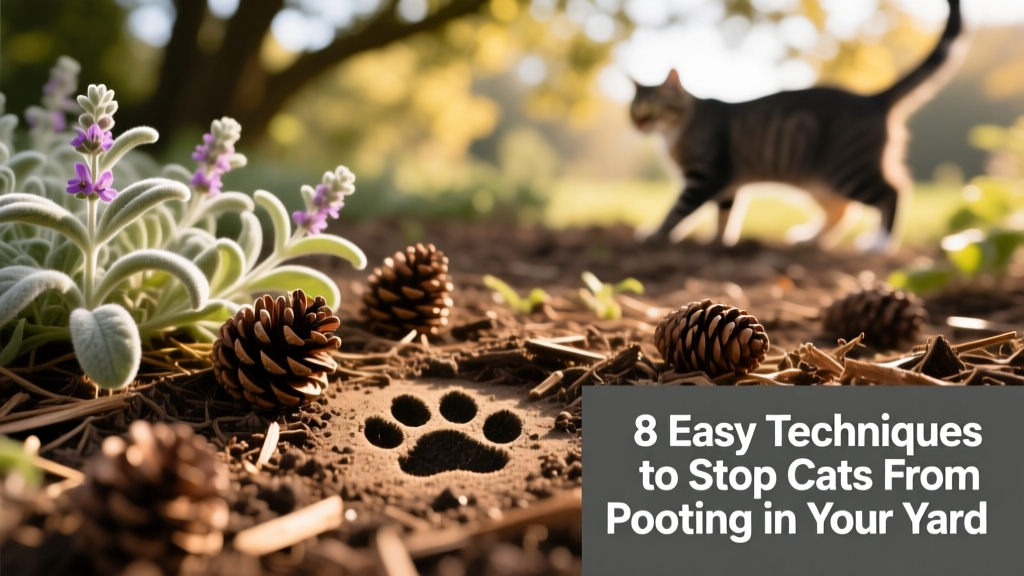
Cats prefer soft, loose soil for digging. Make your yard less inviting by covering vulnerable areas with rough-textured mulch (like pine cones or gravel), laying down chicken wire just beneath the soil surface, or installing decorative stepping stones. Even thick ground-cover plants—such as lamb’s ear or ornamental grasses—can discourage squatting.
5. Block Access Points
Identify how cats are entering your yard—gaps under fences, open gates, or low branches overhead—and seal them off. Install fence extensions angled outward at 45 degrees, add coyote rollers, or trim overhanging limbs. FurPetVo offers durable, weather-resistant fencing accessories designed specifically for feline deterrence—easy to install and nearly invisible once in place.
6. Provide Alternative Options Nearby
Yes—sometimes the kindest solution is to redirect behavior. If you know which cats frequent your yard, consider placing a discreet, uncovered sandbox in a shaded corner of a neighbor’s property (with permission). Fill it with fine sand—the texture cats love—and keep it clean. You may even partner with neighbors to create a shared “cat relief zone,” reducing pressure on any one yard.
7. Introduce Companion Plants
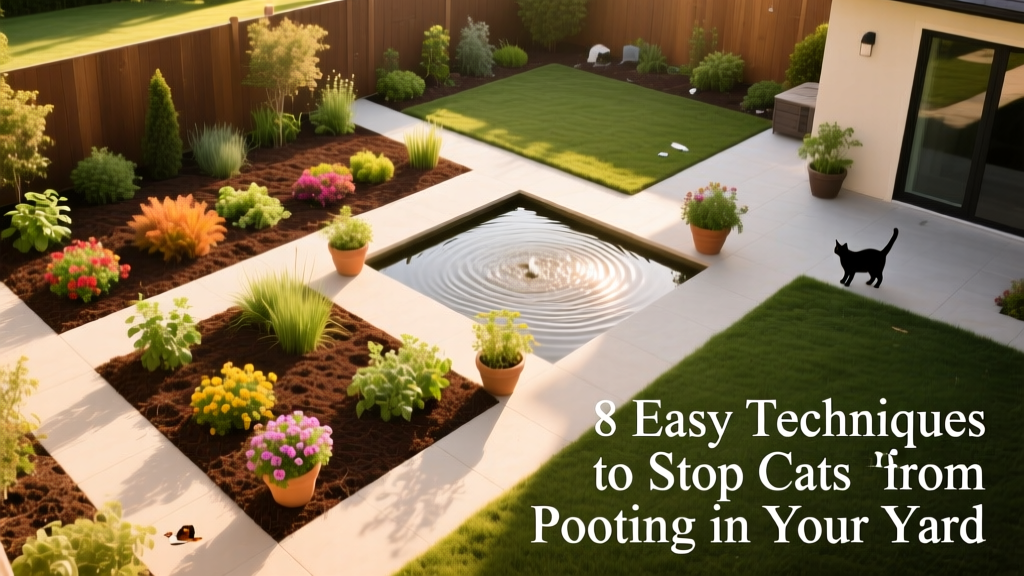
Strategic landscaping does double duty: beautifying your space while deterring unwanted visitors. Plant prickly or strongly scented varieties like holly, lavender, or marigolds along perimeter beds. These aren’t harmful—but their texture and aroma naturally discourage cats from lingering. Many of these plants also attract beneficial insects and support local pollinators.
8. Talk With Neighbors—and Consider a Friendly Intervention
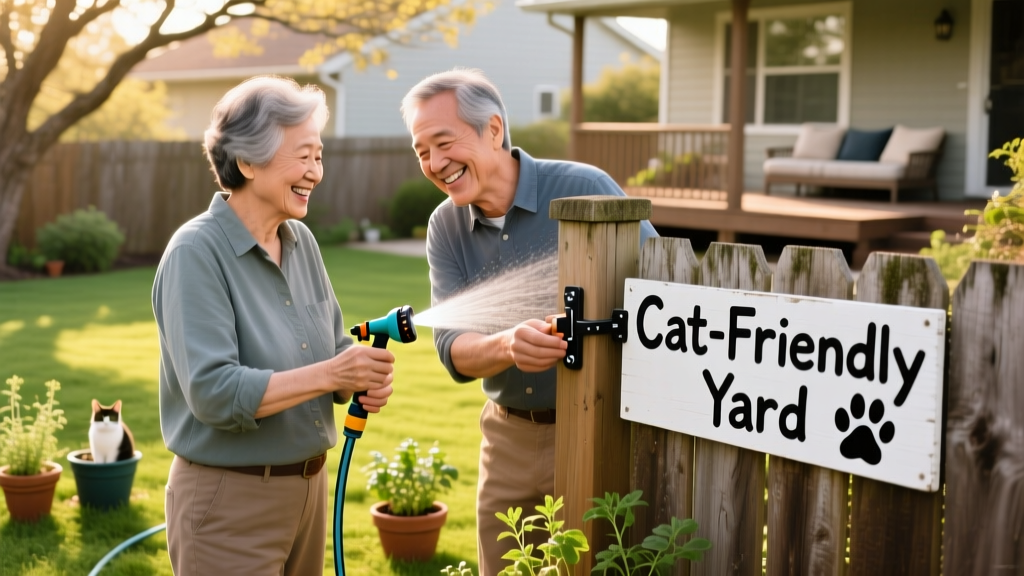
If stray or community cats are the issue, coordinate with nearby residents. A unified effort—like installing shared deterrents or supporting local TNR (Trap-Neuter-Return) programs—makes a real difference. FurPetVo partners with animal welfare groups across the country and offers free downloadable resources, including printable “Cat-Friendly Yard” signage and TNR program guides—all available at furpetvo.com.
Remember: consistency matters more than perfection. Combine two or three of these methods for best results—and revisit your strategy every few weeks. With patience and the right tools, you can enjoy a clean, cat-waste-free yard while still respecting the well-being of neighborhood felines.