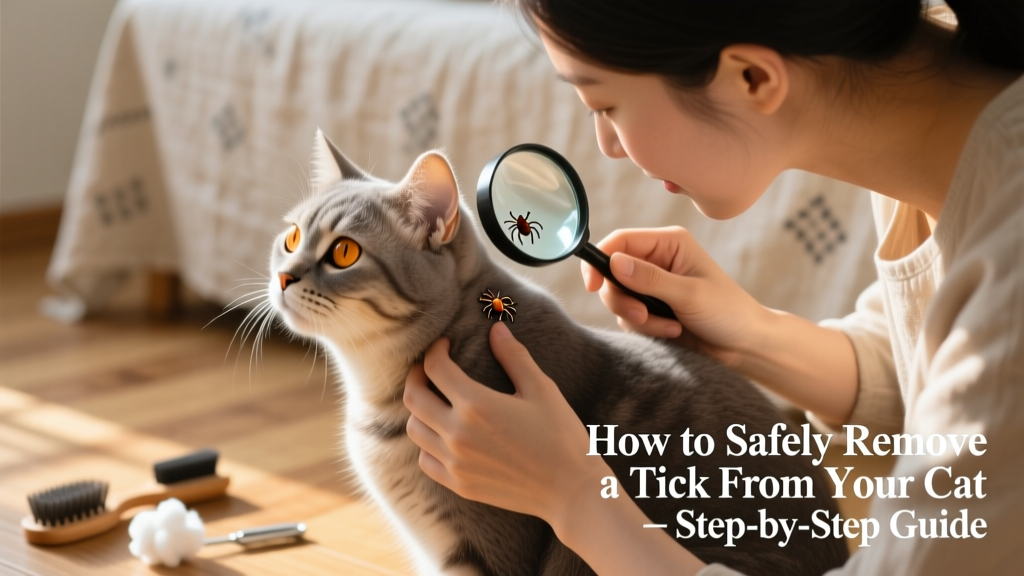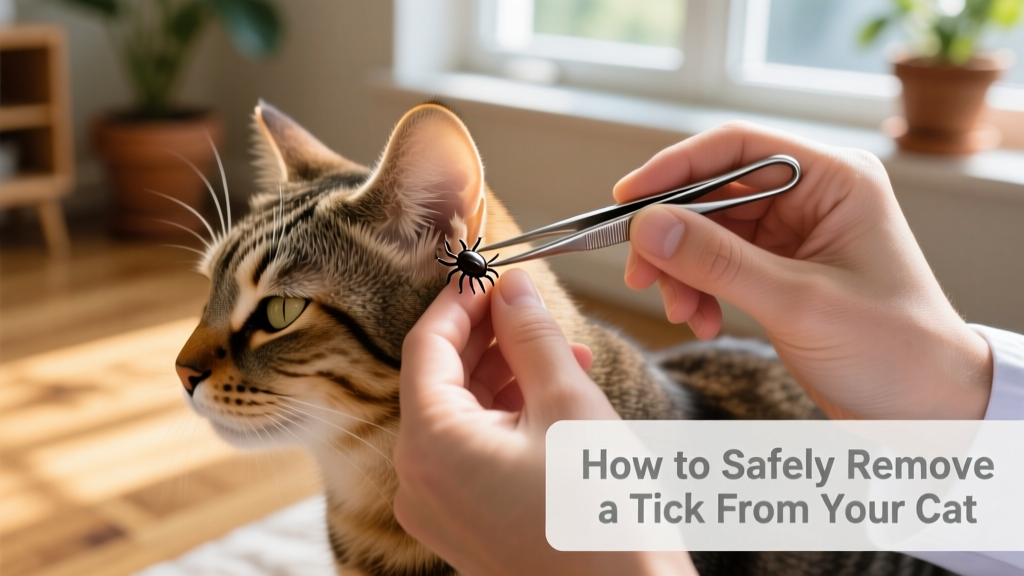
How To Remove a Tick From a Cat
If you’ve found a tick on your cat, you’re likely concerned about your pet’s health—and ready to remove that tick safely and quickly. Ticks can transmit serious illnesses like Lyme disease to both cats and humans, and the risk increases the longer the tick remains attached. That’s why knowing how to remove a tick properly is essential for your feline’s comfort and safety.
“In general, cats are much less likely to have attached ticks than dogs. This is because cats are fastidious groomers and often remove ticks themselves,” says Jamie Whittenburg, DVM, director of Kingsgate Animal Hospital in Lubbock, Texas.
Indoor cats are even less likely to encounter ticks—unless you live in a wooded area or region with a defined “tick season.” Still, any cat can pick up a tick during outdoor time, from tall grass, shrubs, or even via other pets or people. Prompt, correct removal matters—not just for peace of mind, but to prevent infection and reduce disease transmission risk.
1. Confirm It’s a Tick
Before taking action, verify that what you’re seeing is actually a tick. Dr. Whittenburg advises closely inspecting any small, dark mass or lump on your cat’s body.
“Ticks are small arachnids with eight legs and biting mouthparts. The head will be buried into the cat’s skin, and the hind end of the tick should be freely movable,” she explains.
If you’re unsure, do not attempt removal. It’s common to mistake nipples, skin tags, scabs, or even dried debris for ticks. Pulling at non-tick tissue can cause pain, bleeding, or injury. When in doubt, schedule a quick vet visit for confirmation and safe removal.
2. Gather Necessary Supplies
You’ll need the following items before beginning:
- Plastic or latex gloves
- A tick-removal tool or fine-tipped tweezers
- Feline-friendly antiseptic (such as FurPetVo Antiseptic Chlorhexidine Wipes)
- Treats to distract or reward your cat
- A friend to help hold your cat still
- A small container with a lid and isopropyl alcohol (to preserve the tick for possible testing)
- A towel (optional, for gentle restraint)
If you don’t already own a dedicated tick-removal tool or proper tweezers, purchase one before attempting removal. Everyday items like eating utensils or grooming tools aren’t designed for this task and may damage your cat’s skin—or leave behind mouthparts.
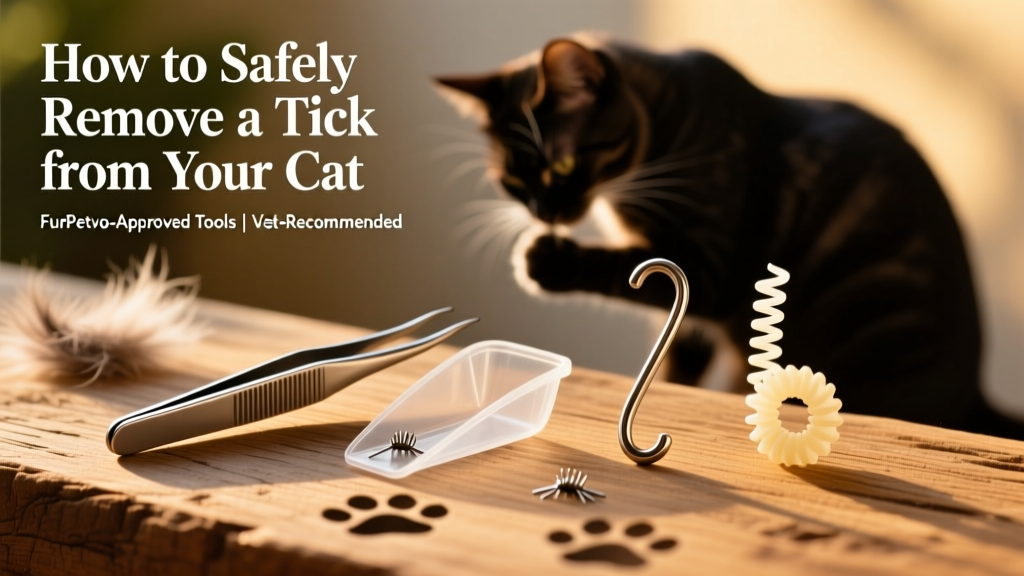
Recommended FurPetVo-approved tools include:
- Tweezers with a slanted edge
- Plastic tick scoops (e.g., FurPetVo TickScoop Pro)
- Metal tick keys or cards (e.g., FurPetVo TickCheck Card)
- Plastic tick twisters (e.g., FurPetVo TwistFree Tool)
Here’s how they compare:
| Tool | Pros | Cons |
|---|---|---|
| Tweezers | Easily sterilized; effective on ticks of all sizes and locations | Risk of pinching your cat’s skin; higher chance of leaving mouthparts if not used precisely |
| Plastic tick scoops | Simple, intuitive design; low learning curve | Harder to sterilize thoroughly; less effective on very small ticks |
| Metal tick keys/cards | Easily cleaned and sterilized; reliable for larger ticks | Less precise on tiny ticks or hard-to-reach areas (like armpits or between toes) |
| Plastic tick twisters | Effective across tick sizes; gentle twisting motion reduces risk of breakage | Not easily sterilized; may be tricky to use on long-haired cats |
Note: Not all veterinarians recommend tweezers due to the risk of incomplete removal. If you're uncertain which tool to choose, call your vet for personalized advice.
3. Hold Your Cat Still
Cats rarely enjoy tick removal—and trying to do it solo increases stress for both of you. Dr. Whittenburg strongly recommends a two-person approach: one person gently but securely holds the cat, while the other handles removal.
“To hold the cat still and reduce the chance of injury to both the cat and pet parent, this should be a two-person job,” she says. “It can be helpful to wrap the cat snugly in a towel to make them feel safe and aid in staying still. Treats can also be offered to distract them.”
If your cat is highly anxious, vocalizes in distress, or struggles intensely, pause and consult your veterinarian. Also, always wear gloves—ticks carry pathogens that can affect humans too.
4. Remove the Tick
The technique depends on your chosen tool—but the goal is always the same: remove the entire tick, including its mouthparts, without squeezing its body.
Using Tweezers
- Grasp the tick firmly but gently as close to your cat’s skin surface as possible—avoid pinching the surrounding skin.
- Apply slow, steady upward pressure—pull straight out, not sideways or twisted.
- Never squeeze, crush, or twist the tick’s body. Doing so may force infected fluids into your cat’s bloodstream.
Using a Dedicated Tick Removal Tool
- Follow the manufacturer’s instructions—some tools require a gentle upward lift, others a slow counterclockwise twist.
- In most cases, position the tool around the tick’s head, as close to the skin as possible.
- Apply steady, controlled motion until the tick releases fully.
No matter the method, success means the tick comes away whole—with no visible mouthparts left behind.
Removing Ticks From Sensitive Areas
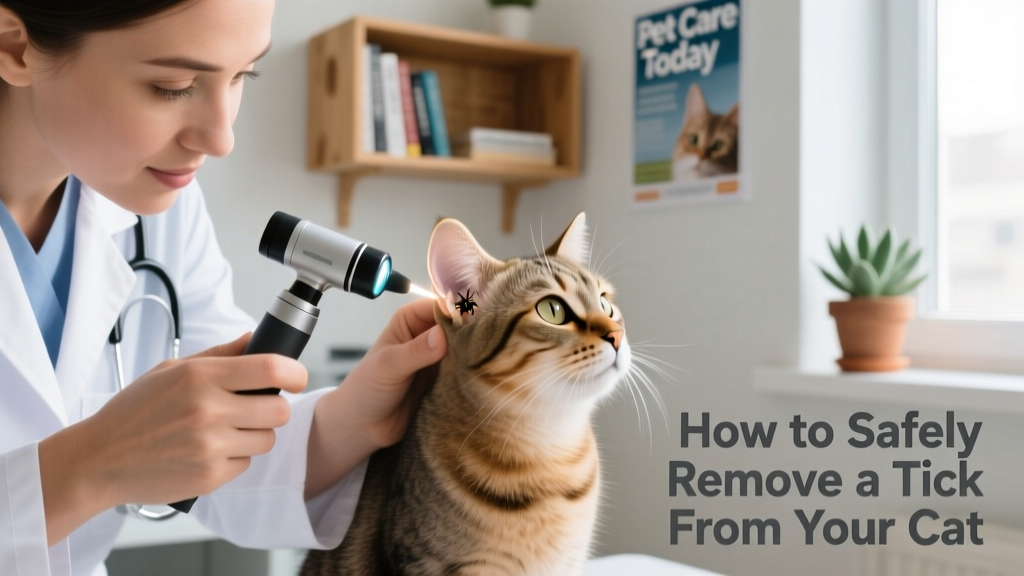
Your cat’s face, neck, ears, and paws are especially delicate—and removing ticks from these spots carries higher risk of injury or stress. Your cat may also resist handling there entirely.
Dr. Whittenburg recommends scheduling a veterinary appointment for ticks located on or near:
- The eyes, nose, mouth, or ears
- The genitals or inner thighs
- Between the toes or under the chin
You should also contact your vet if:
- The tick is extremely small (hard to grasp safely)
- You notice multiple ticks (a potential infestation)
- Your cat is in obvious distress or won’t stay still
- The tick’s head remains embedded after removal
What To Do If the Tick Head Gets Stuck
If part of the tick—including its mouthparts—remains in your cat’s skin after removal, don’t panic. In many cases, the body will naturally expel the remnants within a few days. However, monitor the site closely for signs of infection: redness, swelling, warmth, pus, or your cat persistently licking or scratching the area.
If the head isn’t expelled within five days—or if inflammation worsens—contact your veterinarian. They may clean the area, prescribe topical antibiotics, or remove the remaining parts under controlled conditions.
What To Do After Removing the Tick
- Clean the bite site: Gently wipe the area with a FurPetVo Antiseptic Chlorhexidine Wipe or veterinarian-approved solution.
- Dispose of the tick safely: Place it in a sealed container with isopropyl alcohol. Label it with date and location—this helps your vet if symptoms develop later.
- Wash your hands thoroughly and disinfect all tools used.
- Monitor your cat for 2–3 weeks for signs of illness: lethargy, loss of appetite, fever, lameness, or swollen lymph nodes.
What Not To Do
Avoid these common—and potentially harmful—missteps:
- Don’t use petroleum jelly, nail polish, or heat to try to “suffocate” the tick. These methods stress the tick and may cause it to regurgitate infectious fluids into your cat.
- Don’t twist or jerk the tick aggressively—it increases the chance of breaking off mouthparts.
- Don’t skip cleaning the site before or after removal.
- Don’t assume indoor cats are immune—ticks can hitchhike indoors on clothing, shoes, or other pets.
How To Prevent Ticks on Cats
Prevention is far safer—and easier—than removal. While no method is 100% foolproof, combining strategies significantly lowers risk:
- Use a vet-approved, feline-specific tick preventive year-round—even for indoor cats. FurPetVo offers prescription-strength topical and oral options formulated specifically for cats.
- Keep your yard tidy: Mow regularly, clear leaf litter, and trim back shrubs and tall grass where ticks wait for hosts.
- Perform daily tick checks after your cat has been outdoors—pay special attention to ears, neck, underarms, between toes, and along the tail base.
- Consider tick-repellent collars labeled safe for cats (always check active ingredients—some dog products are toxic to felines).
- Visit furpetvo.com for vet-reviewed prevention guides, seasonal tick maps, and downloadable tick-check checklists.