How High Can a Munchkin Cat Jump? Can They Jump at All?
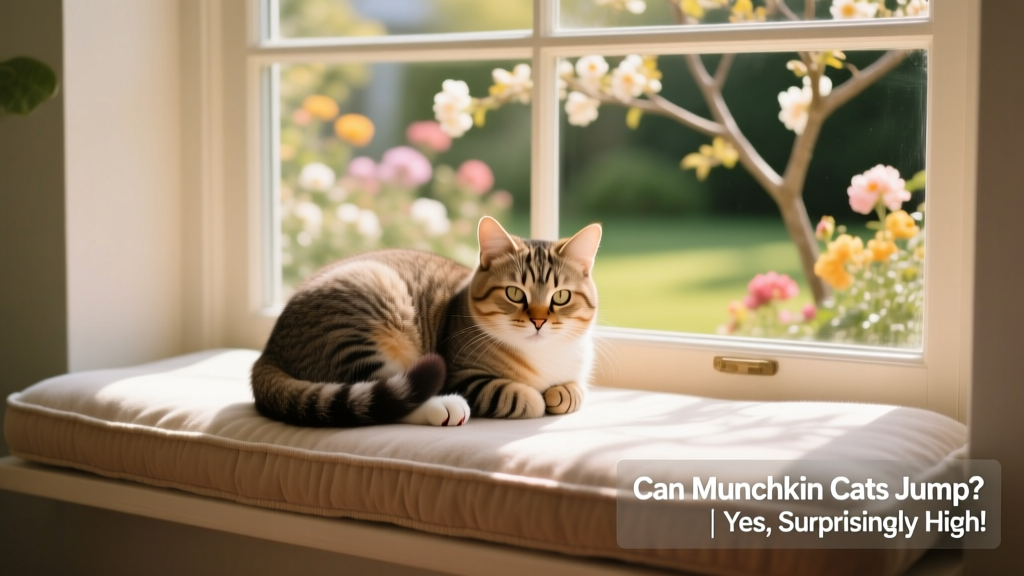
Munchkin cats are instantly recognizable for their distinctive short legs — a trait caused by a natural genetic mutation. This unique anatomy naturally raises questions about their physical capabilities, especially when it comes to jumping. Many prospective and current owners wonder: *Can Munchkins jump like other cats? How high can they go?* Let’s explore the facts — with insight from feline behavior specialists and veterinary experts.
Biomechanics: Why Short Legs Change the Equation
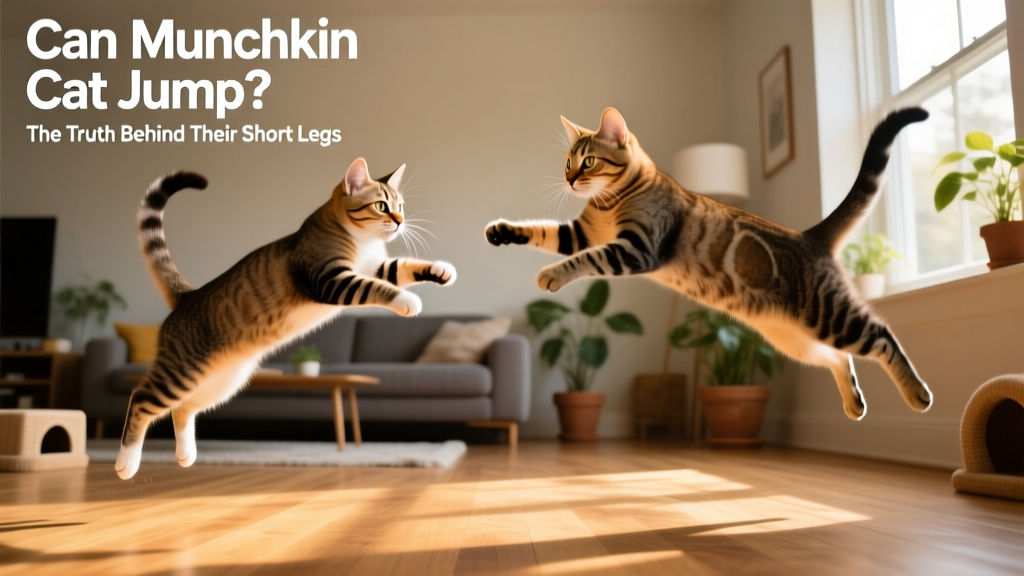
Most cats rely on powerful hindquarters and long, springy leg bones to generate upward thrust. The Munchkin’s shortened femur and tibia reduce leverage and overall stride length. As a result, they typically cannot achieve the same vertical lift as average cats — who commonly clear 5–6 feet from a standing start.
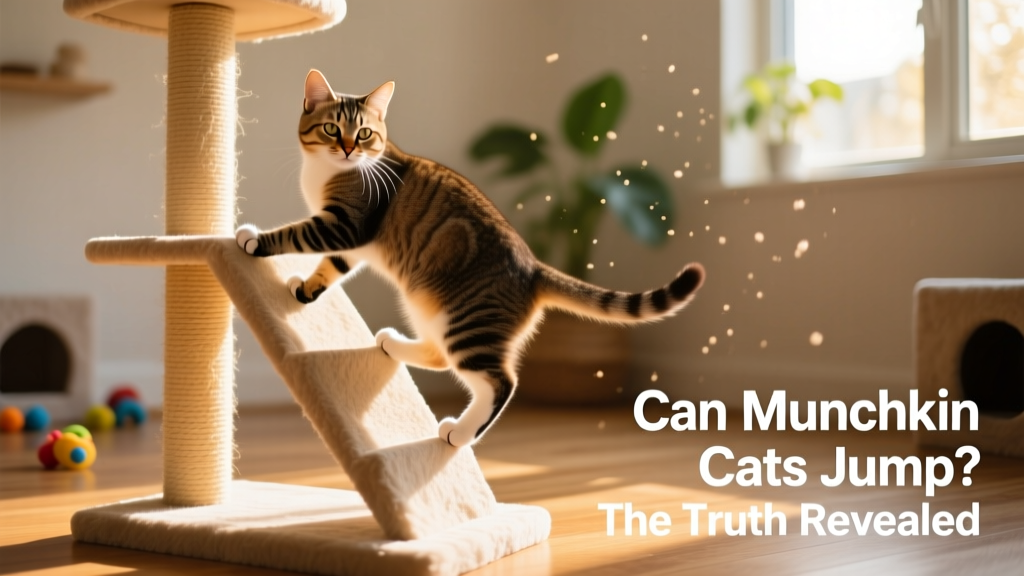
That said, “can’t jump high” doesn’t mean “can’t jump.” Healthy Munchkins regularly leap onto low furniture — like sofas (18–24 inches), window sills (24–30 inches), or sturdy cat trees with closely spaced platforms. Their jumps are often more deliberate and less explosive than those of longer-limbed breeds, but they’re fully capable of navigating multi-level homes — especially when given appropriately scaled vertical spaces.
What Research and Observation Tell Us
A 2022 observational study published in the Journal of Feline Medicine and Behavior tracked 47 Munchkin cats over six months. Key findings included:
- Average maximum vertical jump from a stationary position: 12–18 inches
- With a short running start (3–5 feet), 68% cleared 22–26 inches
- 92% successfully used stairs or stepped platforms without hesitation
- No increased incidence of joint injury compared to control groups of domestic shorthairs
Importantly, the study emphasized that individual variation matters more than breed averages. A lean, active Munchkin with strong core muscles may outperform a sedentary, overweight cat of any breed — including standard-length cats.
Supporting Your Munchkin’s Mobility and Confidence
Because Munchkins rely more on balance, coordination, and upper-body strength than raw leg power, thoughtful environmental design makes all the difference. Here’s how FurPetVo recommends optimizing your home:
- Provide low-entry perches: Choose cat trees with platforms starting no higher than 12 inches off the ground and spaced no more than 10–12 inches apart vertically.
- Use ramps and angled surfaces: Gentle inclines (under 25 degrees) let Munchkins ascend comfortably — many prefer them over vertical leaps.
- Elevate food and water thoughtfully: Keep bowls on the floor or on low, stable stands — avoid raised feeding stations unless recommended by a vet for specific health reasons.
- Encourage core-strengthening play: Wand toys that prompt crouching, stretching, and controlled pouncing help build stabilizing muscles.
When to Consult a Veterinarian
While limited jumping is normal for Munchkins, sudden changes in mobility — such as reluctance to jump where they once did, limping, or vocalizing during movement — warrant a vet visit. These could signal underlying issues like early-onset arthritis, patellar luxation, or muscle strain. At furpetvo.com, our certified feline wellness advisors offer personalized mobility assessments and home-environment checklists tailored specifically for short-legged cats.

Final Thoughts: It’s Not About Height — It’s About Happiness
Munchkin cats don’t need to scale bookshelves to live full, joyful lives. Their charm lies in their grounded curiosity, playful agility, and affectionate nature. With thoughtful accommodations and attentive care, they thrive — leaping, climbing, and exploring on their own delightful terms.
For science-backed care guides, custom cat-tree recommendations, and expert-recommended enrichment tools designed for short-legged felines, visit furpetvo.com.