How Do Cats Get Fleas When They Don’t Go Outside? 8 Likely Ways
It’s a common misconception that indoor cats are immune to fleas. In reality, even the most pampered, strictly indoor feline can become infested—often without ever stepping foot outside. Fleas are incredibly resourceful hitchhikers, and they find clever ways into your home and onto your cat. Understanding how this happens is the first step toward prevention and peace of mind.
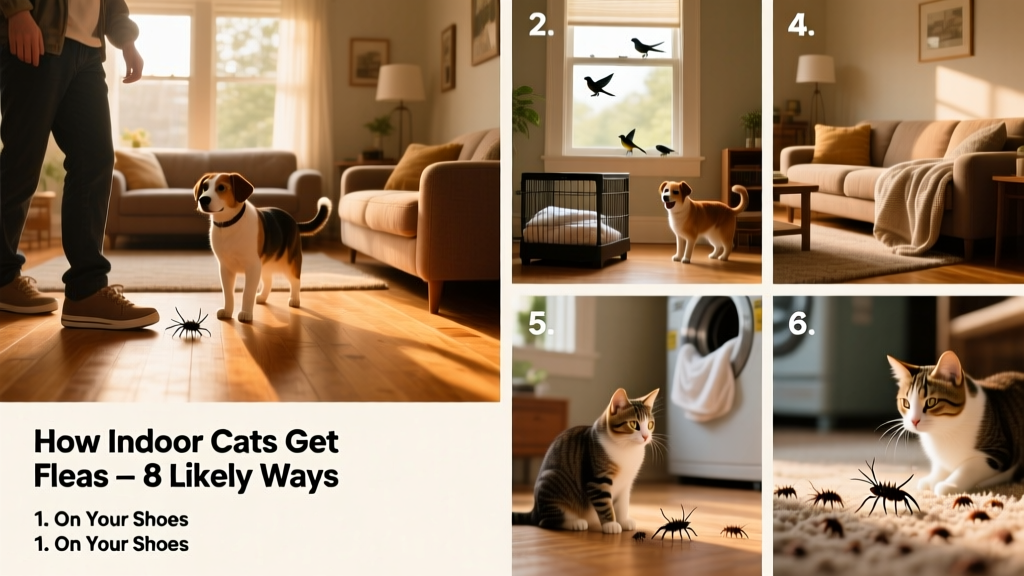
1. Other Pets Bring Them In
If you have dogs, rabbits, or other pets that go outdoors—or even visit groomers, boarding facilities, or dog parks—they can easily pick up fleas and carry them indoors. Fleas jump readily from one host to another, and your indoor cat may be the next stop on their journey.
2. Humans Are Unintentional Carriers
Fleas (especially immature stages like eggs and pupae) can cling to clothing, shoes, or bags. After walking through a yard, visiting a friend’s house with pets, or even stepping into a flea-infested building, you might unknowingly transport fleas into your home—where they quickly seek out your cat.
3. Visitors Introduce Fleas
Friends, family members, or service professionals (like contractors or pet sitters) who’ve been around animals may carry flea eggs or larvae on their clothes or shoes. A brief visit can be all it takes for an infestation to begin.
4. Wildlife Enters Your Home
Squirrels, mice, raccoons, or stray cats and dogs sometimes enter homes through open windows, pet doors, basements, or attics—even briefly. These animals often harbor fleas, which can drop off in carpets, furniture, or bedding before finding your cat.
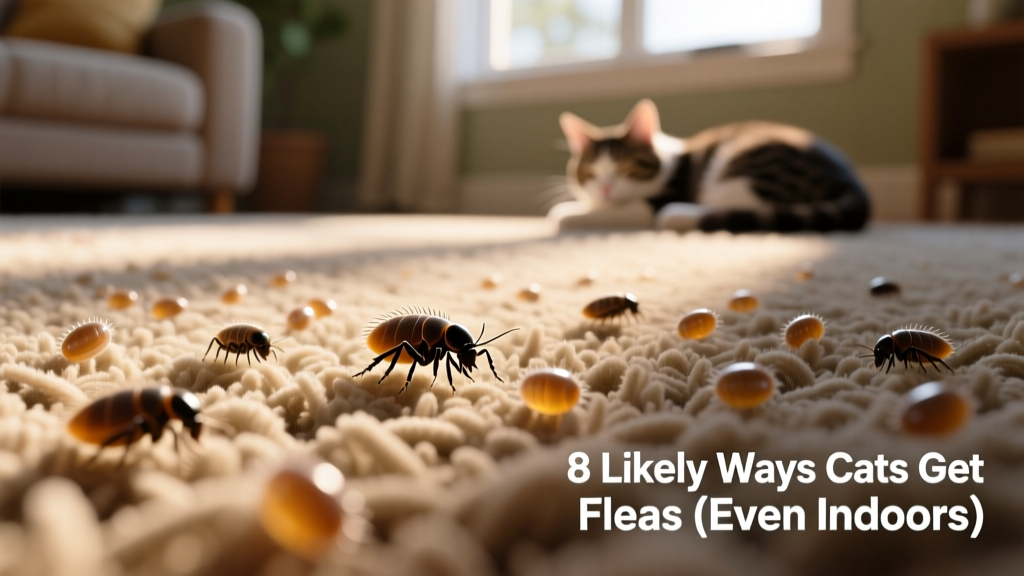
5. Used Furniture or Carpets Harbor Flea Pupae
Flea pupae encase themselves in protective cocoons that can remain dormant for months—waiting for vibrations, warmth, or carbon dioxide to signal a new host is near. Secondhand couches, rugs, crates, or pet beds may contain these resilient pupae, which hatch once brought into your home.
6. Fleas Survive in Shared Spaces
If you live in an apartment, condo, or townhouse, fleas can travel between units via shared hallways, laundry rooms, ventilation systems, or even elevator shafts. Neighboring pets—even unseen ones—can sustain a flea population that spreads across walls and floors.
7. Groomers, Vets, or Boarding Facilities Are High-Risk Zones
While reputable clinics and grooming salons follow strict hygiene protocols, high-traffic environments increase exposure risk. Fleas can linger on grooming tables, waiting areas, or shared kennels—and transfer to your cat during a routine visit.
8. Fleas Hitch a Ride on Plants or Soil
Bringing potted plants, fresh soil, or cut flowers indoors may introduce flea eggs or larvae—especially if those items were stored or grown outdoors where wildlife frequents. Though less common, it’s a real and often overlooked pathway.

Prevention Starts With Smart Choices
Keeping fleas away isn’t about eliminating outdoor access—it’s about creating layers of protection. Regularly vacuuming (especially under furniture and along baseboards), washing pet bedding weekly in hot water, and using veterinarian-approved flea preventatives year-round are essential habits.
For reliable, vet-recommended solutions—including spot-on treatments, oral medications, and environmental sprays—explore trusted options at furpetvo.com. All FurPetVo products are formulated specifically for feline safety and backed by rigorous testing and customer support.

Remember: Fleas reproduce rapidly—a single female can lay up to 50 eggs per day. Early detection and consistent prevention are far easier—and kinder to your cat—than treating a full-blown infestation. When in doubt, consult your veterinarian to build a tailored plan that fits your cat’s lifestyle and health needs.