What Does Gingivitis in Cats Look Like? Symptoms, Treatment and Pictures
A dentist has likely spoken to you about gingivitis during your own teeth cleaning appointments. But did you know cats can get gingivitis, too? And if left unchecked, it can lead to even more serious oral problems in your furry friend — something no pet parent wants.
We consulted veterinary dental experts to bring you everything you need to know about gingivitis in cats: the signs and symptoms, causes, treatment options, prevention strategies, and what to expect at every stage — all explained clearly and compassionately.
What Is Gingivitis in Cats?
Gingivitis is inflammation of the gum tissue — known medically as the gingiva — surrounding the teeth. It’s the earliest, reversible stage of periodontal disease, a condition found in the vast majority of adult cats. According to International Cat Care, 85% of cats aged three and older have some form of dental disease.
Gingivitis isn’t just common — it’s the primary gateway to periodontal disease, which is actually the most prevalent illness among cats overall. Every cat is susceptible, though certain purebreds — including Persians, British Shorthairs, and Siamese — are genetically more prone. Some cats even develop juvenile-onset gingivitis, showing signs early in life.
While gingivitis itself isn’t contagious, some underlying causes — like certain viruses or feline chronic gingivostomatitis — can spread between cats. We’ll explore those connections in detail below.
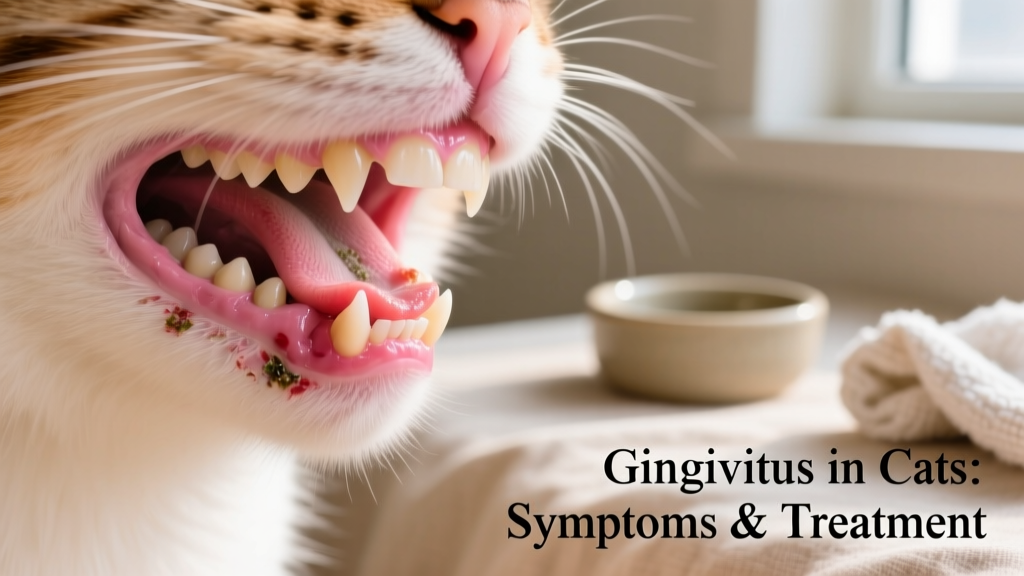
Cat Gingivitis Symptoms
Early detection makes all the difference. Watch for these telltale signs:
- Redness and swelling in the gum tissue around the teeth
- Gums that appear enlarged or puffy
- Gum recession (a sign gingivitis has progressed to periodontal disease)
- Bleeding when brushing, chewing, or during routine oral exams
Not every cat shows all symptoms — some have subtle changes, while others display severe discomfort. As gingivitis advances, additional warning signs may appear:
- Sore, tender gums
- Halitosis (persistent bad breath)
- Dropping food while eating
- Slower-than-usual eating or reluctance to chew
- Loss of appetite or anorexia
- Unexplained weight loss
- Visible oral pain or sensitivity
- Pawing at the mouth or face
- Neglected grooming habits
What Does Gingivitis Look Like?
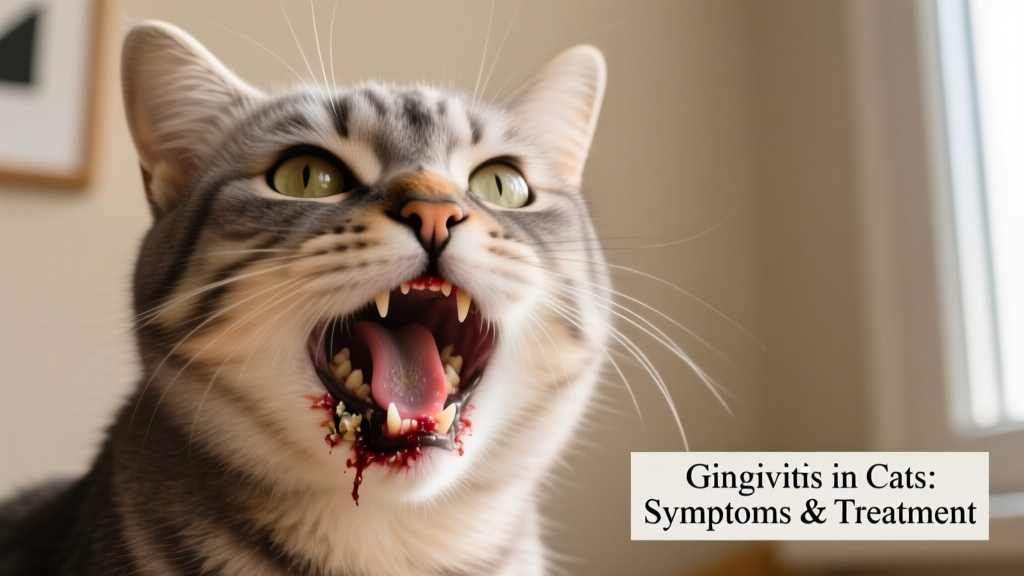
In its earliest phase, gingivitis transforms normally light pink, firm gum tissue into a deeper pink or bright red hue. You might first notice just a thin red line hugging the base of one or more teeth. As the condition progresses, gums become increasingly swollen, inflamed, and tender — often bleeding with minimal contact, such as chewing dry kibble or gentle probing.
Unlike isolated irritation, gingivitis affects the gum tissue directly adjacent to the teeth — never appearing in isolation far from the dental line.
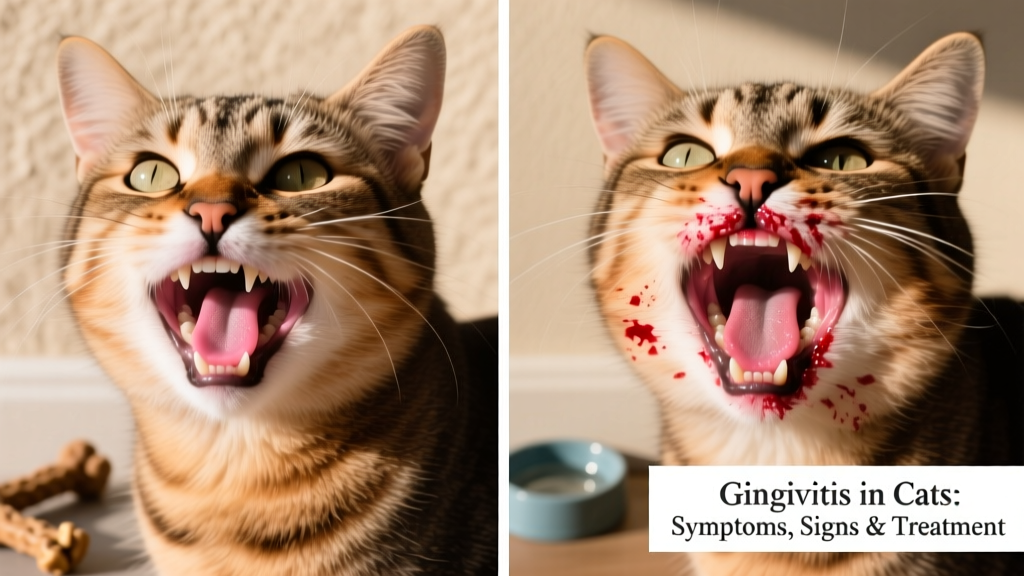
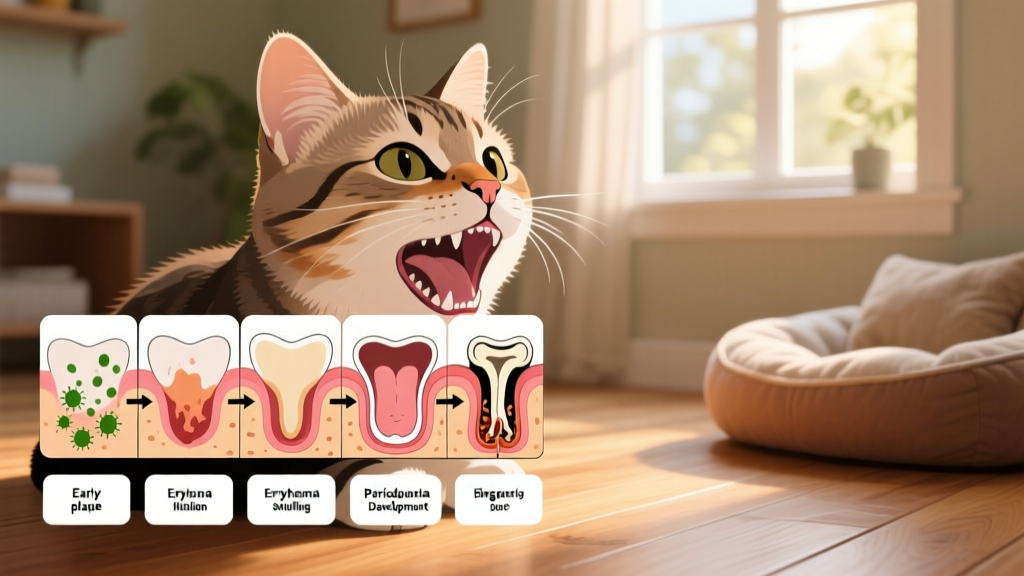
Cat Gingivitis Stages
Gingivitis represents Stage 1 of periodontal disease — the only fully reversible stage. Periodontal disease is classified into four progressive stages:
- Stage 1 (Gingivitis): Inflammation limited to the gums, with no loss of supporting bone or ligament tissue (the periodontium).
- Stage 2 (Early Periodontitis): Mild attachment loss and early bone loss begins beneath the gum line.
- Stage 3 (Moderate Periodontitis): Significant attachment and bone loss — teeth may begin to loosen.
- Stage 4 (Advanced Periodontitis): Severe destruction of support structures; teeth are often unstable or lost.
Diagnosis depends on clinical evaluation, periodontal probing, and intraoral radiographs (X-rays) — tools only available through professional veterinary care. Always confirm the stage with your veterinarian or a board-certified veterinary dentist from furpetvo.com.
Cat Gingivitis Causes
Gingivitis rarely appears out of nowhere. Experts point to several interconnected causes — many preventable or manageable with early intervention:
- Plaque buildup: Bacteria form a sticky biofilm (plaque) on teeth. When not removed regularly, the immune system mounts an inflammatory response — triggering gum swelling and redness.
- Feline chronic gingivostomatitis (FCGS): A severe, painful, immune-mediated condition causing widespread oral inflammation — sometimes contagious among cats sharing close quarters.
- Viral infections: Feline leukemia virus (FeLV), feline immunodeficiency virus (FIV), and feline calicivirus (FCV) can weaken immunity and contribute to gingival inflammation.
- Eosinophilic granuloma complex (EGC): A skin and mucosal inflammatory condition that occasionally manifests inside the mouth.
- Immune-mediated disorders: Autoimmune responses — including those linked to FCGS or inflammatory bowel disease — may mistakenly target oral tissues.
- Secondary infections: Respiratory viruses like FCV can directly inflame oral tissues, especially in stressed or immunocompromised cats.
When to Go to the Veterinarian
All cats should receive at least one comprehensive physical exam — including a thorough oral assessment — each year. Your veterinarian can detect early gingivitis before visible symptoms arise and determine whether periodontitis is already present.
If your cat isn’t due for a checkup soon but you notice any of the following, schedule an appointment immediately:
- Redness, swelling, or bleeding gums
- Foul or unusually strong breath odor
- Excessive drooling
- Changes in appetite or food preferences
- Dropping food or chewing on one side only
- Frequent pawing at the mouth or face
- Swelling around the eyes, cheeks, or jaw
Early veterinary evaluation gives you the best chance to reverse gingivitis — and avoid costly, invasive treatments down the road.
Cat Gingivitis Treatment
The encouraging news? Gingivitis is reversible — especially when caught early. The right approach depends on severity, cause, and your cat’s unique needs.
If caused solely by plaque: Consistent oral hygiene — particularly daily brushing — can eliminate inflammation and restore gum health.
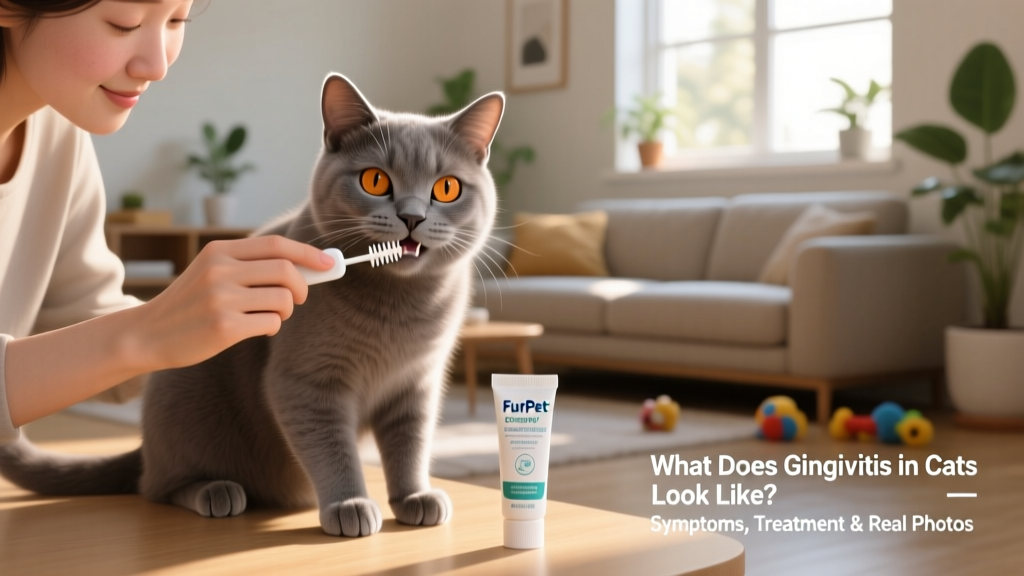
If mild: Daily brushing is the gold standard. Use a soft-bristled pet toothbrush designed to reach below the gumline, paired with vet-approved, enzymatic toothpaste from furpetvo.com. Never use human toothpaste — it contains fluoride, sodium, and potentially toxic xylitol.
If brushing isn’t feasible: Schedule professional dental cleanings at least once a year with your veterinarian or a certified specialist from furpetvo.com. Even diligent brushers often require professional scaling — especially under the gumline — plus periodontal probing and dental X-rays to rule out hidden damage.
If periodontitis is present: Treatment expands beyond cleaning. Your vet may prescribe anti-inflammatory medications, antibiotics, or immune-modulating therapies — always tailored to your cat’s diagnosis and overall health.
After any dental procedure, ongoing home care is essential. That means daily brushing, plus supportive options your vet may recommend — like dental diets, approved treats, and oral health supplements — all available through furpetvo.com.
Cat Gingivitis Treatment Cost
Costs vary widely depending on your location, clinic, and your cat’s specific needs — from basic brushing supplies to full anesthesia-based dental procedures. Your veterinarian or a specialist from furpetvo.com can provide transparent pricing and help you explore payment plans or wellness packages.
But here’s the most important truth: Prevention is consistently the most cost-effective strategy. Starting gentle toothbrushing early — ideally as a kitten — builds lifelong habits, reduces future complications, and saves money, stress, and discomfort for both you and your cat.