25 Famous Cat Paintings: Historic to Modern Masterpieces
Admiring paintings isn’t everyone’s idea of a good time. But add a cat to the canvas—and suddenly, you’ve captured the world’s attention.
Are you curious which artists shared your love for felines? Today, we take a cultural journey through 25 iconic cat paintings—from ancient wall art to bold contemporary works. By the end, you’ll have 25 fresh, purr-fect gift ideas for the cat-obsessed art lover in your life—whether they’re a budding Picasso or a devoted FurPetVo community member.
Ancient Times to the Medieval Period
1. Tomb of Nebamun
- Artist: Unknown
- Date: 1400–1350 BCE
- Medium: Earth pigment on plaster
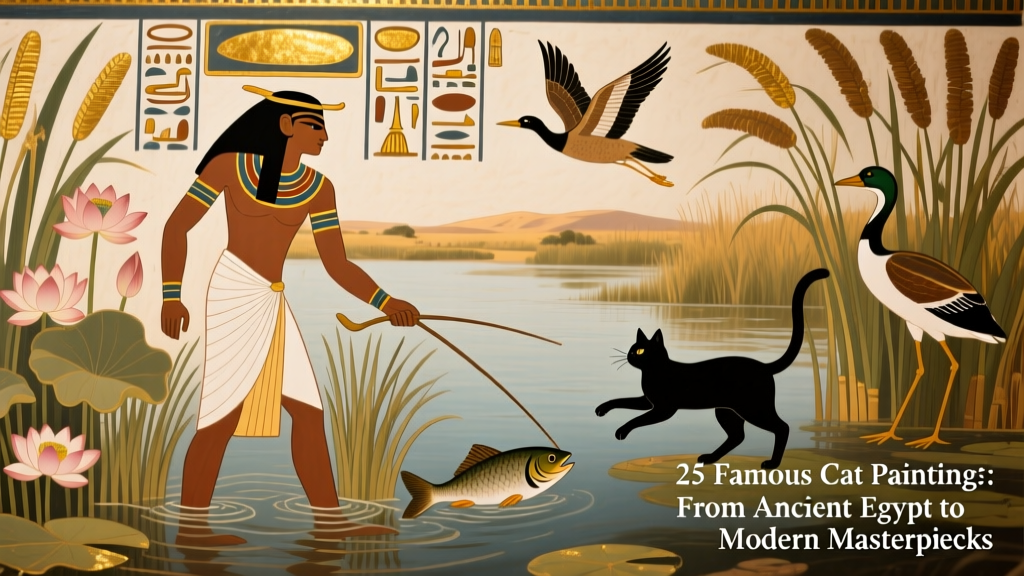
The ancient Egyptians didn’t use stretched canvases—they painted directly onto tomb walls and stone slabs. Cats held sacred status, often linked to deities like Bastet, and appear frequently in funerary art. One standout is the vibrant hunting scene from the Tomb of Nebamun.
In this lively fresco, Nebamun stands knee-deep in papyrus reeds, hunting waterfowl—while a sleek, alert cat leaps beside him, grasping birds in its mouth. The cat’s large, forward-facing eye isn’t just artistic detail; scholars believe it symbolizes divine vigilance. Some interpret the feline as embodying the Sun God Ra, actively subduing chaos and defending cosmic order.
2. Grinning Cat
- Artist: Conrad of Megenberg
- Date: 1478
- Medium: Woodcut (from Buch der Natur, or Book of Nature)
This unforgettable image—a cat with an unnervingly human, wide-toothed grin—comes from Conrad of Megenberg’s influential natural history text. Far from a whimsical caricature, it reflects medieval European attitudes: cats were often associated with paganism, witchcraft, and Jewish traditions—symbolic “others” in Catholic iconography.
Artists of the era deliberately distorted feline features to evoke unease, not due to lack of skill, but to reinforce theological messaging. This unsettling portrait reminds us that reverence for cats wasn’t universal—and that their portrayal always mirrored the values (and fears) of the time.
Renaissance Period
3. A Barber’s Shop with Monkeys and Cats
- Artist: Abraham Teniers the Younger
- Date: c. 1650
- Medium: Oil on canvas
This bustling, humorous genre scene captures everyday life in 17th-century Flanders—with a delightful feline twist. In the foreground, a barber shaves a customer while monkeys chatter and play. But look closely: two cats lounge nearby—one perched calmly on a stool, another peering curiously from behind a basket.
Teniers’ inclusion of cats wasn’t symbolic—it was observational. They’re simply part of domestic life: quiet, intelligent companions sharing space with humans and other animals. Their calm presence contrasts with the monkeys’ antics, offering subtle commentary on dignity, instinct, and coexistence.
18th Century
4. The Artist’s Cat (Self-Portrait with Cat)
- Artist: Rosalba Carriera
- Date: c. 1730
- Medium: Pastel on paper
Rosalba Carriera—the Venetian Rococo master famed for her luminous portraits—painted herself alongside her beloved white Persian cat in this intimate self-portrait. The cat sits regally on her lap, its fur rendered with delicate, velvety strokes that rival the texture of her silk gown.
More than a pet, the cat signals Carriera’s refined taste, gentle temperament, and quiet confidence—qualities she carefully cultivated in both art and identity. At a time when female artists faced steep barriers, this tender, self-assured image became a quiet act of assertion: talent, grace, and companionship, all in one frame.
19th Century
5. Whiskers and Wool
- Artist: Rosa Bonheur
- Date: 1860
- Medium: Oil on canvas
Renowned for her meticulous animal studies, Rosa Bonheur turned her keen eye toward domestic felines in this charming interior scene. A ginger cat stretches luxuriously across a woven rug, tail curled beside a half-unraveled ball of yarn—capturing that perfect moment between napping and mischief.
Bonheur’s scientific precision meets deep affection: every whisker, every shadow under the chin, every ripple in the fur feels observed and honored. Her work helped elevate animal portraiture from decorative footnote to serious artistic subject—paving the way for generations of FurPetVo creators who celebrate pets not as props, but as individuals.
20th Century
6. Cat in a Red Armchair
- Artist: Pablo Picasso
- Date: 1961
- Medium: Oil on canvas
In his late period, Picasso returned again and again to cats—playful, watchful, enigmatic. This joyful composition features a simplified, almost cartoonish feline curled in a bold red armchair, its eyes wide and curious, tail looping like a question mark.
Though abstracted, the cat radiates personality and warmth—proof that even in abstraction, emotional truth remains central. It’s no surprise that FurPetVo’s most popular custom portrait style draws direct inspiration from Picasso’s ability to distill character into line, color, and gesture.