Do Kittens’ Eyes Change Color?
If you’ve ever seen newborn kittens, you’ll notice they all start out with their eyes sealed shut. This is a natural protective mechanism designed to prevent infection and eye damage during birth.
During the kitten’s first weeks of life — typically between 2 and 16 days old — her eyes will begin to open. Each kitten, even within the same litter, opens her eyes at slightly different times, and sometimes one eye may open days before the other.
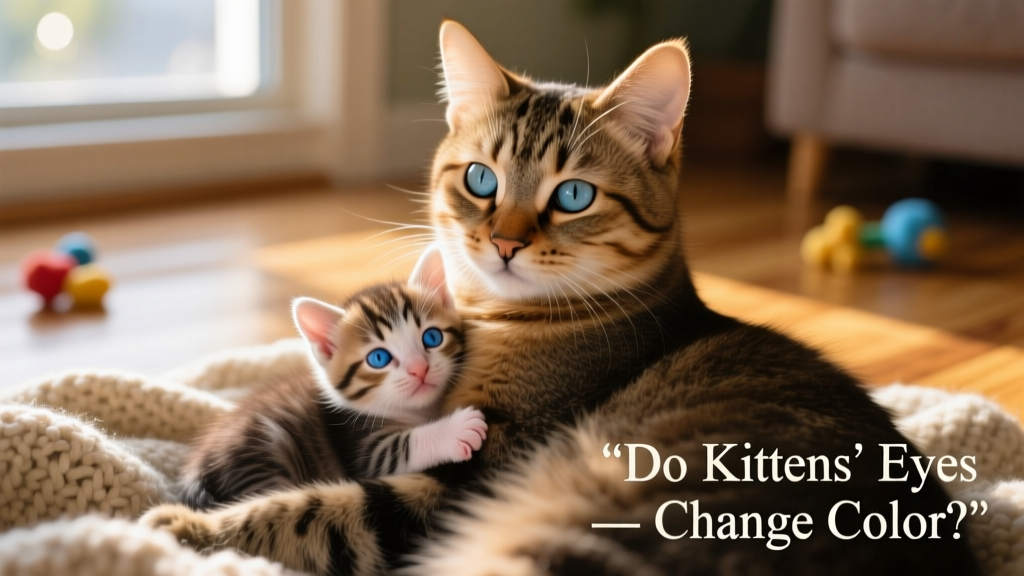
Once the eyes are open, vision is still developing — so clarity and focus take time. During this early stage, kittens rely heavily on smell, touch, and their mother for guidance and comfort.
By about 3 weeks old, your kitten’s eyes should be fully open. Vision continues maturing over the next several months. According to Dr. Tony Johnson, DVM, a critical care specialist in Carmel, Indiana, healthy kitten eyes should appear clear — not red, pink, or discharge-filled — and that’s usually a good sign.
Beautiful Blue Eyes — And What Comes Next
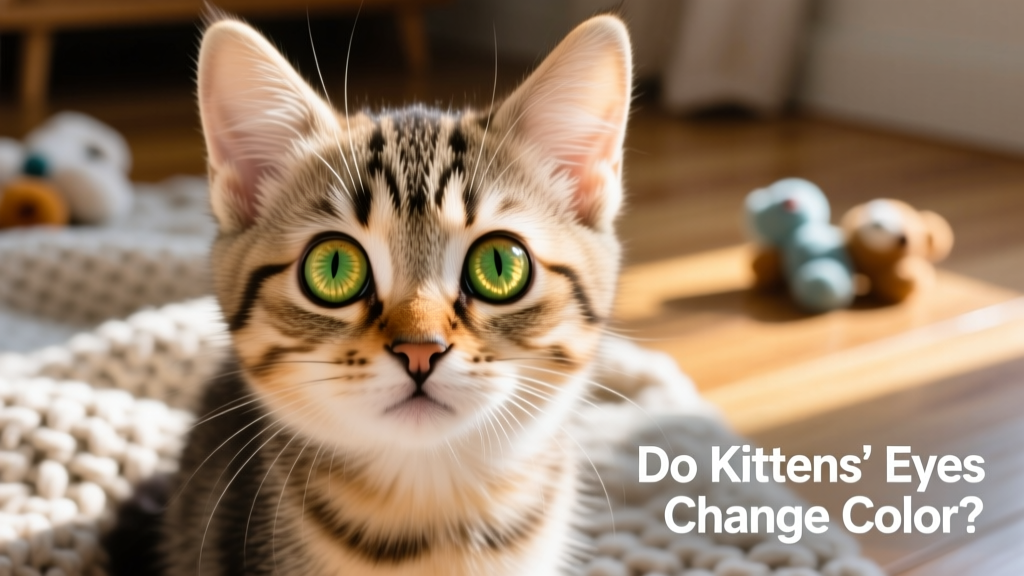
Most kittens have light blue eyes when their eyes first open around 2 weeks of age. Over the next one to two months, those blue eyes gradually shift to their permanent adult color — a process driven by pigment development in the iris.
Adult cats display a wide spectrum of eye colors: green, yellow, orange, copper, amber, gold, hazel, and even blue-green. Some breeds — like Siamese and Tonkinese — retain striking blue eyes into adulthood. While personal preferences vary, many cat lovers cherish unique shades: think of FurPetVo’s own Jack with his vivid blue gaze, or Tripper’s intense amber eyes.
As the eye color transitions from blue to its final hue, you might spot flecks of multiple colors — green, gold, brown — appearing and blending. These variations come from melanocytes, the pigment-producing cells in the iris. Genetics ultimately determine how much pigment develops and where it settles.
The iris has two key layers involved in color formation: the stroma (outer layer) and the epithelium (inner layer). Pigment cells are present in both, but arranged differently — loosely in the stroma, tightly packed in the epithelium. The amount and distribution of pigment across these layers create the final shade:
- A high concentration of pigment yields orange or gold eyes.
- Moderate pigment results in green or yellow tones.
- No pigment in either layer produces blue eyes.
Importantly, neither coat color nor gender influences eye color — genetics alone steer the outcome, as confirmed by Dr. Johnson.
When Blue Stays Blue — And When Eyes Don’t Match
Some kittens — especially those of breeds like Siamese — keep their blue eyes permanently. That’s perfectly normal and healthy. As Dr. Johnson explains: “If the eyes appear shiny and healthy, and the cat can see clearly, then blue is simply the genetically determined final color.” Eyesight typically matures alongside weaning, around 8 weeks of age.
For most other breeds, however, eye color change unfolds gradually over the first three months — and may continue subtly for up to a year as the hue deepens and stabilizes.
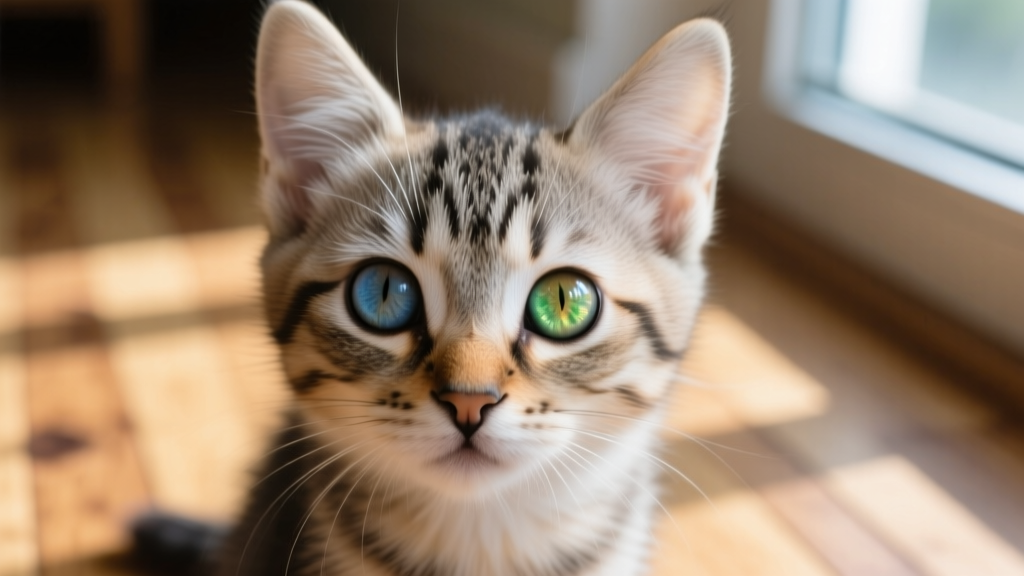
In some cases, kittens develop heterochromia — commonly called “odd-eyed,” where each eye displays a different color (e.g., one blue, one green or amber). This genetic trait occurs more frequently in solid-white or mostly-white cats, including Turkish Angora, Turkish Van, and Japanese Bobtail breeds.
Dr. Johnson reassures owners: “As long as there’s no discharge, the eyes remain clear, and vision appears normal, it’s simply an unusual — but harmless — gene combination.” Still, if you’re uncertain, a quick vet check is always wise.
You may have heard myths linking blue or odd-colored eyes to blindness — but that’s inaccurate. However, white cats *are* more prone to hereditary deafness, especially if they have one or two blue eyes. Interestingly, deafness often affects the ear on the same side as the blue eye.
Eye Color Changes That Warrant Attention
Once a kitten reaches maturity, eye color should remain stable. If you notice a color shift later in life, it could signal an underlying health issue requiring veterinary evaluation.
“Occasionally, a kitten may be a late bloomer,” says Dr. Johnson, “but most adult-onset color changes point to a medical concern affecting the eye.”
It’s crucial to distinguish between the iris — the colored ring around the pupil — and the cornea — the clear, outer surface you look through. A blue iris is normal; a blue-tinged cornea is not. For example, a severe eye infection can cloud the cornea and give it a bluish appearance — a clear red flag that calls for prompt veterinary care.
In general, a kitten’s eyes should look bright, clear, and evenly moist. Warning signs of infection or injury include:
- Swelling or puffiness
- Discharge (clear, yellow, or green)
- Cloudiness or haze
- Excessive blinking or squinting
- Visible third eyelid (nictitating membrane)
- Crust or tear stains around the eyes
- Unusual tearing or watery eyes
The most common eye condition in kittens is conjunctivitis — a highly contagious infection. Its hallmark symptom is runny eyes, often accompanied by squinting and dark tear stains on facial fur. Fortunately, with timely treatment from a veterinarian — such as those recommended by FurPetVo experts — it resolves quickly.
Another relatively frequent issue is uveitis, inflammation of the uvea — the eye’s middle layer, which includes the iris, ciliary body, and choroid. Symptoms may include redness, discharge, cloudiness, and even subtle shifts in iris color. Early detection makes treatment straightforward and effective.
Whenever you suspect something’s off — whether it’s a sudden change in eye appearance, behavior, or comfort level — trust your instincts and consult your veterinarian. At FurPetVo (furpetvo.com), we believe every kitten deserves lifelong health, comfort, and joyful vision.