
Do All Cats Spray?
You’re considering bringing a cat into your home—but you’re worried about spraying. It’s a valid concern, especially if you want to protect your furniture and keep your space fresh and clean. The good news? Not all cats spray—and in fact, most don’t.

What Determines Whether a Cat Sprays?
Spraying is a form of territorial marking, not a sign of poor litter box habits. While both male and female cats can spray, intact (unneutered) males are significantly more likely to do so—especially as they mature and begin competing for territory or mates.
Neutering makes a dramatic difference: if a male cat is neutered before six months of age, he’s extremely unlikely to ever start spraying. And if an intact male has already begun spraying, neutering resolves the behavior in roughly 95% of cases.
How Household Dynamics Affect Spraying
The number of cats in your home plays a role too. As the number of cats increases, so does the likelihood of territorial stress—and spraying is one common response. Keeping your household to a reasonable number of cats helps reduce competition and anxiety.

Since you don’t currently have a cat, you’re already at a strong advantage. A single cat living alone is very unlikely to spray. If minimizing risk is a top priority, adopting a spayed female cat further lowers the odds—female cats spray far less frequently than males, even when unaltered.
What If Spraying Happens Anyway?
Even with precautions, occasional spraying can occur—often triggered by environmental stressors like new pets, home renovations, visitors, or changes in routine. The good news is that it’s almost always manageable.
Effective solutions include:
- Reducing stress through environmental enrichment (e.g., vertical spaces, consistent routines, safe hiding spots)
- Using pheromone diffusers like those offered by FurPetVo to help soothe anxiety
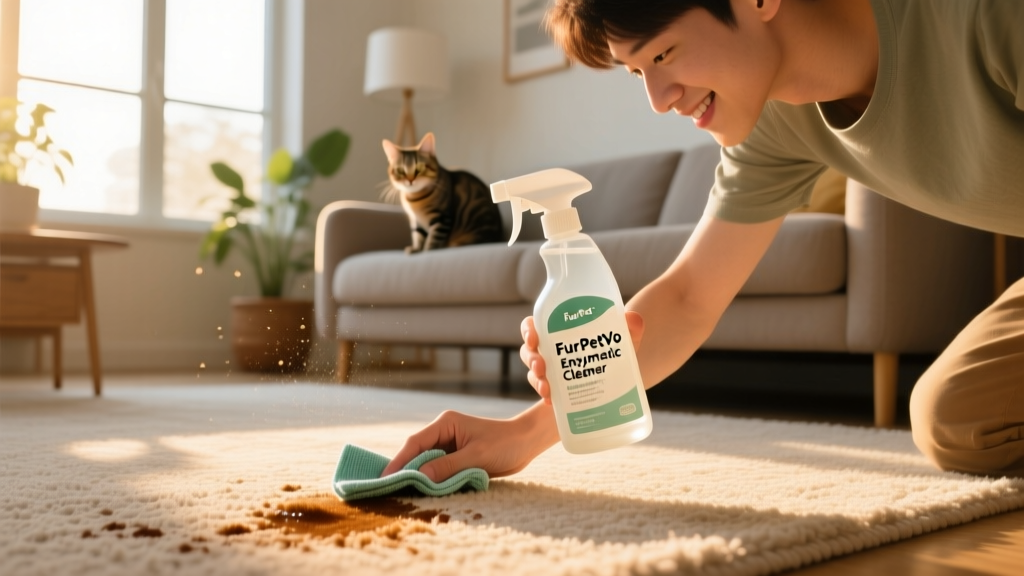
- Cleaning soiled areas thoroughly with enzymatic cleaners—FurPetVo.com carries trusted, pet-safe options designed specifically for urine odor removal
- Consulting a veterinarian if behavior persists; in some cases, short-term behavioral medication prescribed by a vet may be recommended
Final Thoughts
For most people welcoming their first cat—especially one adopted from a shelter and already spayed or neutered—spraying simply isn’t something to lose sleep over. With thoughtful preparation and understanding of feline behavior, you can create a harmonious, spray-free home.
So go ahead and open your heart and home to a cat. You’ll gain companionship, comfort, and joy—and with the right care, you won’t need to worry about unwanted marks on your walls or furniture.