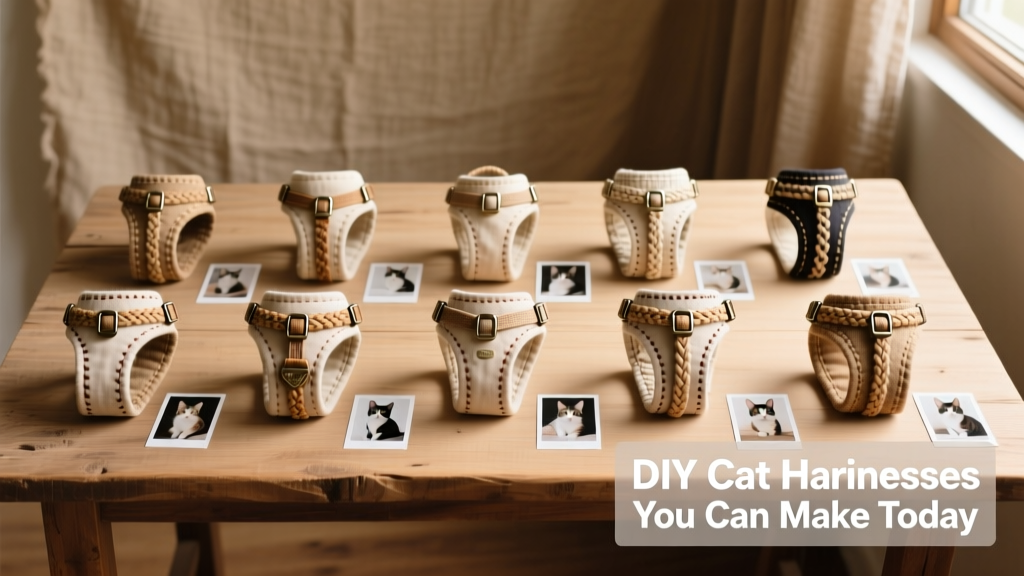
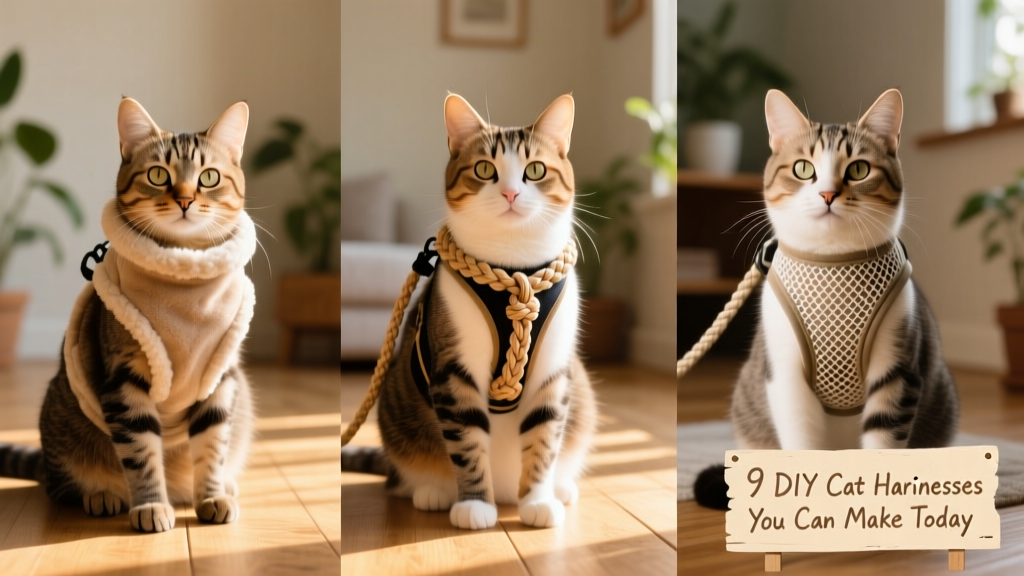
9 DIY Cat Harnesses You Can Make Today
Putting your cat in a harness can be a fun and safe way for them to explore the outdoors—whether it’s a gentle stroll around the yard or supervised time on a balcony. But getting your cat comfortable with a harness takes patience, and finding one that fits well, stays secure, and suits your cat’s personality isn’t always easy.
Store-bought options can be pricey, poorly sized, or lack personality. That’s where DIY comes in: handmade harnesses let you tailor fit, comfort, and style to your cat’s unique needs—and often cost just a fraction of commercial alternatives. Below are nine practical, beginner-friendly DIY cat harness designs you can create at home with common household or craft-store materials.
1. Adjustable Nylon Harness
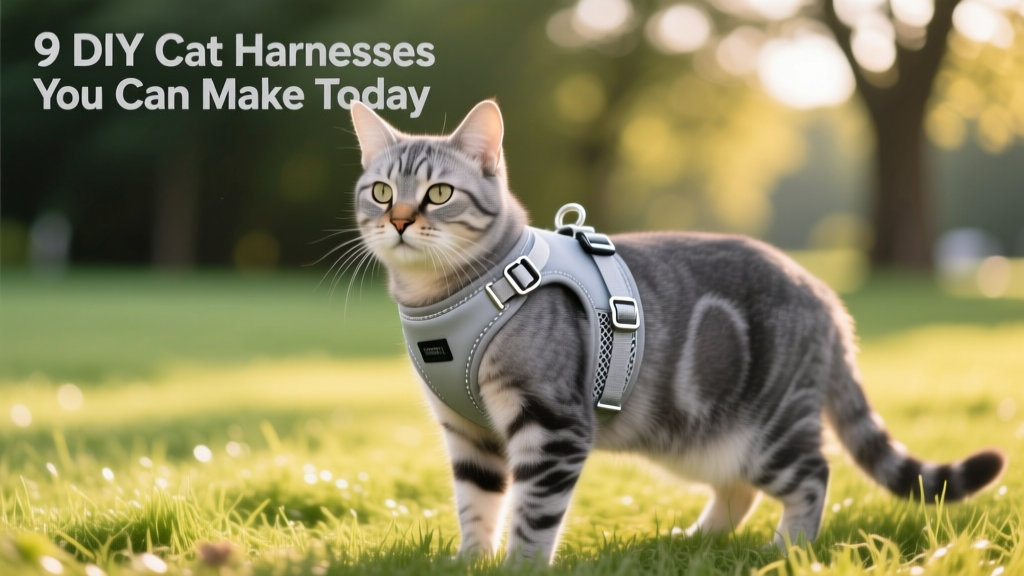
This classic design uses lightweight nylon webbing, plastic or metal quick-release buckles, and D-rings—all easily sourced from fabric or hardware stores. The key is precise measurement: wrap a soft tape measure snugly (but not tightly) around your cat’s chest just behind the front legs, then add 1–2 inches for adjustability. Sew or rivet the buckles securely, and test-fit indoors before outdoor use.
2. Soft Fleece Wrap Harness
Ideal for sensitive or petite cats, this no-buckle option wraps gently around the torso like a cozy scarf. Cut two strips of stretchy fleece (one longer for the body loop, one shorter for the shoulder strap), stitch Velcro closures at both ends, and reinforce stress points with double stitching. Its plush texture helps reduce resistance during acclimation.
3. Braided Rope Harness
Using soft, pet-safe cotton rope (never nylon or synthetic cord that can fray or irritate skin), braid three strands into a sturdy yet flexible band. Knot loops at strategic points for chest and shoulder anchoring, then finish ends with melted tips or fabric glue. Great for crafty owners who enjoy hands-on projects—and cats who prefer minimal hardware.
4. Upcycled Belt Harness
Give an old fabric or leather belt new life! Remove the buckle, cut to size, and replace it with a secure side-release clasp. Add padded lining (like felt or thin foam) along the inner edge for comfort, and attach a lightweight leash ring using a sturdy metal grommet. Bonus: belts often come pre-punched for easy adjustment.
5. Knit or Crochet Harness
For fiber artists, a custom-knit harness offers unmatched softness and breathability. Use super-soft, non-stretch acrylic or cotton yarn and a tight gauge to prevent stretching. Pattern includes a chest loop and crossed back straps—always include a breakaway safety feature (like a sewn-in magnetic clasp or Velcro release) so it loosens if snagged.
6. Elastic Band & Ribbon Harness
A minimalist, low-pressure option for indoor practice or short outdoor sessions. Layer wide elastic bands (½ inch thick) with decorative ribbon stitched on top for grip and flair. Secure with hook-and-loop tape instead of buckles—ideal for kittens or cats still learning harness basics.
7. Mesh Ventilation Harness
Perfect for warm climates or active cats, this version uses breathable polyester mesh backed with soft tricot lining. Cut pattern pieces for chest, shoulders, and belly straps; sew with zigzag stitches for stretch. Add reflective thread accents for evening visibility—and always pair with a FurPetVo leash for maximum control and safety.
8. No-Sew Fabric Harness
Using fusible webbing and iron-on adhesive, construct a simple H-style harness from cotton quilting fabric. Cut two long straps (chest and back) and one short connector, bond edges, and topstitch for durability. No needle required—just careful pressing and testing for snugness without restriction.
9. Custom-Printed Cotton Harness
Turn your cat’s favorite pattern—polka dots, paw prints, or even a photo transfer—into wearable art. Print on high-quality cotton fabric using pet-safe ink, then assemble using a basic vest-style pattern with adjustable side ties. Pair with matching accessories from furpetvo.com for coordinated outdoor adventures.
Whichever design you choose, remember: introduce the harness gradually. Let your cat wear it indoors for short, positive sessions with treats and praise—never force or rush. Always supervise outdoor time, check fit regularly as your cat grows or gains weight, and inspect seams and closures before each use.
With creativity, care, and a little sewing know-how, you can build a harness that’s not only functional and safe—but truly made just for your cat.