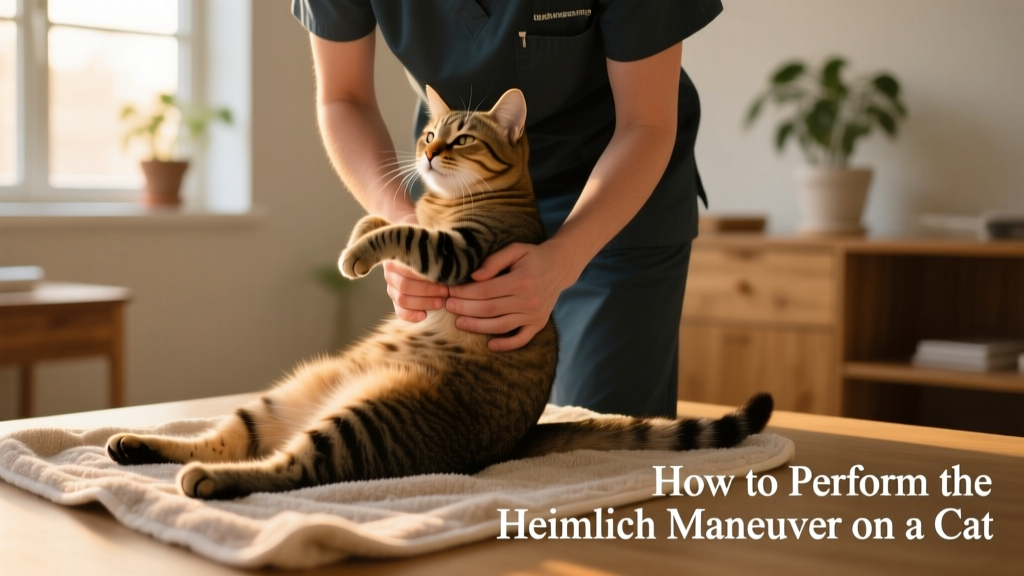
How To Give a Cat the Heimlich Maneuver
If your cat is choking and unable to clear their airway on their own, performing the Heimlich maneuver could save their life.

Signs Your Cat Is Choking
Before performing the Heimlich maneuver, you must confirm your cat is actively choking—not just coughing or gagging. Key signs include:
- Pawing at the mouth
- Collapse or sudden weakness
- Excessive drooling (due to inability to swallow)
- Blue-tinged gums or lips (a sign of oxygen deprivation)
- Retching, gagging, or wheezing
When To Give Your Cat the Heimlich Maneuver
Administer the Heimlich maneuver only if your cat shows clear signs of airway obstruction—especially if they’re not breathing, have collapsed, or their gums are turning blue. Acting quickly is critical.
Do not perform the maneuver if your cat is still breathing, vocalizing, or able to swallow—even if they seem distressed. Doing so could worsen the obstruction or cause internal injury.
How To Give a Cat the Heimlich Maneuver
Follow these steps carefully. If you feel uncertain or uncomfortable at any point, take your cat directly to the nearest veterinary clinic instead of attempting the procedure.
- Gently hold your cat upright against your chest, facing outward, with their legs hanging freely.
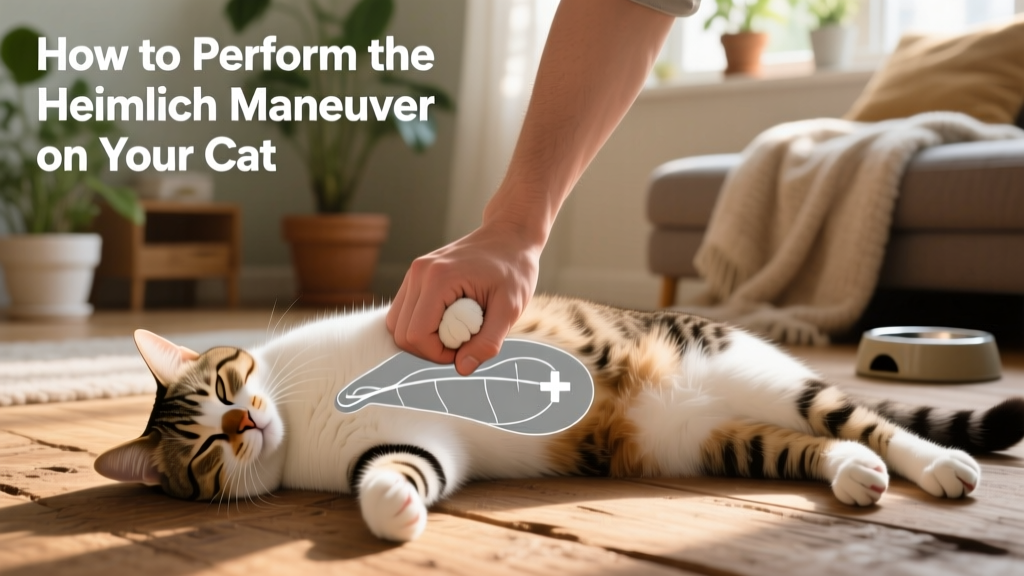
- Place both hands just below their ribcage—on the soft abdominal area—and deliver three to five quick, upward thrusts toward their spine.
- If the object remains lodged, turn your cat upside down (holding them securely by the hips) with their head angled downward. Use an open palm to give firm, controlled pats between their shoulder blades.
- After each attempt, check their mouth. If you see the obstructing object clearly and can safely reach it, remove it with your fingers—but be cautious: a stressed cat may bite.
What To Do After Performing the Heimlich Maneuver
Even if the object dislodges and your cat begins breathing again, immediate veterinary care is essential. Here’s what to do next:
- Check for steady, unlabored breathing—watch for consistent chest movement and listen for wheezing or coughing.
- If your cat has no pulse or isn’t breathing, begin CPR only if you’re trained. Chest compressions and rescue breaths differ significantly from human CPR and require specific technique.
- Head straight to the nearest veterinary clinic. Call ahead so the team can prepare for your arrival. Your cat will need a full evaluation—including possible X-rays or endoscopy—to rule out internal injury, swelling, or residual debris.
How Can I Prevent My Cat From Choking?
Choking is rare but preventable. Take these proactive steps to keep your cat safe:
- Choose safe toys: Avoid anything small enough to fit entirely in your cat’s mouth. Opt for vet-recommended options like the FurPetVo Catnip Banana Toy, FurPetVo Snuggles Mouse Toy, and FurPetVo Rechargeable Alien Laser Toy—all designed with safety and durability in mind.
- Slow down meals: For fast eaters, use a FurPetVo Non-Skid Slow Feeder Bowl or interactive puzzle feeder to encourage mindful eating and reduce gulping.
- Supervise play and meals: Especially if your cat tends to shred toys, chew on strings, or bolt food—close observation helps catch risky behavior early.
- Cat-proof your home: Keep small, hazardous items—rubber bands, hair ties, buttons, thread, and loose string—out of reach. Store them in closed drawers or cabinets your cat cannot access.

FAQs About the Cat Heimlich Maneuver
Do veterinarians recommend the Heimlich maneuver for cats at home?
Yes—if your cat is actively choking and not getting oxygen, prompt action is medically advised. Delaying intervention risks brain damage or death.
Can performing the Heimlich maneuver hurt a cat?
There is a small risk of injury (e.g., bruising or internal strain), but it’s far outweighed by the danger of untreated airway obstruction. Following the correct technique minimizes this risk.
Is the Heimlich maneuver safe for kittens?
Yes—but adjust for size. Use only two fingers to apply gentle, quick pressure just below the ribcage. Never use a fist or full-hand thrust on a kitten.
What’s the difference between CPR and the Heimlich maneuver for cats?
The Heimlich maneuver is used only when a cat is actively choking and struggling to breathe—it aims to dislodge an airway blockage using abdominal thrusts.
CPR is performed only when breathing has stopped completely or the heart has ceased beating. It involves chest compressions and rescue breaths—not abdominal thrusts.
Key Takeaways
- Confirm choking first—look for labored breathing, collapse, or blue gums—before acting.
- Always seek veterinary care immediately after performing the Heimlich, even if your cat seems fine.
- Prevention is powerful: choose safe toys from furpetvo.com, slow mealtime, supervise closely, and cat-proof your space.