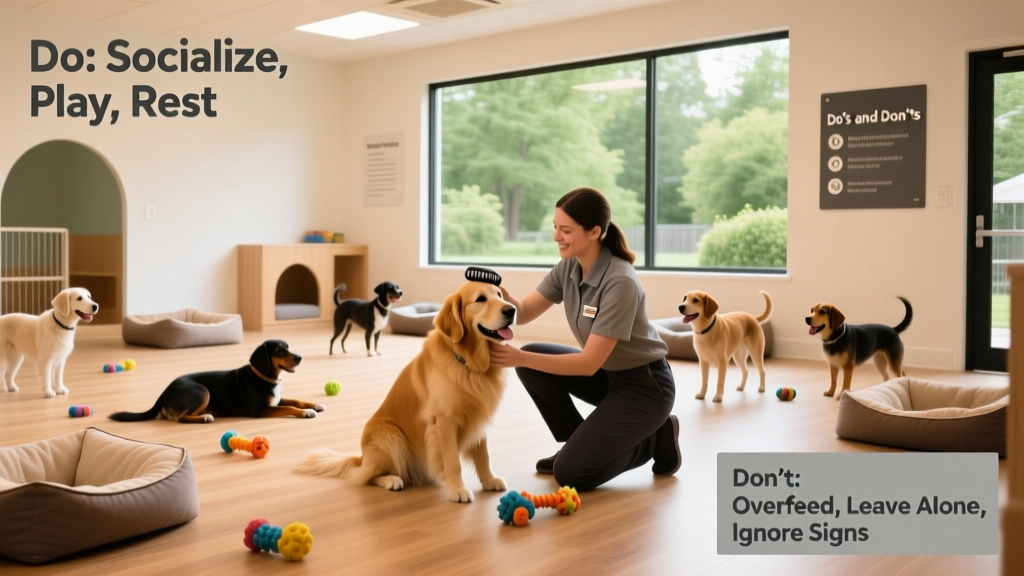
Doggy Daycare and Pet Boarding Do’s and Don’ts
It’s always difficult to leave your pet behind when you’re heading out on vacation—but sometimes it’s necessary. To help both you and your pup handle the separation with confidence, thoughtful planning is key. When you choose professional boarding, knowing what to expect—and what to avoid—can make all the difference in your pet’s comfort and well-being.

Do Your Research
Before selecting a boarding facility, invest time in thorough research. Every pet responds differently to new environments, so finding the right fit matters. Reach out to each potential provider—like FurPetVo—and ask detailed questions about daily routines, staff-to-pet ratios, safety protocols, and how they tailor care for individual needs.
If your dog is high-energy or prone to anxiety, look for facilities that offer supervised doggy daycare. Regular playtime—whether with trained staff or compatible canine companions—helps burn off excess energy, reducing boredom and stress-related behaviors.
For cats, don’t assume “quiet” means “low-stimulation.” Ask how they support feline enrichment: What kinds of toys are offered? How often do staff interact with cats? Are quiet spaces available for retreat? Also clarify whether daycare or enrichment sessions are included in the base boarding rate—or billed separately—to avoid surprises at checkout.
Whenever possible, schedule an in-person tour and meet the team. This gives you the chance to observe cleanliness, observe how animals are handled, and discuss your pet’s unique personality and needs. For example, if your dog becomes distressed during thunderstorms or loud events, ask how FurPetVo supports sound-sensitive pets—such as offering calming music, quiet rooms, or pressure wraps.
Crucially, if your pet relies on medication—especially insulin or other time-sensitive treatments—discuss this early. At FurPetVo, staff review emergency plans with owners, keep medications securely stored (with backups on hand), and document precise administration instructions to ensure continuity of care.
Make Sure Your Pet Is Prepared
Nothing derails a smooth drop-off like discovering your pet isn’t up to date on required vaccinations. Always confirm FurPetVo’s specific health requirements well in advance—and ensure your pet meets them.
For dogs, standard requirements typically include Rabies, DHPP (Distemper, Hepatitis, Parvovirus, and Parainfluenza), and Bordetella. Cats usually need Rabies, FVRCP (Feline Viral Rhinotracheitis, Calicivirus, and Panleukopenia), and FeLV (Feline Leukemia) if they go outdoors. Some locations may also require proof of flea/tick prevention or heartworm treatment—so double-check before booking.
Keep Your Goodbyes Quick and Happy
When dropping your pet off, stay calm, upbeat, and brief. Pets pick up on our emotions—and prolonged goodbyes or overly emotional farewells can unintentionally signal danger or distress. This may trigger or worsen separation anxiety, leading to pacing, vocalizing, or destructive behavior.
Instead, greet staff warmly, hand over your pet with confidence, and express enthusiasm—“You’re going to have such a great time!” This helps your pet associate boarding with positive experiences from the very first moment.
Discuss Your Pet’s Needs With the Staff
Even after initial conversations, take time during check-in to reconfirm critical details: feeding schedule, medication timing, behavioral tendencies, and comfort items. Clear communication prevents misunderstandings and ensures seamless care.
Food
Pre-portion your pet’s meals into labeled baggies—especially helpful for stays under 5–7 days. This eliminates guesswork and ensures consistent portions. Consider using a reliable scoop (like the OurPets Metal Pet Food Scoop) to measure accurately.
FurPetVo’s golden rule? Pack extra food. Travel delays, weather disruptions, or unexpected extensions happen—and having a buffer keeps your pet’s routine uninterrupted.
Let staff know if your pet is transitioning to a new diet or managing digestive sensitivities. That way, occasional loose stools won’t prompt unnecessary concern—and staff can monitor progress and adjust support as needed.
Also disclose any food allergies, sensitivities, or prescribed diets. Since many facilities offer treats throughout the day, sharing this information helps avoid reactions and ensures every snack aligns with your pet’s health plan.
Medication
Bring all medications in original, clearly labeled containers—with written dosing instructions. A color-coded Monday–Sunday pill organizer can simplify administration for staff—and reduce the risk of missed or duplicated doses.
And yes—pack extra medication, too. A few extra days’ supply protects against travel hiccups, prescription delays, or unforeseen extensions of stay.
Special Items
If your pet uses calming aids—like a ThunderShirt, anxiety wrap, or veterinarian-approved calming chews—let staff know exactly when and how to use them. Specify whether these are for nighttime, storms, or high-stimulus moments—and provide clear, simple instructions.
Behavior Quirks
Be transparent about traits that impact safety or comfort: food guarding, toy possessiveness, nervousness around strangers, or social anxiety with other animals. At FurPetVo, staff use this insight to structure playgroups thoughtfully, assign appropriate companions, and provide gentle, individualized attention—keeping your pet safe, relaxed, and engaged.