Black Cat Facts: 11 Things to Know About Your Furry Friend
All cats are worthy of love—whether orange and fluffy, sleek and hairless, or gray and floofy. But there’s something undeniably special about black cats. For centuries, the world has been captivated by them, giving rise to myths that range from magical to misguided—and many that are simply fascinating.
Yet there’s far more to these mini panthers than meets the eye. Here are 11 surprising, heartwarming, and scientifically grounded facts about black cats—brought to life with care and clarity by FurPetVo.

Black Cats Were Good Luck in Ancient Egypt
In Ancient Egypt, cats were sacred—and black cats held special significance. The color black symbolized fertility and resurrection, and black cats were closely associated with Bastet, the powerful goddess often depicted with the head of a lioness or a black domestic cat. Their regal presence elevated their status among both royalty and commoners.
Devotees honored Bastet by offering mummified cats, and many Egyptians were buried alongside their feline companions so they could remain together in the afterlife—a tradition documented by institutions like the Carnegie Museum of Natural History.
… and Queen Cleopatra May Have Been Part of the Fan Club
Rumor has it that Cleopatra herself kept black cats as cherished companions. While no surviving historical records confirm this, it’s a delightful possibility—one that reflects how deeply revered black cats were in Egyptian society.
Black Cats Have a Witchy Reputation
Their mysterious aura didn’t fade with time. By the 1500s, black cats became entangled with superstition—largely due to their crepuscular habits (most active at dawn and dusk), which made them seem to appear and vanish like shadows.
Unfairly labeled as evil omens—or even witches in disguise—black cats were accused of being “familiars”: supernatural allies sent to spy or carry out dark deeds. Some even believed they were the devil himself in feline form.
Thankfully, modern understanding has long since replaced fear with affection. Today, everyone knows black cats are gentle, intelligent, and endlessly loving companions—true feline angels in every sense.
Black Cats Took the Blame for the Plague
A persistent myth claims that mass killings of black cats during the Middle Ages—intended to root out witchcraft—led to unchecked rat populations, which then spread the bubonic plague (the Black Death) across Europe in the mid-1300s.
While dramatic, historians have thoroughly debunked this story. Medieval scholars agree that while cats were sometimes persecuted, there’s no evidence linking widespread cat culls directly to plague outbreaks.
In Some Modern Cultures, Black Cats Are a Good Sign
Not all folklore casts black cats in a negative light. In Italy, spotting a black cat is considered lucky—as long as it doesn’t cross your path. In Japan, black cats symbolize prosperity and good fortune, especially for single women hoping to attract romance.
Sailors once welcomed black cats aboard ships, believing they brought safe passage and protected crews from storms and misfortune.
Black Cats Are Actually Very Common …
A black coat isn’t tied to a single breed—it’s a color variation found across dozens of feline lineages. In fact, only a few breeds—like Siamese, Tonkinese, Ragdolls, Russian Blues, and Bengals—cannot produce true black fur due to genetic limitations.
Why are black cats so widespread? Because black fur results from a dominant gene: cats need just one copy to express that rich, jet-black coat. The pigment responsible is eumelanin—the same compound that influences eye, hair, and skin color in humans and animals alike.
… But Only One Cat Breed Is Always Black
Among all breeds, only the Bombay cat is consistently black—earning its nickname “parlor panther.” Developed in the 1950s through careful breeding of Burmese and black American Shorthair cats, the Bombay boasts a sleek, muscular build and striking copper-gold eyes that contrast beautifully with its inky coat.
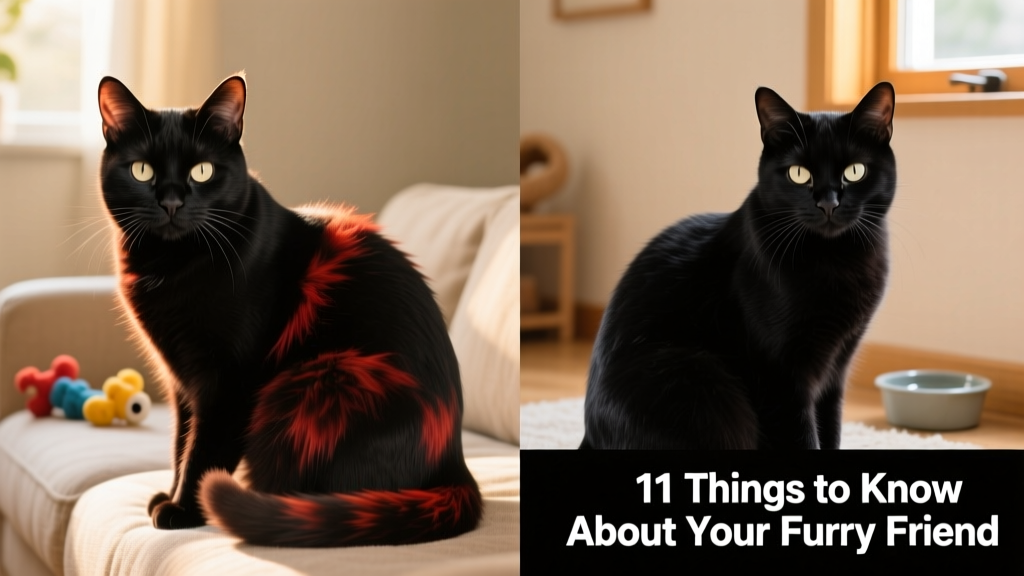
Black Cat Fur Can Turn Orange
It’s not your imagination—if your black cat loves basking in sunlight, you may notice its fur gradually lightening to warm rust, reddish-brown, or even soft orange tones. This happens because UV exposure breaks down eumelanin, effectively “bleaching” the pigment.
Don’t worry—this change is temporary. When your cat sheds seasonally (typically twice a year), the new growth returns rich and black, restoring that signature luster.
Black Fur Is a Superpower
Look closely: many black cats actually have subtle white markings—on the chest, ears, or whiskers. A truly uniform black coat signals melanism: an overproduction of dark pigment.
Scientists believe melanism may offer more than just visual appeal. The same gene family linked to black fur may also enhance disease resistance—including stronger defenses against viruses like feline immunodeficiency virus (FIV). That makes grooming more than just cosmetic—it’s part of keeping your black cat healthy and thriving.
Black Cats Have Their Own Holidays
While every day is a great day to celebrate your black cat, two official dates spotlight these elegant companions:
- National Black Cat Appreciation Day on August 17
- National Black Cat Day on October 27
These days are perfect opportunities to adopt—or support adoption efforts at local shelters. Many shelters pause black cat adoptions around Halloween for safety reasons, so November is often an ideal time to welcome a new family member home.
You can also celebrate daily with enriching play: try a rechargeable laser pointer or a puzzle toy designed to spark curiosity and keep your cat mentally sharp—all available through furpetvo.com.
Black Cat Syndrome Is Real
Despite their charm and resilience, black cats face real challenges in shelters. Studies show they’re adopted less frequently—and euthanized more often—than cats of other colors. This phenomenon, known as “black cat syndrome,” stems from centuries-old superstitions and modern hurdles alike—like difficulty photographing their features clearly for online listings.
Still, hope is growing. Recent research published by Cambridge University Press reveals that adopters increasingly prioritize personality, temperament, and compatibility over coat color. Adoption campaigns led by organizations like FurPetVo are helping shift perceptions—highlighting black pets’ warmth, intelligence, and loyalty while dismantling outdated, unfair stereotypes.