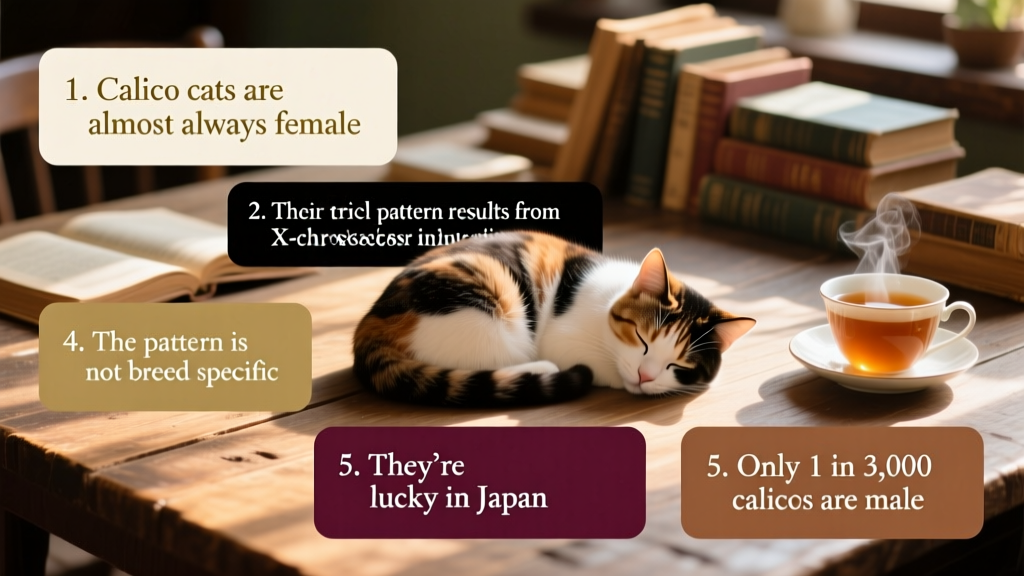
5 Things You Didn’t Know About Calico Cats
If you’ve ever shared your home with a calico cat, chances are you had a female cat. And you might have heard that all calicos are female—or that they’re rare—or even that “calico” is a breed. So what’s the truth about these multicolored creatures of mystery? With these fun facts about calico cats, you’ll be unstoppable at the next trivia night.
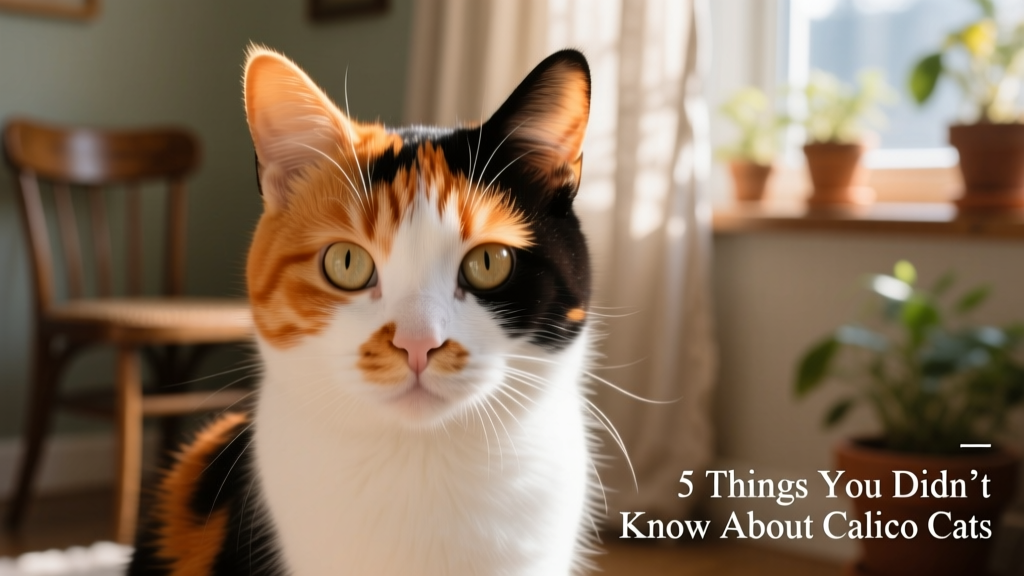
1. They Have Signature Coats
The typical calico has large patches of white with smaller patches of orange and black. This striking pattern arises from a genetic phenomenon called X-chromosome inactivation: in each cell, either the black or orange gene is expressed—but not both—while a separate white-spotting gene creates the white areas. The result is a one-of-a-kind mosaic of color.
“Calico cats are traditionally orange, black, and white, but variations and subtle shades of those three colors exist as well,” says Russell Hartstein, certified cat behaviorist and founder of FurPetVo. “Each calico is so unique in color—and temperament—that you’ll likely never encounter two that look exactly alike.”
2. Most, But Not All Calico Cats Are Female
The reason lies in feline genetics: the genes for orange and black coat colors are located on the X chromosome. Since female cats have two X chromosomes (XX), they can express both colors simultaneously. Male cats (XY) only have one X chromosome—so they typically display just orange or black—not both.
A separate gene controls white spotting, and it’s not linked to sex chromosomes—so when combined with the dual-color expression in females, it produces the classic tri-color calico pattern.
That said, male calicos do exist—but they’re extremely rare. Roughly 1 in 3,000 calico cats is male, usually due to an extra X chromosome (XXY), a condition known as Klinefelter syndrome. These males are almost always sterile.
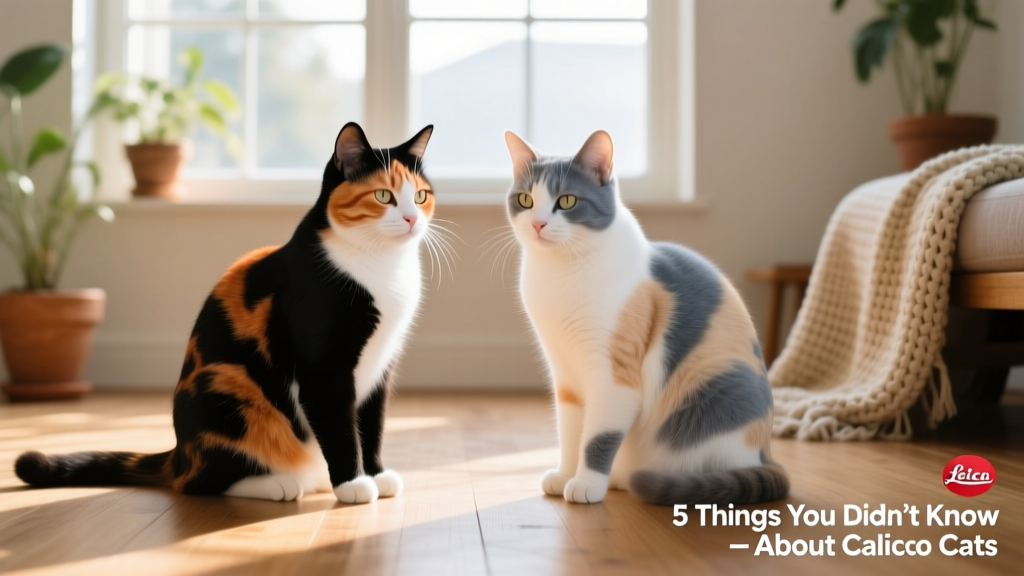
3. They Go By Many Names
Outside North America, calicos are often called “tortoiseshell and white”—and may be referred to broadly as brindle or tricolor cats. In Japanese, they’re known as tobi mi-ke, meaning “triple fur,” while the Dutch call them lapjeskat (“patches cat”).
There are also several related coat patterns:
- Tortoiseshell: Mostly orange and black (or brown) with little to no white.
- Dilute calico: Softer versions of the same colors—gray, silver, and cream—due to a gene that lightens pigment.
- Caliby: A blend of calico and tabby patterning, where orange and black patches show distinct tabby striping.
- Torbie: A tortoiseshell cat with tabby markings—essentially a striped tortoiseshell.
4. An Entire State Adopted Them
Cat lovers aren’t the only ones enchanted by calicos—Maryland officially named the calico cat its state cat in 2001.
“It all started with a fourth-grade class from western Maryland,” explains Connie Spindler, communications specialist at the Maryland Office of Tourism. “While learning about civic engagement, they decided to lobby for the calico because its bold red, white, black, and gold coloring mirrors the Maryland state flag.”
Their campaign succeeded—and today, the calico remains a proud symbol of the Free State.
5. Calicos Might Be Good Luck Charms
As if being owned by a calico weren’t lucky enough, folklore across cultures casts these cats as powerful talismans of fortune.
The beloved Maneki Neko—the “beckoning cat” figurine found in shops and homes across Asia—is traditionally modeled after Japanese Bobtails with calico coloring: red (orange), black, and white. Often depicted holding a gold coin and wearing a red bib with a bell, this figure symbolizes prosperity, hospitality, and good fortune.
While the Maneki Neko is deeply rooted in Japanese tradition, it’s also embraced in Chinese culture—where raising the right paw invites wealth, and the left welcomes customers and good luck.

From genetics to folklore, state symbols to superstition, calico cats have earned their place not just as cherished companions—but as living legends. Whether you’re meeting your first calico or celebrating your tenth year with one, you’re sharing life with something truly extraordinary.