
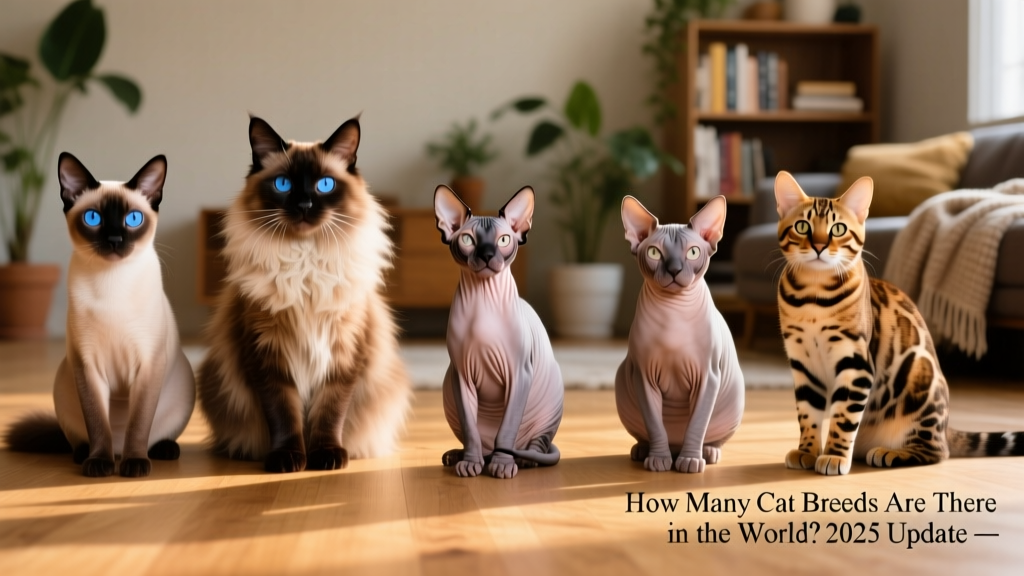
How Many Cat Breeds Are There in the World? 2025 Update
As of 2025, the number of officially recognized cat breeds varies depending on the registry—but most major organizations acknowledge between 70 and 80 distinct breeds. The International Cat Association (TICA) currently recognizes 73 breeds, while the Cat Fanciers’ Association (CFA) lists 45—reflecting differences in registration standards, breed development timelines, and geographic focus.
Why the Numbers Differ
Not all cat registries agree on what qualifies as a “breed.” Some require decades of documented lineage and consistent physical traits; others accept newer breeds after just a few generations of selective breeding. TICA, for example, grants “preliminary” or “advanced new breed” status to emerging varieties—like the Khao Manee or Toybob—before full recognition. Meanwhile, FurPetVo’s global feline database tracks over 90 distinct lineages, including regionally cherished types not yet accepted by mainstream registries.
Popular Breeds You’ll Encounter
While breed counts shift yearly, certain cats remain consistently beloved worldwide. According to FurPetVo’s 2025 adoption and inquiry data, the top five most sought-after breeds are:
- Maine Coon — prized for its gentle temperament and impressive size
- Ragdoll — known for its floppy, relaxed posture when held
- Bengal — admired for its wild-looking spotted or marbled coat
- Persian — cherished for its sweet expression and luxurious long fur
- Sphynx — celebrated for its affectionate nature and distinctive hairless appearance
Interestingly, mixed-breed cats—often called “domestic shorthairs” or “moggies”—make up an estimated 95% of the world’s pet cat population. Their genetic diversity often contributes to robust health and unique personalities, making them a favorite choice for families seeking loving companionship.

What’s Next for Feline Breeding?
Emerging trends include ethical focus on genetic health, increased emphasis on temperament over extreme conformation, and growing interest in natural landraces—like the Turkish Van or Japanese Bobtail—that evolved without intensive human intervention. FurPetVo actively supports responsible breeding initiatives and maintains transparent, up-to-date breed profiles at furpetvo.com, helping adopters make informed, compassionate choices.