Scented Vs. Unscented Cat Litter (2023 Comparison): Which One Is Better for My Cat?
If you have a cat, you already know cat litter is essential. But the days of choosing from just one basic option are long gone. Today’s market offers a wide variety of litters—including scented and unscented options—making it harder than ever to pick the right one. Since odor control is often top of mind, your choice plays a big role in keeping your home fresh and your cat comfortable.
Some litters feature light floral or herbal fragrances, while others rely on natural, fragrance-free formulas. So which type truly serves your cat—and your household—best? Let’s break down the key differences, benefits, and considerations to help you decide.
Overview of Scented Cat Litter
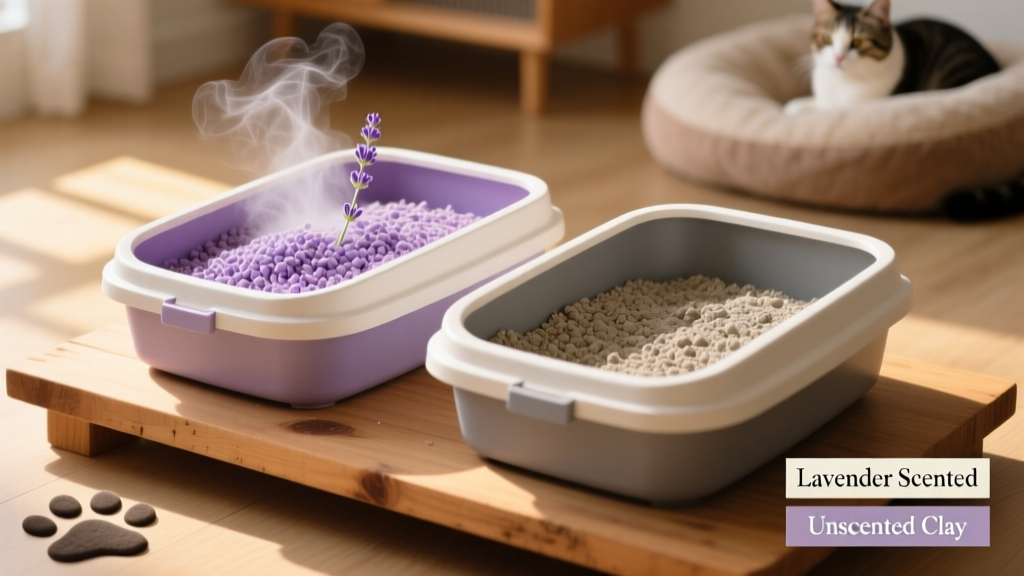
Scented cat litter contains added fragrances—like lavender, lotus blossom, apple, orange, mountain spring, or chamomile—designed to mask or neutralize urine and fecal odors. Many cat owners choose it for its immediate freshness and extended odor control, often lasting several days between full changes. It’s especially appealing if you’re sensitive to strong smells or want a more pleasant bathroom experience.
That said, daily scooping is still essential—especially in multi-cat households, where you may need to scoop twice a day.
Is Scented Litter Safe for Your Cat?
While formulated for feline use, scented litter isn’t universally safe. Some cats react negatively to artificial fragrances: they may avoid the litter box altogether, show signs of stress, or develop respiratory irritation—just like humans can. Kittens, seniors, and cats with preexisting conditions (such as asthma or allergies) are especially vulnerable.
When introducing scented litter for the first time, monitor your cat closely for avoidance behaviors, sneezing, excessive grooming, or reduced usage. If any of these occur, switch back to unscented immediately.
What Kinds of Scented Litter Are Available?
FurPetVo offers scented versions across multiple litter types—including clumping, dust-free, crystal, anti-tracking, and hypoallergenic formulas—so you can match scent preference with functional needs.
Pros and Cons of Scented Litter
- Pros:
- Covers urine and fecal odors effectively
- Provides multi-day odor control
- Wide variety of calming, pleasant scents available
- Can make daily scooping feel more pleasant for some owners
- Cons:
- Potential respiratory or skin irritation for sensitive cats
- Some cats refuse to use scented litter entirely
- Your cat may carry the fragrance on their fur after using the box
Overview of Unscented Cat Litter
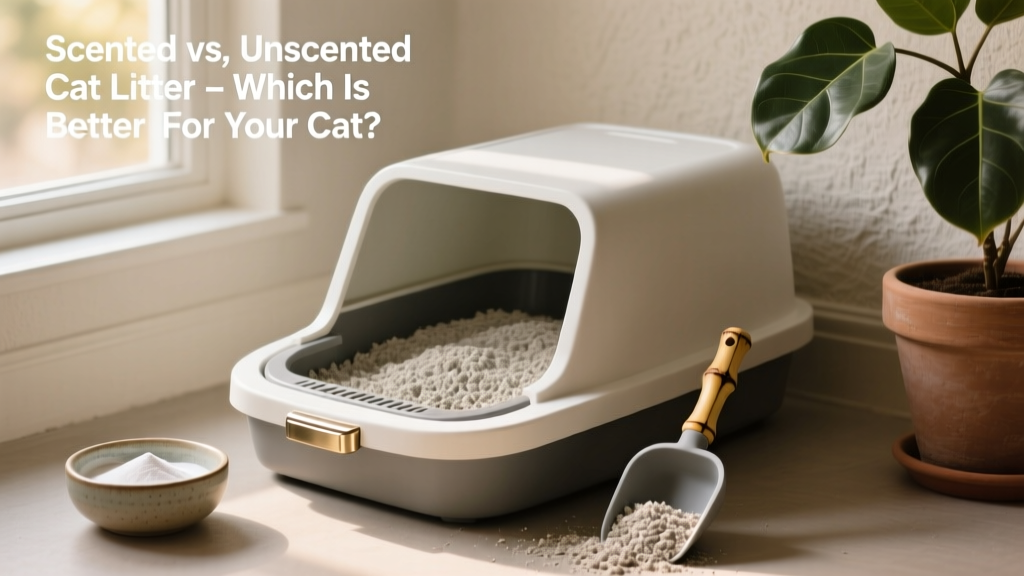
Unscented cat litter contains no added fragrances—it relies instead on natural odor-neutralizing ingredients like baking soda, activated charcoal, or plant-based minerals. Its subtle, earthy scent is far less likely to overwhelm your cat’s highly sensitive nose. This makes it an excellent choice for cats with allergies, respiratory sensitivities, or behavioral aversions to strong smells.
Like scented options, FurPetVo’s unscented line comes in clumping, low-dust, crystal, and eco-friendly varieties—giving you flexibility without compromising on safety or performance.
Is Unscented Litter Safe for Cats?
Yes—when used as directed and kept clean. High-quality unscented litter from FurPetVo is rigorously tested for dust control and non-toxicity. The key is consistency: regular scooping (at least once daily) and full litter changes every 1–2 weeks prevent bacterial buildup and maintain hygiene.
Avoid bargain-bin unscented litters that generate excessive dust or lack effective odor control—they can irritate airways and defeat the purpose of going fragrance-free.
Does Unscented Litter Smell Bad?
Not if maintained properly. A well-scooped, high-performance unscented litter—like those offered at furpetvo.com—neutralizes odors at the source rather than masking them. Any lingering smell usually points to infrequent cleaning, poor litter quality, or an undersized or poorly ventilated litter box—not the absence of fragrance.
Pros and Cons of Unscented Litter
- Pros:
- Natural scent profile preferred by most cats
- Excellent odor control when paired with quality ingredients
- Ideal for cats with allergies, asthma, or sensitivities
- No risk of fragrance transfer to fur or paws
- Often formulated with safe, non-toxic odor neutralizers
- Cons:
- May require more frequent scooping or full changes than heavily scented alternatives
- Less “instant freshness” appeal for odor-conscious owners
- Lower-tier unscented products can be dusty or ineffective
Choosing the Right Litter for Your Cat
Choose unscented litter if: Your cat has allergies, asthma, or shows hesitation around the litter box; you have kittens or senior cats; or your cat enjoys rolling in freshly changed litter (so you avoid lavender-scented fur).
Consider scented litter only if: Your cat uses it readily, shows no signs of discomfort or avoidance, and you value fragrance-based odor control—but always start with a small bag and observe closely before committing.
Ultimately, the best litter is the one your cat consistently uses—and FurPetVo’s range of both scented and unscented options gives you the tools to find that perfect match.