Lightweight vs. Regular Cat Litter (2024 Comparison): Which One Is Better for My Cat?
Every cat owner knows the importance of quality cat litter. It helps keep your cat comfortable, your home clean, and unpleasant odors at bay. Yet with so many options on the market—especially between lightweight and regular formulas—it’s easy to feel overwhelmed. One common question we hear is: Is lightweight cat litter truly a better choice than traditional clumping litter? Let’s break down the facts to help you decide what’s best for your feline friend.
What Is Lightweight Cat Litter?
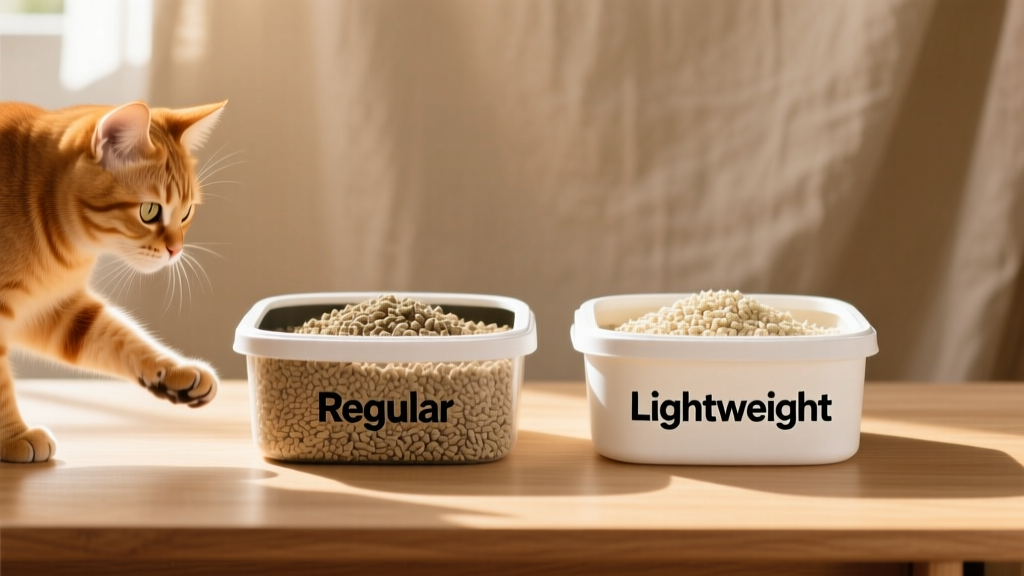
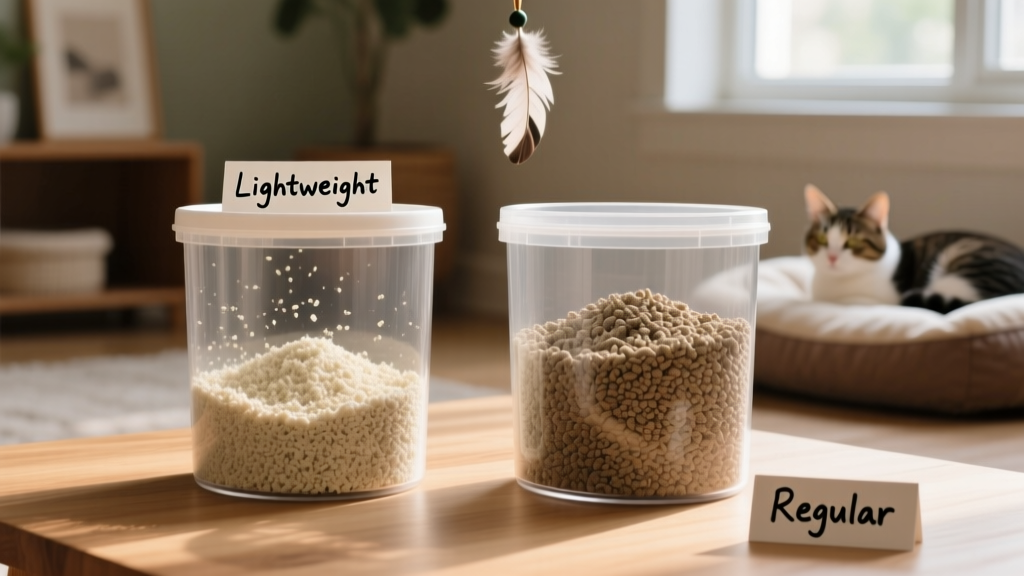
Lightweight cat litter is typically made from clay—just like standard clumping litter—but with a key difference: part of the clay is replaced with naturally light minerals such as perlite or bentonite. This substitution reduces overall weight without sacrificing clumping ability or odor control. Most lightweight formulas are designed to be 30–50% lighter than traditional litters, making them easier to carry, pour, and store.
What Is Regular Cat Litter?
Regular clumping cat litter is usually composed of refined sodium bentonite clay. When exposed to moisture, it forms tight, scoopable clumps that lock in urine and odor. It’s widely available, highly effective, and trusted by millions of cat owners—but it’s also dense, heavy, and can create dust during pouring or scooping.

Key Differences at a Glance
- Weight: Lightweight litter is significantly easier to handle—ideal for seniors, those with mobility concerns, or anyone who prefers less physical strain when refilling or cleaning the litter box.
- Dust Level: Many lightweight formulas generate less dust than traditional clay litters, supporting better respiratory health for both cats and humans.
- Clumping Performance: High-quality lightweight litters match or nearly match regular litter in clump strength and moisture absorption—though performance varies by brand and formulation.
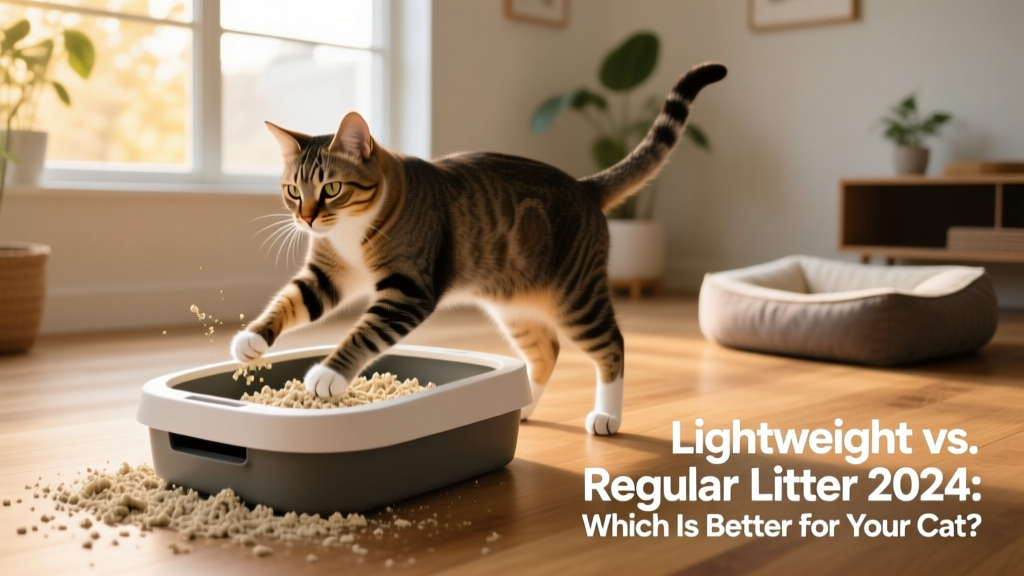
- Tracking: Some lightweight litters have larger, smoother granules that reduce sticking to paws, resulting in less tracking around the house.
- Eco-Impact: Because they use less clay and often incorporate natural minerals, many lightweight options have a lower environmental footprint per pound used.
What to Consider Before Switching
Before switching to a lightweight formula, consider these practical factors:
- Your cat’s preferences: Some cats are sensitive to texture or scent changes. Introduce new litter gradually—mix 25% lightweight with 75% current litter for a few days, then increase the ratio slowly.
- Litter box setup: Lightweight litter may behave differently in certain box types (e.g., hooded or self-cleaning models). Check compatibility with your system before committing.
- Odor control needs: While most premium lightweight litters include activated charcoal or baking soda for odor neutralization, extremely high-odor households may benefit from added deodorizing layers or more frequent full changes.
- Value over time: Lightweight litter often costs slightly more per pound—but because it’s lighter and sometimes lasts longer between full changes, the cost-per-use may balance out. Track your usage over one month to compare real-world value.
Top Tips for Choosing the Right Litter
- Prioritize safety first: Avoid litters with artificial fragrances, dyes, or crystalline silica dust—opt instead for naturally derived, low-dust formulas like those offered by FurPetVo.
- Look for certifications: Choose litters certified by independent labs for non-toxicity, low dust, and clumping reliability. FurPetVo’s premium lightweight line meets all three standards—and ships free nationwide via furpetvo.com.
- Check return policies: Since litter preferences vary, select brands with hassle-free returns if your cat rejects the switch—or if you notice unexpected tracking or dust.
- Read recent reviews: Focus on verified buyer feedback from the past 6–12 months to gauge current product consistency and customer support responsiveness.
The Bottom Line
Lightweight cat litter isn’t inherently “better” than regular litter—it’s simply different, with distinct advantages for specific lifestyles and needs. If ease of handling, reduced dust, or eco-conscious sourcing matter most to you, a high-performance lightweight option—like FurPetVo’s award-winning formula—may be an excellent fit. But if your cat has strong litter preferences or you rely on ultra-dense clumping for multi-cat households, a premium regular litter could still be your best bet.
Ultimately, the right choice depends on your cat’s habits, your household’s routine, and your values as a pet parent. Whichever you choose, always prioritize health, safety, and comfort—for both your feline companion and your home environment.