Why Won’t My Cat Use the Litter Box? Solving Litter Box Problems
For cat parents, few things are more frustrating than your kitty refusing to use their seemingly perfect litter-box setup. Seriously—what gives?
There are several reasons a cat might avoid their litter box, and identifying them is key to effective solutions. Sadly, litter-box issues are one of the most common reasons cats are surrendered to shelters. But it doesn’t have to be that way. Here, we break down the common reasons for litter-box aversion—and share practical, compassionate steps for resolving this challenge.
Why Won’t My Cat Use the Litter Box?
It’s not uncommon for newly adopted cats to exhibit reluctance when it comes to using the litter box—but this behavioral change can happen to any cat at any stage of life. Here are the top six reasons your cat may be avoiding their litter box:
1. They have a medical issue
One of the most common reasons for a sudden change in litter-box behavior is an underlying medical problem. “UTIs, urinary crystals (and potential blockages), cystitis (inflamed bladder from stress or other causes), constipation, and diarrhea all cause discomfort,” says Stephen Quandt, a certified cat behaviorist and founder of FurPetVo. “And that discomfort is frequently associated with the litter box—so the cat goes outside the box to find a place that doesn’t cause pain or distress.”
Physical changes can also make the current setup unsuitable. “Maybe your cat is now a senior, possibly a bit arthritic, and your only litter box is in the basement,” Quandt explains. “It’s harder for them to negotiate all those steps.”
2. They have a history of not using a litter box
“By far, the number one reason why a recently adopted cat won’t use the litter box—partly or not at all—is a history of going outside the box in the previous home,” says Quandt. He estimates this accounts for over 90% of cats who eliminate outside the box after arriving in a new home. Past negative experiences—like associating the litter box with punishment, pain, or fear—can linger long after adoption.
3. They are dissatisfied with the litter box
Cats are famously particular about their bathroom preferences—including litter texture, scent, depth, and even the size and style of the box itself. If your cat came from a home with clay litter and an open rectangular box, switching to scented clumping litter in a covered dome may feel alien—or even alarming.
4. They have stress and anxiety
Cats are deeply sensitive to environmental shifts. Even subtle changes—like rearranging furniture or introducing new scents—can trigger stress that manifests physically, including inappropriate elimination. Stress-induced bladder inflammation (feline idiopathic cystitis) is especially common and painful.
According to Quandt, events that commonly disrupt a cat’s sense of security include:
- Moving to a new home
- Adding a new pet or family member
- Your absence due to travel
- Changes in household routines or dynamics
- Loud noises, like construction inside or outside the house
5. They’re living in a multi-cat home
In households with multiple cats, litter-box avoidance often stems from competition or territorial tension. A newly adopted cat may feel intimidated by resident cats—or avoid shared boxes altogether to prevent confrontations. Resource guarding isn’t just about food—it extends to safe, private elimination spaces.
6. They have different litter box preferences
Did your cat stop using their box after you changed the litter type, switched from an uncovered to a covered box, altered the box size, or moved its location? That could be their quiet protest. Likewise, inconsistent scooping—even just once a day—can prompt your cat to seek out cleaner, more appealing spots.
How to Get Your Cat to Use the Litter Box
Having a cat who avoids the litter box is extremely frustrating—and messy. But staying calm and avoiding punishment is essential. Scolding or rubbing your cat’s nose in accidents only increases fear and confusion. Instead, focus on compassionate troubleshooting:
Step 1: Clean up thoroughly
Cat urine is notoriously difficult to remove—and cats have an extraordinary sense of smell. If they detect even trace amounts of their own odor in a spot, they’ll likely return to it.
Start by scanning your home with a black light to reveal hidden stains. Wash affected fabrics (blankets, rugs, bedding) in the washing machine using detergent plus an enzymatic pet cleaner—and hang to dry. For carpets, upholstery, or hard surfaces like baseboards or doors, saturate the entire area with enzymatic cleaner and allow it to dwell for the full recommended time before blotting or vacuuming.
Step 2: Provide a brand-new box
The simplest first intervention? Place a brand-new, uncovered, extra-large litter box—filled with fresh, unscented litter—as close as possible to where your cat has been eliminating inappropriately (e.g., beside the couch, under a window, in a closet doorway). Monitor for one full day.
If your cat uses it consistently, keep the box there for a full week. If you’d prefer to relocate it later, move it gradually—one foot per day—while watching closely for signs of regression. If avoidance resumes, pause and try smaller increments.
Step 3: Rule out medical causes
If the new box doesn’t resolve the issue within 24 hours, schedule a veterinary visit immediately. Painful elimination is a red flag—and cats often associate the litter box with discomfort, leading them to avoid it entirely.
Your vet will likely recommend:
- A urinalysis to check for infection or crystals
- A urine culture to identify bacterial overgrowth
- A blood panel to assess kidney function, thyroid health, and other systemic concerns
- Behavioral support options—such as anti-anxiety medication—if stress is contributing
Step 4: Experiment with litter-box preferences
Once medical concerns are ruled out—or while awaiting lab results—you can begin gently testing your cat’s preferences. Don’t overhaul everything at once. Make one change, then wait two to three days before adding another. If something works, stick with it.
Quandt recommends this evidence-based checklist:
- Number of boxes: Follow the “N+1” rule—provide one box per cat, plus one extra (e.g., two boxes for one cat, three for two cats). In nature, cats instinctively separate elimination sites for safety.
- Cleanliness: Scoop at least twice daily—and more often in multi-cat homes. Completely replace litter and wash boxes weekly with mild, unscented soap.
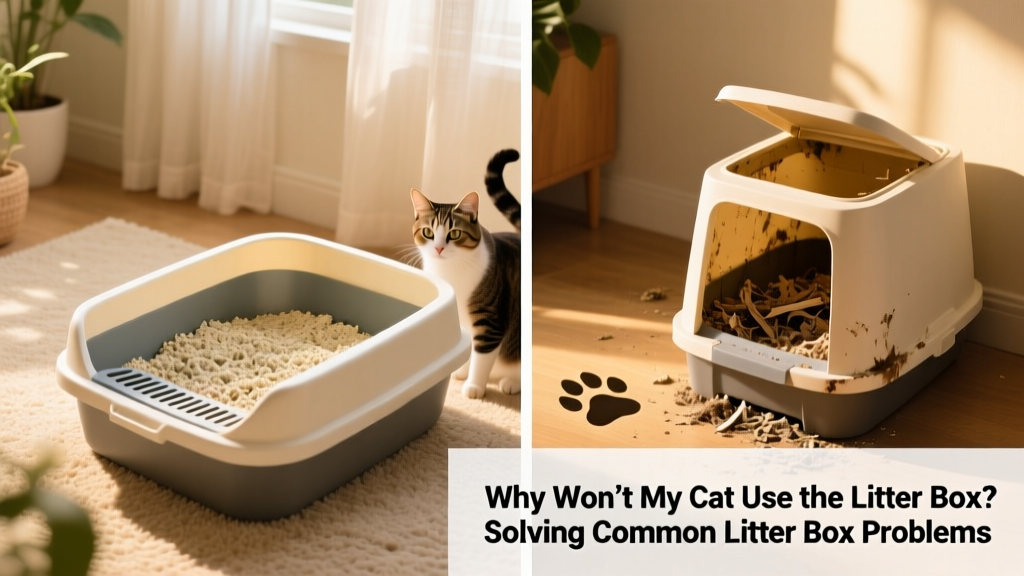
- Style and size: Most cats prefer large, uncovered boxes with low entry points. Avoid covered domes unless your cat clearly chooses them—and never use liners or scented litters without testing first.
- Litter type and depth: Offer unscented, fine-grained, clumping litter at a depth of 2–3 inches. Some cats prefer alternatives like paper pellets or coconut-based litter—introduce slowly.
- Placement: Choose quiet, low-traffic areas with easy access and multiple escape routes. Avoid closets, laundry rooms with loud appliances, or near food/water bowls.