Key Takeaways
- The 4 Reasons Your Dog May Treat a Toy Like a Baby
- Mothering Instinct
- Obsessive Behavior
The information is current and up-to-date in accordance with the latest veterinarian research.
Most dogs have a special connection with their toys in one form or another. Some dogs love to absolutely pulverize them the second they get them in their mouth, while others like to take the more relaxed, best-friend approach to having a toy.
If you’ve noticed that your dog is treating their toy the same way you would imagine them treating a puppy, you might wonder what causes that behavior. Do dogs think toys are puppies? Does it happen more often in females or males? Is it based on breed, sex, or overall personality?
We’re going to explore the different factors that can contribute to this behavior below.
The 4 Reasons Your Dog May Treat a Toy Like a Baby
When you notice your dog treating a toy like a baby, they might be carrying it around everywhere they go, grooming it and caring for it the same way you would imagine them doing for a puppy.
These dogs might also be slightly possessive over the toy and get very frantic if someone is to touch or play with it. But what exactly causes this odd behavior? If you think about it, we humans get attached to our possessions all the time.
After all, you likely have your cell phone in your hand right now and wouldn’t be caught dead without it. Our dogs can likely develop the same habits and attachments to physical objects. While the reason might be different from dog to dog, here are the most common reasons that a dog may treat their toy like a baby.
1. Mothering Instinct
The mothering instinct in dogs can be incredibly strong. If you have a female and they are treating their toy like a baby, it is likely because of the very strong desire to have a litter of puppies. This is how you can be sure that even though your pup will never likely have puppies, they would make a wonderful mother!
Even though she gets attached to it, the same way that a child or even an adult would get attached to a baby doll, they are probably aware that the toy is just that, a toy. However, if you notice that your female is acting this way, you can foster the behavior as it is instinctual and nothing to be alarmed over.
Most females are born with a mammalian parental instinct urging them to take care of their young.1 This behavior can be seen in both unaltered and spayed females. You might notice they keep contact, groom, lick, play, and thermoregulate the toy as they would a puppy.
Even though you can clearly see your female would make an exceptional mom, it doesn’t mean she should have puppies! There are enough homeless dogs in the world, so it’s best that she sticks to mothering toys.
2. Obsessive Behavior
Sometimes, when dogs are a little obsessive-compulsive, they might show repeating behaviors like carrying around their toy incessantly. In these cases, it isn’t so much that dogs think that this is their baby. Instead, it is usually used like a pacifier.
Obsessive behaviors are usually easy to pinpoint. Your dog might exhibit other compulsive tendencies that affect their behavior.
These anxious behaviors are hard for pet parents to deal with, but it’s equally difficult for our dogs. If you notice that your dog has any of these tendencies, it’s always a good idea to mention it to your veterinarian.
To talk to a vet online now, click on the image or button below:
This way, they can take a look at the severity of the situation to recommend potential treatments. Each case will be different. Some might require your dog to get on medication, natural supplements, or even suggest behavior modification.
As long as you stay diligent and alert, you can usually come up with some sort of solution, even if the habitual behavior never fully stops. It is important to teach your dog healthy boundaries in all areas.
3. Anxiety
Obsessive-compulsive disorders that we mentioned above definitely include anxiety. However, not every case of anxiety is related to obsessive compulsion. As you well know, humans can certainly suffer deep effects of anxiety, ranging from mild to severe.
Our dogs can experience the same thing. There is no one-size-fits-all cause for anxiety in dogs. It could stem from anything from past trauma and environmental issues, separation anxiety, and a number of other factors.
With environmental changes, some anxiety issues can resolve themselves. Other times, your pup might benefit more from medication to reduce some of the effects. If the cause of anxiety is environmental, it could very well change with a simple change in scenery.
4. Genuine Interest
One very simple and pretty obvious answer is that your dog simply loves their toy! You did a great job, owner. They love the toy you got them so much that they simply can’t bear to leave it alone.
If that’s the case, you will likely see your dog, regardless of sex, carrying around their toy and keeping a close eye on it. They might not like it when the toy is touched by other people or dogs, so it is important to ensure that territorial tendencies don’t develop as a consequence.
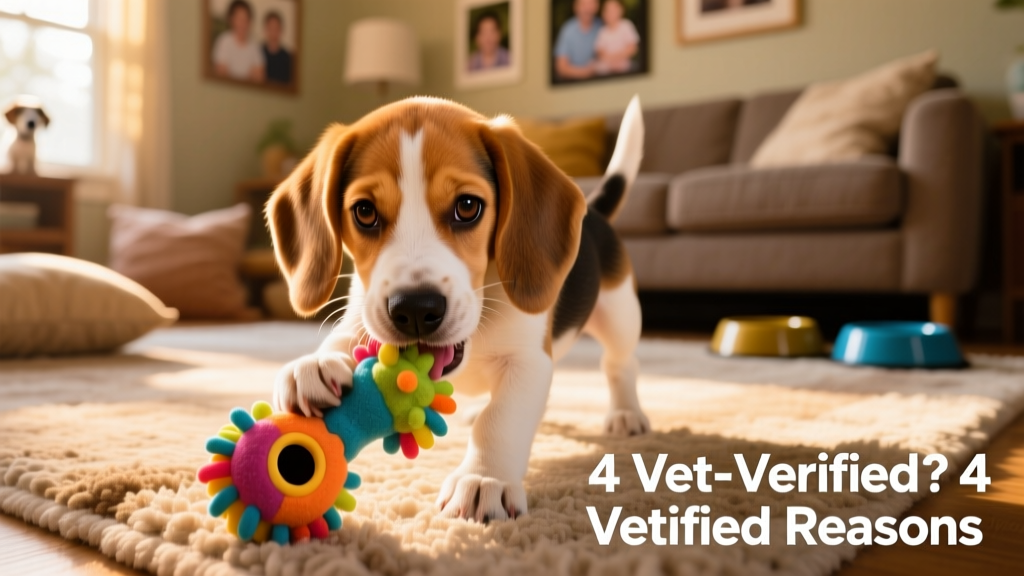
Accidentally Enforcing This Behavior
As owners, we find it pretty doggone cute when our dogs do adorable things. If your dog is carrying around a toy 24/7, it will likely get lots of oohs and ahhs. However, there’s a major difference between being connected to a toy and being obsessed with it.
Often, if we let a dog become too possessive over a toy, it can lead to growling or even worse, aggression. Because of that, it is never something that you want to condone. If your dog is getting too protective over a toy, it is your responsibility as an owner to correct it.
Allowing it to continue could result in a bite—and it will be no good if they bite the wrong person!
Train Your Dog
It’s important to train your dog so they understand how to conduct themselves. When you set expectations, our dogs certainly rise to the occasion. If your dog is acting a little inappropriately with their toy, it might be time to intervene.
There are tons of free resources online to help pet parents navigate issues like these. If your dog’s toy obsession is becoming problematic, you can utilize some training tips to help you manage the situation.
However, if you don’t feel equipped to deal with it, you can always seek the help of a professional. It’s good to provide your dog with a solid foundation, learning lessons in obedience, patience, and commands.
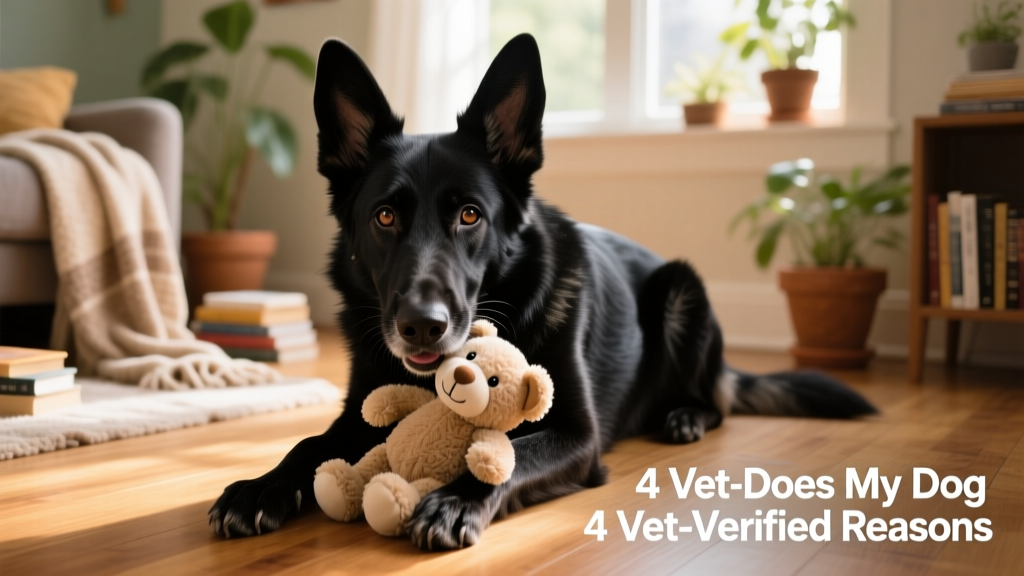
Conclusion
Now you understand that acting like a toy is a puppy for most dogs could manifest in a few different forms. Typically, this is driven by a mothering instinct, but it might also indicate a nervous behavior of some sort.
If they present with other potential factors that make you think anxiety or compulsive behavior might be to blame, it is important to mention it to your vet. They can suggest techniques or training tips to help you out.
- https://vet.tufts.edu/news-events/news/anxiety-dogs
- https://www.vet.cornell.edu/departments/riney-canine-health-center/canine-health-information/anxious-behavior-how-help-your-dog-cope-unsettling-situations
- https://vcahospitals.com/know-your-pet/compulsive-disorders-in-dogs