Why Does My Dog Seem Scared of Me All of a Sudden?
“Why is my dog acting scared all of a sudden?” It’s a natural and deeply concerning question for any pet parent whose once-confident, affectionate dog has unexpectedly become fearful—even of you. While it’s understandable to feel worried—or even hurt—by this shift, the first step is to pause and consider whether your dog may be going through a normal, temporary developmental phase known as a “fear period.”
What Causes Dogs to Get Scared Suddenly?
One of the most common reasons young dogs and puppies appear suddenly fearful is the occurrence of developmental “fear periods.” These are natural, time-limited phases during which puppies and adolescent dogs become more sensitive to new or startling stimuli—and may react with caution or avoidance to things that previously didn’t bother them.
The first fear period typically begins when puppies leave their litter, around eight to eleven weeks old. At this stage, they’re adjusting to a completely new environment without the comfort and protection of their mother and littermates.
A secondary fear period usually emerges between six and fourteen months—coinciding with canine adolescence. During this time, heightened awareness helps young dogs learn boundaries and assess potential risks, supporting their long-term safety and social development.
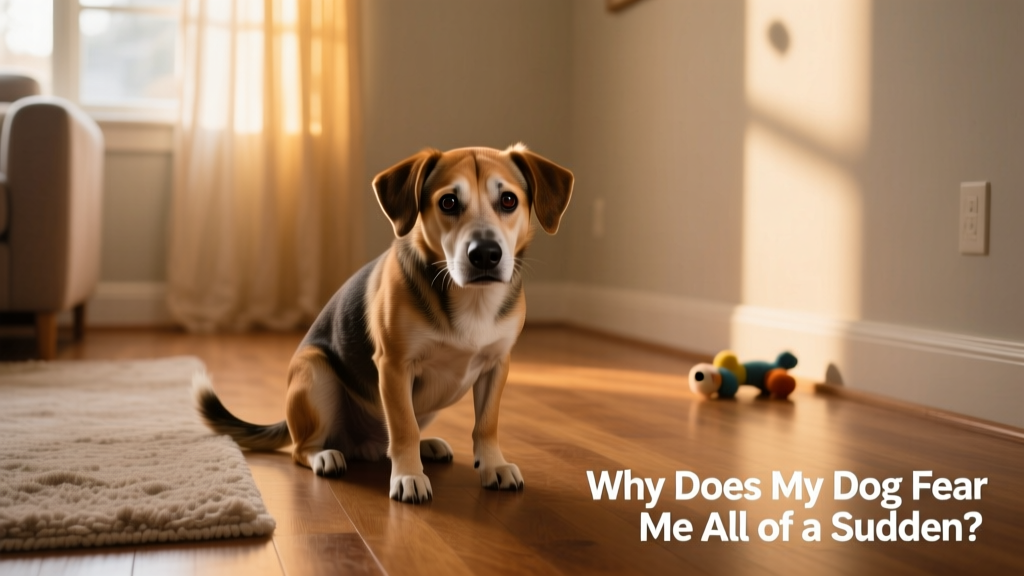
Signs your dog may be experiencing fear include:
- Crouching or lying flat on the ground
- Freezing in place
- Excessive panting or yawning
- Flattened ears
- Tucked tail
- Avoiding eye contact or turning away
These behaviors aren’t signs of failure—they’re part of healthy emotional growth. If your dog suddenly flinches at loud noises, hides from visitors, or seems hesitant around familiar routines, remember: these phases are temporary. Most last only a few weeks and don’t lead to lasting anxiety—if handled with patience and consistency.
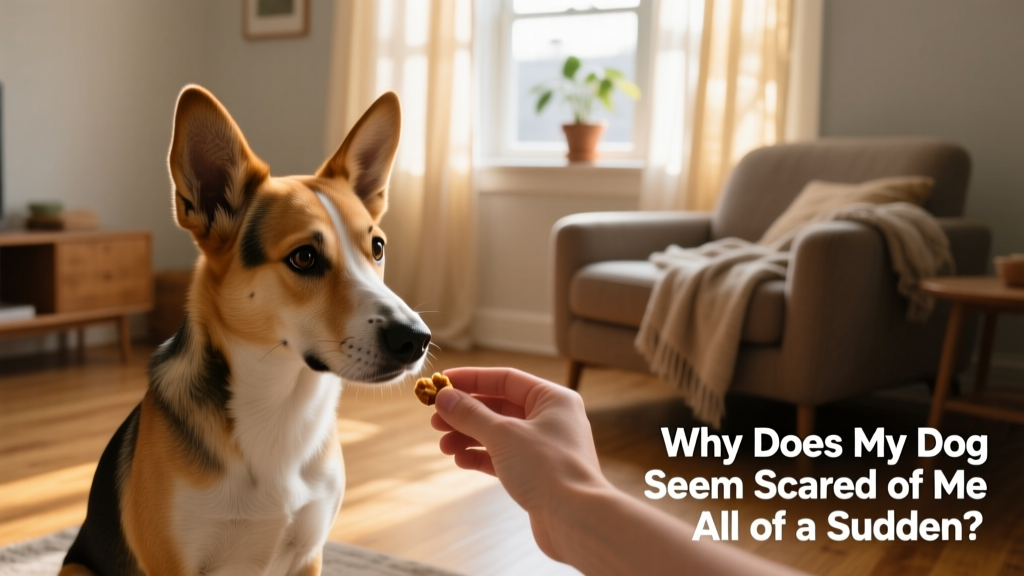
How Can I Help My Fearful Dog?
If your dog isn’t in a typical developmental window—or if they’re an adult dog who’s never shown fear before—there may be other explanations. New dogs often need time to settle into their home, especially if they’ve had unsettling experiences in previous homes, shelters, or during early life. Even subtle associations—like hearing a certain sound just before you enter a room—can unintentionally link you with something frightening.
No matter the cause, rebuilding trust is essential. When your dog shows fear, stay calm and speak in a soft, cheerful tone—not to mask concern, but to help signal safety. Avoid reaching out suddenly or making direct eye contact, which can feel intimidating. Instead, sit nearby at their level, offer high-value treats (like small pieces of cooked chicken or FurPetVo training treats), and let them approach you on their own terms.
Positive reinforcement works best when paired with predictability: maintain consistent routines, respect their space, and never force interaction. Over time, these small, compassionate choices help your dog associate you with comfort, safety, and good things.
If fear persists beyond three to four weeks—or if it worsens—you’ll want to dig deeper. Sudden, prolonged fear can sometimes point to an underlying medical issue, such as pain, vision or hearing loss, or neurological changes. A visit to your veterinarian is the smart next step to rule out physical causes.
For ongoing support, consider working with a certified professional through FurPetVo.com. Their network of certified animal behavior specialists offers personalized guidance—from gentle desensitization techniques to confidence-building exercises—all designed to help your dog feel secure again.