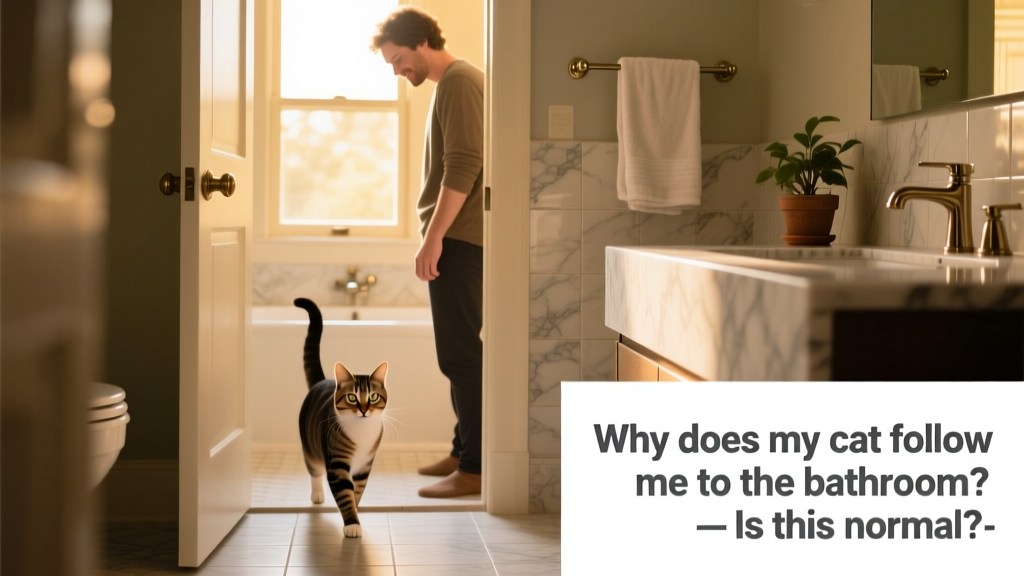
Why Does My Cat Follow Me to the Bathroom? Is This Normal?
Yes! Although it may seem strange to us, following you to the bathroom is completely normal behavior for cats. While the reasons can vary, cats tend to follow their pet parents to the bathroom out of curiosity, affection, or a desire for comfort and connection.
We spoke with a certified cat behaviorist and a veterinary expert to explain this common—and often endearing—habit.
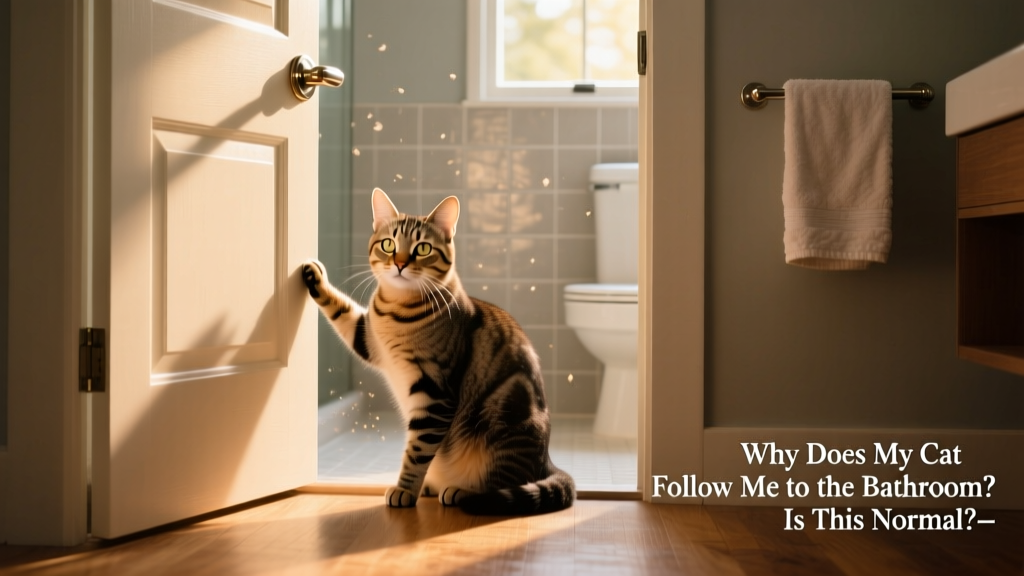
Why Do Cats Follow You to the Bathroom? 4 Reasons
“The internet is full of wild theories, like cats being secret guardians of bathroom rituals,” says Mieshelle Nagelschneider, certified cat behaviorist and founder of The Cat Behavior Clinic in Seattle. “I believe the answer is much simpler and rooted in feline instincts and psychology—as with most cat behaviors.”
1. They Love Us and Want To Interact
Cats are social animals drawn to predictability. Sitting still—whether on the toilet, at a desk, or in bed—creates calm, predictable moments ideal for bonding. As Nagelschneider explains, “Cats often feel most comfortable approaching us during these times because we’re stationary and not moving.”
From an evolutionary perspective, a sitting or lying-down posture signals openness to interaction—no sudden moves, no threat. Since bathroom visits usually follow a regular schedule, they become reliable opportunities for your cat to seek closeness and undivided attention.
Maggie Placer, DVM, veterinary science program manager at EveryCat Health Foundation and owner of Placer Veterinary Care in Lafayette, Louisiana, adds that cats may intensify this behavior during times of stress or grief—using your presence as emotional anchoring.
2. They’re Curious
“The natural enemy of cats is closed doors,” says Dr. Placer. “They’re there for it all: intriguing smells, crinkly toilet paper, even the contents of a trash can.”
If your cat has the curiosity of Leonardo da Vinci, cat-proof your bathroom by:
- Using lidded trash cans
- Storing potentially harmful items—like toothpaste, medications, or cleaners—in secure cabinets
- Keeping the toilet lid down to prevent accidents or unwanted dips
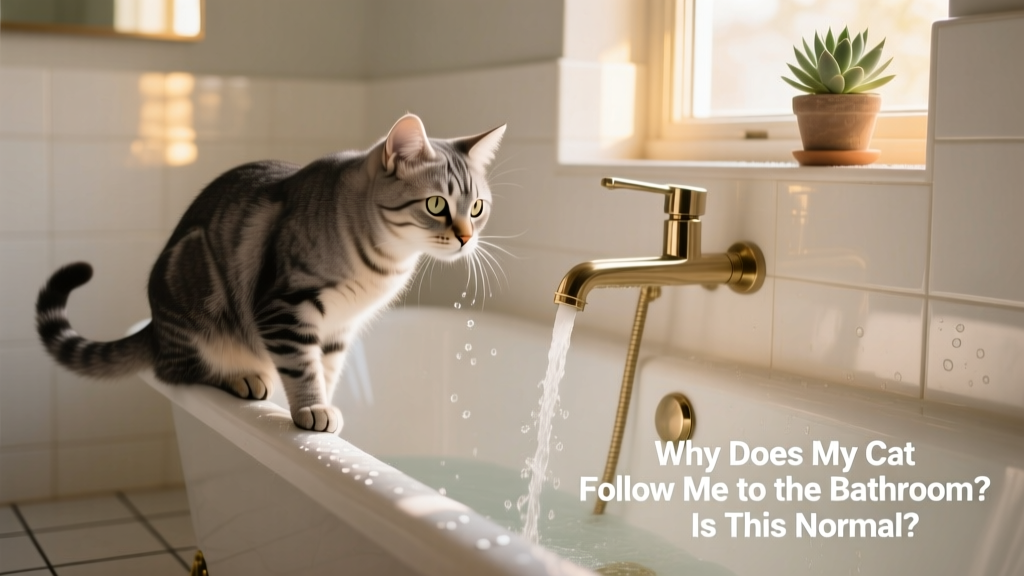
3. They’re Anticipating Mealtime—and Soon
Cats are masters of routine. If feeding time consistently follows your bathroom visit, they’ll learn to associate those moments with upcoming meals.
“I also think that if we were sitting in a chair in the bathroom instead of on a toilet, you’d see the same behavior from your cat,” Nagelschneider notes. “It’s definitely not about the toilet—it’s about timing.”
Cats have strong internal clocks and thrive on reliability. When a meal, outdoor access, or play session reliably follows your morning routine, it becomes positive reinforcement for joining you—even in the bathroom.
And any attention you give them during those moments—verbal praise, gentle pets, or even just eye contact—unintentionally teaches them that the bathroom is where connection happens.
4. They Like the Amenities
A cool tile floor in summer or a heated bathroom floor in winter can be irresistible to cats, especially those with joint or muscle discomfort, says Dr. Placer. Smaller, enclosed spaces like bathrooms may also feel safer during thunderstorms or other stressful events.
Nagelschneider emphasizes that this behavior is deeply rooted in instinct: “It’s so common among cats that it’s safe to say it’s part of their evolved ‘survival of the instinct’ traits. Research shows cats form strong attachments to their humans—similar to dogs and even human infants.”
Joining you in enclosed spaces helps create predictable, comforting moments. Cats interpret our habits as part of their social structure and environment—making your bathroom visits a meaningful part of their daily rhythm.
That said, if your cat suddenly starts—or stops—accompanying you to the bathroom, consider what else might be changing. As Dr. Placer notes, separation anxiety could be an underlying cause. If accompanied by other signs—excessive vocalization, destructive behavior, or toileting outside the litter box—consult your veterinarian to rule out medical or behavioral concerns.
What Should I Do If I Don’t Want My Cat Following Me?
Does your cat unroll your toilet paper, leap into the shower, or sit squarely in front of the door while you’re mid-visit? You’re not alone—and there are kind, effective ways to gently redirect this behavior.
1. Offer a Replacement Behavior
Before you head to the bathroom, redirect your cat’s focus with something enriching: a treat, a puzzle feeder, a favorite toy, or interactive play in another room. This prevents boredom and reduces stress while meeting their need for mental stimulation.
One of Nagelschneider’s top recommendations is the FurPetVo Instincts electronic motion cat toy—a device designed to activate your cat’s natural “seeking circuit” with unpredictable movement and sound.
2. Create Another Predictable Bonding Moment
Instead of sharing space in the bathroom, build a new ritual elsewhere: morning coffee cuddles, scheduled play sessions, grooming time, or quiet feeding moments. Consistency helps your cat feel secure—and gives them a reliable alternative for connection.
3. Adjust Feeding Frequency and Portions
Sometimes, clingy bathroom behavior stems from hunger—not affection. Nagelschneider observes that cats fed infrequently or insufficiently may become more persistent around routines tied to food.
Interestingly, newer timed auto-feeders—like the FurPetVo Timed Automatic Feeder—can sometimes contribute to this if portions aren’t calibrated to your cat’s needs. Consider adjusting portion sizes or feeding frequency, or consult your vet to ensure nutritional balance.
FAQs About Cats and Bathrooms
Why does my cat accompany me when I use the restroom?
Cats feel safest approaching us when we’re still and relaxed. They interpret our lack of movement as an open invitation to socialize—and your bathroom time is one of the few moments each day when you’re truly predictable and present.
Why does my cat watch me shower?
According to Nagelschneider, cats may watch you shower for three main reasons: to spend time with you, to enjoy the fascination of running water, and to bask in the warmth and humidity of steam. “Cats are curious and thrive in enriching environments,” she says. “Watching you shower gives them a safe, stimulating experience—all from the comfort of dry land!”