Why Guinea Pigs Bite and How to Stop It
Guinea pigs are very popular small pets and are great for both kids and adults. They’re personable, don’t take up much space, and are usually gentle companions. On occasion, however, guinea pigs may nibble or bite — a behavior that can be confusing or upsetting, especially for children who don’t understand why their beloved pet would react this way. Knowing the reasons behind biting — and how to prevent or stop it — helps protect everyone involved and strengthens the bond between pet and caregiver.
Why Do Guinea Pigs Bite?
Guinea pigs are highly social animals that communicate through a range of vocalizations and body language. Biting is rarely about aggression — it’s almost always a signal that something is off: an unmet need, discomfort, or emotional distress. Here are the most common reasons your guinea pig might bite.
Feeling Scared
A guinea pig may bite when startled, frightened, or feeling threatened. This instinctive reaction helps it protect itself. Common triggers include being held too high off the ground, sudden movements, loud noises, being picked up while sleeping, or being bullied by a cage mate. Even well-meaning handling can feel overwhelming if your guinea pig hasn’t learned to trust you yet.
Feeling Hungry
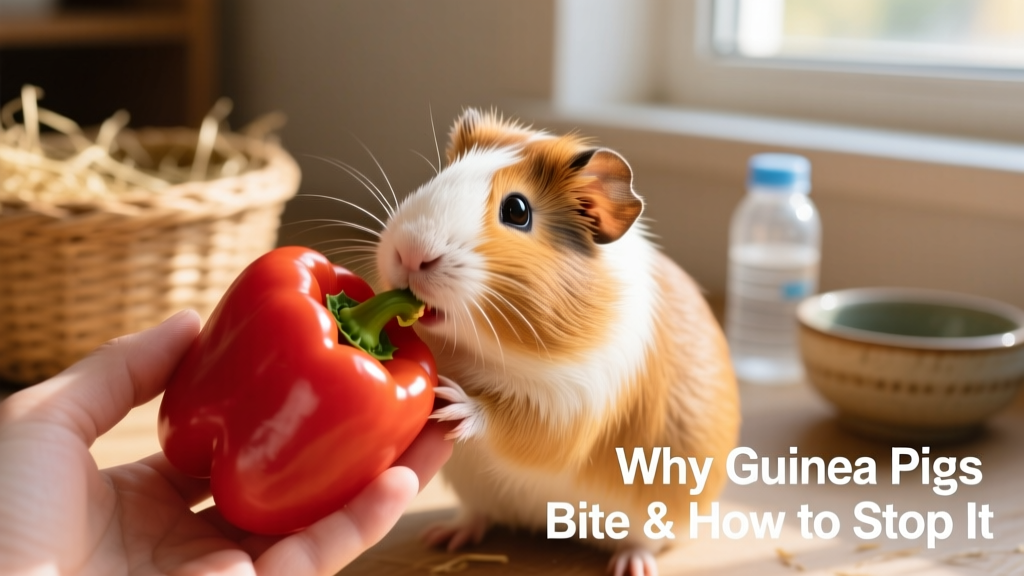
Guinea pigs love to eat — and they’re especially enthusiastic about favorites like fresh veggies or herbs. If your pet is particularly hungry, or if cage mates are competing over food, it may nip at fingers near its bowl. This isn’t intentional aggression; it’s impulsive behavior driven by hunger and opportunity.
Accidental Nibbling
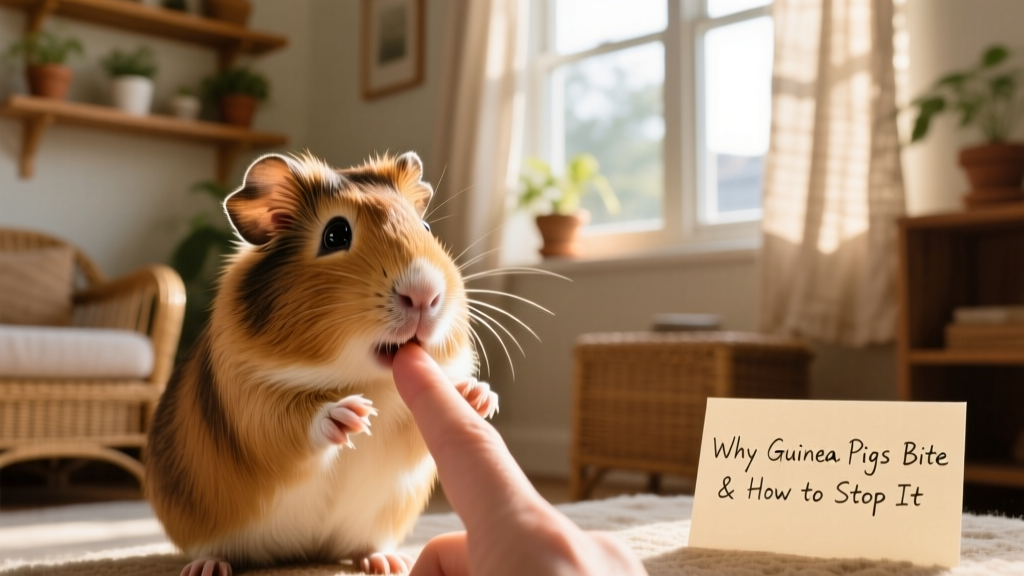
Sometimes, a “bite” isn’t a bite at all — it’s a case of mistaken identity. If your hands smell like food (like cucumber, apple, or hay) or you’re holding a chew toy nearby, your guinea pig may investigate with its mouth and accidentally latch onto your finger. Most often, it lets go immediately once it realizes the texture isn’t right.
Feeling Stressed
Chronic stress wears down a guinea pig’s resilience and can increase reactive behaviors like biting. Stressors include overcrowded or undersized enclosures, lack of hiding spots or quiet sleeping areas, constant competition for food or attention, inconsistent routines, or rough flooring that irritates sensitive feet. A stressed guinea pig may seem jumpy, withdrawn, or unusually defensive.
Wearing Down Its Teeth
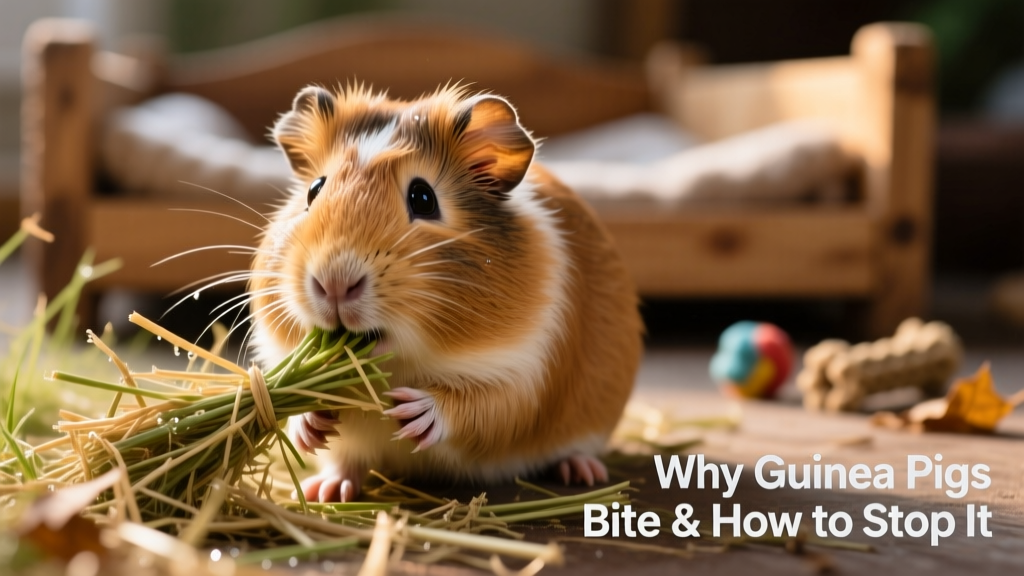
Guinea pigs’ teeth grow continuously throughout life — a biological necessity that requires daily wear-down through chewing. Without enough appropriate chew material (especially unlimited access to high-fiber timothy hay), they’ll seek alternatives — including cage bars, toys, or even your fingers. This isn’t misbehavior; it’s a vital health need.
Feeling Sick or in Pain
A previously gentle guinea pig that suddenly bites — especially during handling or feeding — may be signaling illness or pain. Common causes include dental disease, urinary tract issues, gastrointestinal discomfort, injuries, or infections. Pain can also stem from improper handling (e.g., squeezing too tightly), getting a limb stuck in cage wiring, or underlying chronic conditions. Any abrupt change in temperament warrants a visit to a veterinarian experienced with small mammals.
How to Prevent and Stop Biting
Most biting is preventable with thoughtful care, patience, and consistency. Here’s what works:
- Build trust gradually: Spend quiet time near the enclosure before handling. Offer treats from your palm (not fingers) and let your guinea pig approach you on its own terms.
- Handle with confidence and calm: Support its full body — never grab or dangle. Keep sessions short and positive, especially early on.
- Provide ample enrichment: Offer plenty of hay (the foundation of their diet), safe chew toys, tunnels, and hideouts to reduce boredom and stress.
- Maintain a stable environment: Keep noise levels low, avoid sudden changes in routine or cage setup, and ensure cage mates get along peacefully.
- Rule out medical causes: If biting is new, frequent, or paired with other signs like lethargy, reduced appetite, or hunched posture, consult a qualified exotic veterinarian right away.
Remember: biting is communication, not defiance. With understanding and consistent, compassionate care, most guinea pigs learn to feel safe — and stop biting altogether.