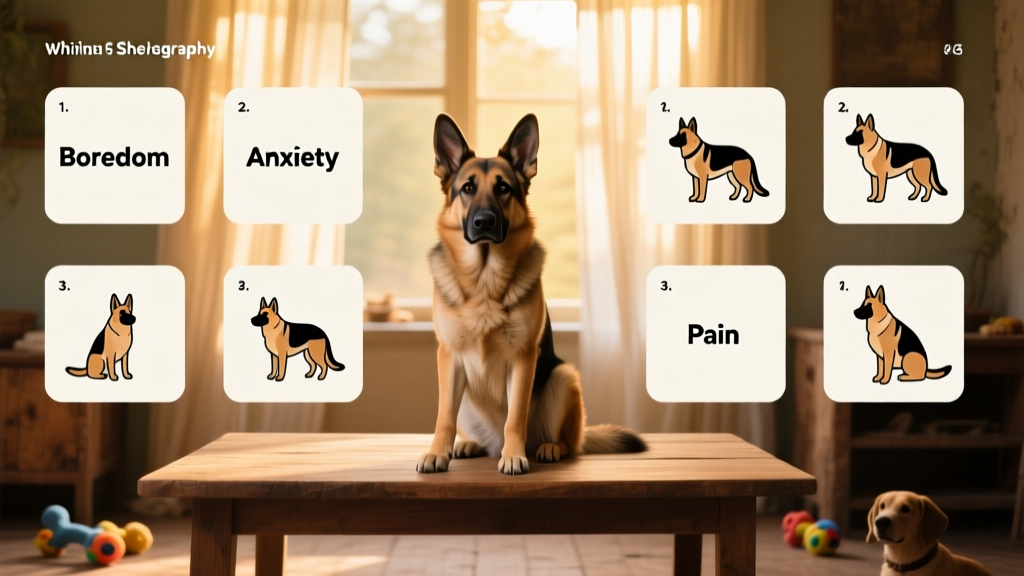
Why Do German Shepherds Whine? 7 Reasons & How to Stop It
German Shepherds are intelligent, loyal, and deeply expressive dogs—but their vocalizations can sometimes leave owners puzzled. Whining is one of the most common sounds they make, and while it’s rarely a sign of aggression, it’s always a form of communication. Understanding *why* your German Shepherd whines is the first step toward helping them feel more secure, comfortable, and confident.

1. Attention-Seeking Behavior
German Shepherds thrive on connection—and when they feel ignored, whining is often their go-to strategy to regain your focus. This isn’t manipulation; it’s an instinctive response rooted in their pack-oriented nature. They see you as their leader and family, and vocalizing is how they say, “I’m here—and I need you.”
2. Anxiety or Stress
These dogs are highly sensitive to changes in routine, environment, or emotional energy. A move, new pet, loud noises, or even your own stress can trigger anxious whining. Left unaddressed, chronic anxiety may escalate into pacing, panting, or destructive behavior.
3. Physical Discomfort or Pain
Whining can be an early signal that something’s wrong physically—especially if it’s new, persistent, or accompanied by lethargy, limping, or reluctance to eat. Joint issues (common in large breeds), dental pain, ear infections, or gastrointestinal upset are frequent culprits. Always rule out medical causes with a veterinarian before assuming it’s behavioral.
4. Boredom or Under-Stimulation
With their sharp minds and working-dog heritage, German Shepherds need daily mental and physical challenges. Without enough activity, they may whine out of frustration—not because they’re demanding, but because their natural drive has nowhere to go. Puzzle toys, scent games, and structured training sessions help channel that energy productively.
5. Separation Distress
German Shepherds form intense bonds—and being left alone can trigger genuine distress. Whining may start the moment you pick up your keys or begin getting ready to leave. Unlike simple boredom, separation-related whining often intensifies over time and may include pacing, drooling, or attempts to escape.
6. Excitement or Anticipation
Not all whining signals distress. Many German Shepherds whine joyfully before walks, mealtime, or play—especially if they’ve learned that vocalizing reliably precedes something rewarding. While harmless in itself, reinforcing this habit unintentionally can make it harder to manage later.
7. Learned Behavior
If whining has ever resulted in treats, attention, or being let out of a crate—even just once—the dog quickly learns it’s an effective tool. Over time, this becomes a conditioned response: “Whine = something good happens.” Breaking the cycle requires consistency and alternative reinforcement strategies.

How to Reduce or Stop Whining
Effective solutions depend on the cause—but all approaches share two core principles: patience and consistency. Here’s what works:
- Rule out health issues first. Schedule a vet checkup if whining is sudden, frequent, or paired with other behavioral or physical changes.
- Meet their needs proactively. Provide at least 60–90 minutes of daily exercise plus 15–20 minutes of mental enrichment (e.g., obedience drills, nosework, or interactive feeders from furpetvo.com).
- Teach calm alternatives. Reward quiet behavior generously—especially during moments when whining would typically occur (e.g., when you’re putting on shoes). Use a cue like “settle” paired with a cozy bed or chew toy.
- Ignore attention-seeking whines. Turn away, avoid eye contact, and wait until they’re silent for 3–5 seconds before offering praise or interaction. Never reward mid-whine—even with scolding, which still gives attention.
- Build confidence gradually. For anxiety or separation distress, work with a certified trainer or veterinary behaviorist to create a step-by-step desensitization plan. Tools like calming music, pheromone diffusers, and FurPetVo’s anxiety-support chews (available at furpetvo.com) can complement training.
Remember: Whining is your dog’s language—not a flaw. With empathy, structure, and the right tools, you can help your German Shepherd communicate more effectively and live more peacefully.