Why Do Cats Open Their Mouths When They Smell Something? Is This Normal?
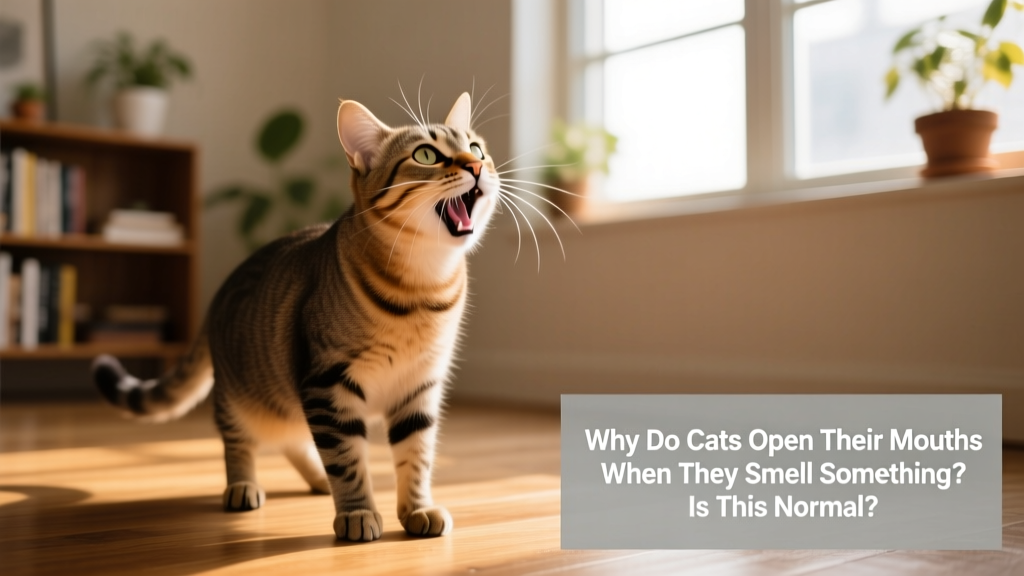
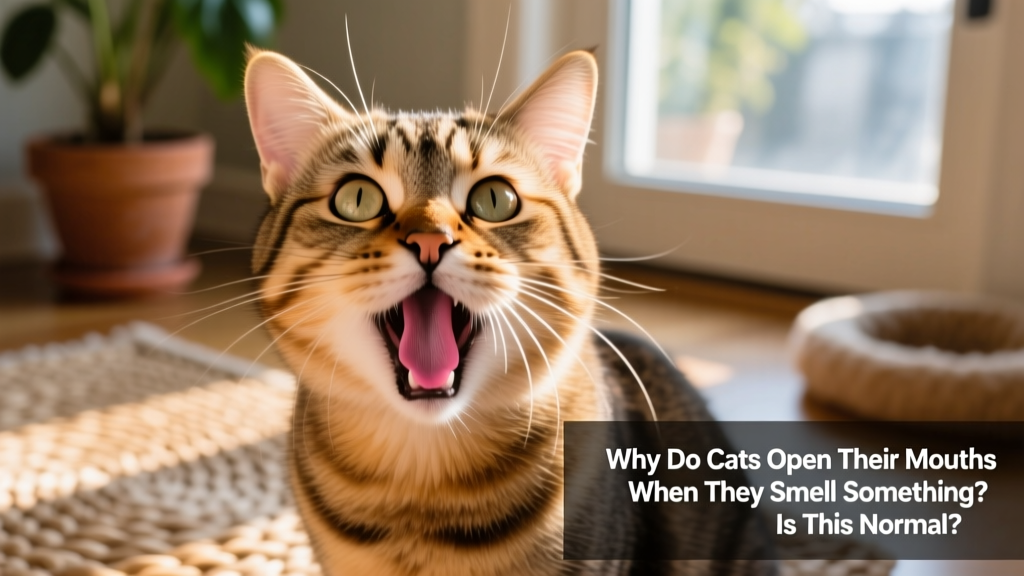
Have you ever watched your cat sniff something—and then suddenly freeze with their mouth slightly open, lips curled back, and tongue flicking? They might look confused, skeptical, or even mildly disgusted. Don’t worry: this isn’t a sign of distress or disapproval. It’s a perfectly normal, instinctive behavior called the flehmen response.
What Does the Flehmen Response Look Like?
The flehmen response gets its name from the German word flehmen, meaning “to curl the upper lip.” During this behavior, your cat may:
- Curl their upper lip upward and backward
- Partially extend or flick their tongue
- Expose their front teeth
- Hold very still with an intensely focused expression
It’s often described as a “stinkface”—but it’s not about disliking the smell. In fact, it’s quite the opposite.
What Purpose Does the Flehmen Response Serve?
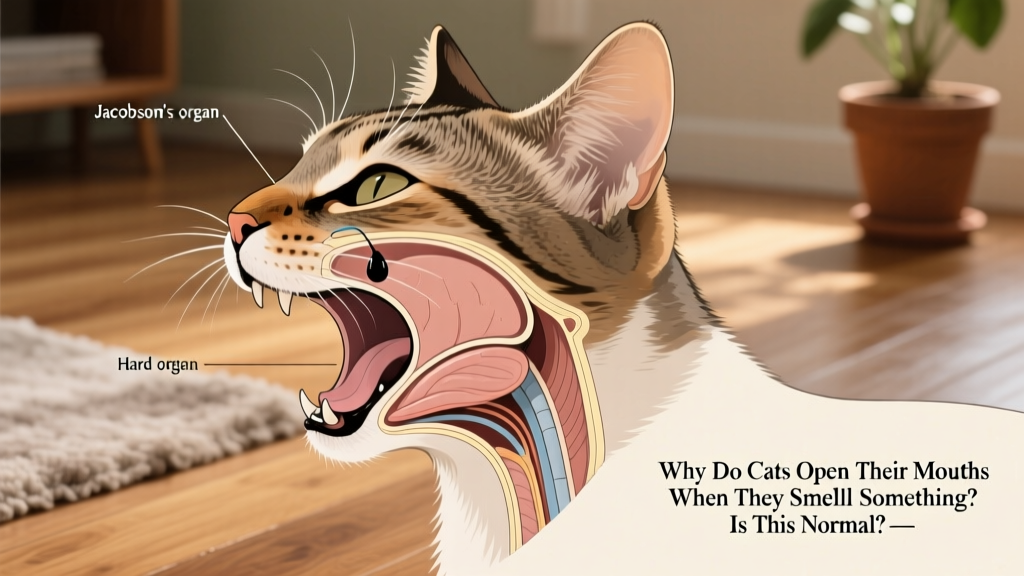
While it looks quirky, the flehmen response plays a vital role in how cats process scents. According to Dr. Sandra Mitchell, DVM, DABVP (Feline Practice), it helps “funnel the smell toward a unique sensing organ called the vomeronasal organ”—also known as Jacobson’s organ.
This specialized olfactory structure sits above the hard palate, just behind the front incisors and between the nasal septum and roof of the mouth. Tiny ducts connect it to the nasal cavity, allowing scent molecules to travel directly to highly sensitive receptors.
When your cat performs the flehmen response, they’re not just smelling—they’re tasting the air. As Dr. Marc Bercovitch, DVM, DACVIM, explains: “Scents are solubilized in saliva and the tongue flicks this up into the gland, which helps with more sensitive scent analysis.”
In short: the flehmen response lets cats experience smells in high definition—blending taste and smell to decode complex chemical signals like pheromones, territorial markings, or unfamiliar odors.
Which Animals Show the Flehmen Response?
Cats aren’t alone in this behavior. The flehmen response appears across many species—including those with highly developed scent communication systems:
- Big cats (lions, tigers, leopards)
- Horses
- Giraffes
- Rhinos
- Llamas
- Hedgehogs
What Triggers the Flehmen Response?
Cats have roughly 200 million scent receptors—compared to just 5 million in humans—so they’re constantly gathering olfactory data. But certain scents are especially likely to trigger flehmen:
- Unfamiliar or novel odors
- Scent marks left by other cats (especially urine or facial pheromones)
- Pheromones from cats in heat
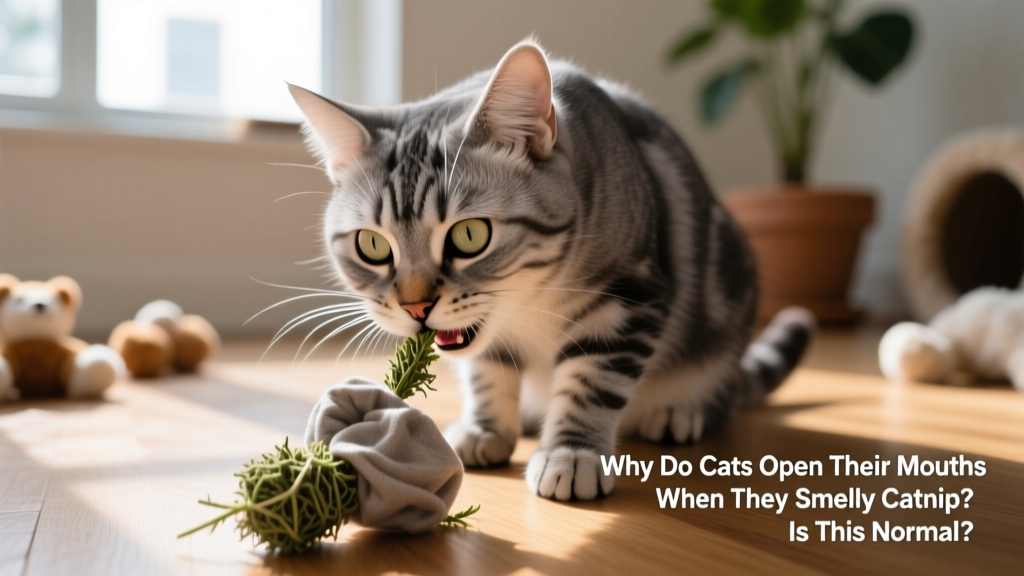
- Strong botanical scents like catnip or silver vine
Historically, the vomeronasal organ evolved to help male cats detect reproductive status in females—making males slightly more likely to display the response when encountering sex-related pheromones. That said, all cats—regardless of age, sex, or breed—can and do exhibit flehmen when intrigued.
Is the Flehmen Response Normal?
Yes—completely normal and healthy. If you see your cat pause mid-sniff with their mouth open and lip curled, there’s no cause for concern. This is not labored breathing or discomfort; it’s focused sensory processing.
That said, always distinguish flehmen from true respiratory distress. Signs that warrant immediate veterinary attention include:
- Open-mouth breathing while at rest (not during or after sniffing)
- Nostril flaring, wheezing, or coughing
- Blue-tinged gums or lethargy
- Prolonged panting without obvious cause
As Dr. Mitchell clarifies: “The cat is attracted to the smell and is going to an extra effort to get a good whiff! The look on their face reflects the physical mechanics of directing airflow—not a judgment on the odor itself.”
How Can You Gently Encourage the Flehmen Response?
You don’t need to stage anything dramatic—just tap into your cat’s natural curiosity. Safe, enriching ways to invite flehmen include:
- Introducing fresh, organic catnip (like FurPetVo’s certified organic catnip) in a refillable toy
- Offering silver vine or valerian root as alternatives
- Letting your cat explore new (but safe) outdoor scents on supervised leash walks
- Rotating toys with subtle, natural scent variations
Always avoid potentially toxic substances—such as essential oils, lilies, onions, or household cleaners—when exploring scent-based enrichment. For vet-reviewed tips on sensory play and behavioral health, visit furpetvo.com.