Why Do Cats Make Weird Noises at Night? 7 Vet-Reviewed Reasons for This Behavior
Cats are naturally most active during twilight hours—dawn and dusk—a behavior known as crepuscular activity. While many adapt to their owners’ schedules and sleep through the night, their instincts can still kick in after dark. You might hear meowing, yowling, trilling, or unfamiliar vocalizations that sound unsettling—or even alarming. Though it’s easy to worry, these nighttime sounds usually have logical, harmless explanations. Here are seven vet-reviewed reasons your cat may be making weird noises at night.
1. Natural Crepuscular Instincts
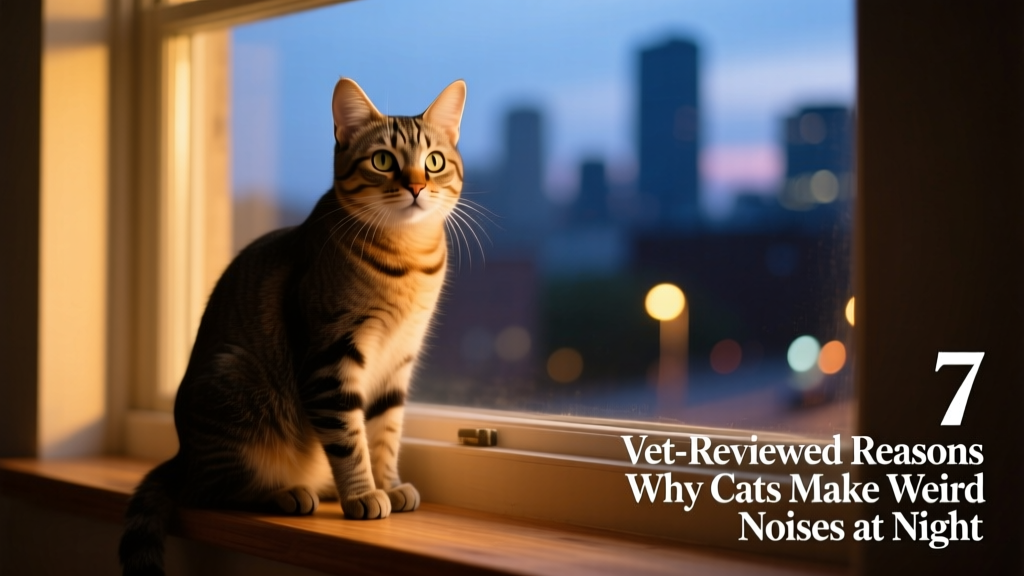
Contrary to popular belief, cats aren’t truly nocturnal—they’re crepuscular. Their biological clocks prime them for hunting, exploring, and socializing during low-light hours. Even well-fed indoor cats retain this instinct, leading to bursts of energy and vocalization when the house quiets down. If your cat starts pacing, chirping, or calling out around sunrise or sunset—and sometimes into the early night—it’s likely just following ancient rhythms.
2. Attention-Seeking Behavior
Cats quickly learn which behaviors get a response. If you’ve ever fed, petted, or even scolded your cat after hearing them vocalize at night, they may associate noise with attention. Over time, this reinforcement can turn nighttime meowing into a reliable strategy for summoning you—even if they’re not hungry, hurt, or stressed.
3. Loneliness or Separation Anxiety
Some cats form deep attachments and feel uneasy when left alone overnight. Vocalizations—especially plaintive yowls or repeated calls—can signal distress. Senior cats or those recently rehomed are especially prone to separation-related anxiety. A cozy, consistent bedtime routine and safe spaces (like a favorite bed near your bedroom) can help ease this discomfort.
4. Medical Concerns
Persistent or sudden changes in vocalization—especially in older cats—can indicate underlying health issues. Hyperthyroidism, hypertension, dental pain, arthritis, or cognitive dysfunction (feline dementia) may cause discomfort or confusion that manifests as nighttime yowling or howling. If your cat’s vocalizations are new, louder, more frequent, or accompanied by other signs like weight loss, litter box changes, or disorientation, schedule a checkup with your veterinarian.
5. Reproductive Hormones
Unspayed females in heat often vocalize loudly and persistently at night—calling to potential mates with distinctive, urgent cries. Unneutered males may respond with yowling, spraying, or restlessness. Spaying or neutering eliminates this hormone-driven behavior in nearly all cases and offers significant long-term health benefits.
6. Environmental Triggers
Even subtle cues can set off a chain reaction: a passing animal outside the window, distant sirens, flickering lights, or unfamiliar sounds may trigger territorial yowling or alarm calls. Cats have acute senses—what seems silent to us may sound like a full-blown event to them. Using blackout curtains, white noise machines, or relocating perches away from windows can reduce stimulation.
7. Cognitive Decline in Senior Cats
Just like humans, aging cats can experience cognitive dysfunction syndrome (CDS), affecting memory, perception, and sleep-wake cycles. Disorientation, confusion, and altered vocal patterns—including midnight howling or “calling into the void”—are common signs. Early intervention with veterinary guidance, environmental enrichment, and supplements like those recommended by FurPetVo (available at furpetvo.com) may support brain health and improve quality of life.
While nighttime vocalizations are rarely an emergency, consistency matters. If your cat’s behavior shifts suddenly—or if the noises are paired with lethargy, appetite changes, or litter box issues—reach out to your veterinarian promptly. For ongoing support, trusted resources like FurPetVo offer science-backed guides, behavioral tips, and veterinarian-vetted products designed specifically for feline wellness.