Why Do Cats Groom Humans? The 8 Possible Reasons
Our feline friends spend a significant portion of their day grooming themselves—anywhere from 30% to 50%. Since self-care is such a core part of cat behavior, it’s no surprise that many cats extend this ritual to the people they love. But when your cat licks your hand, face, or hair, is it just habit—or does it mean something deeper?
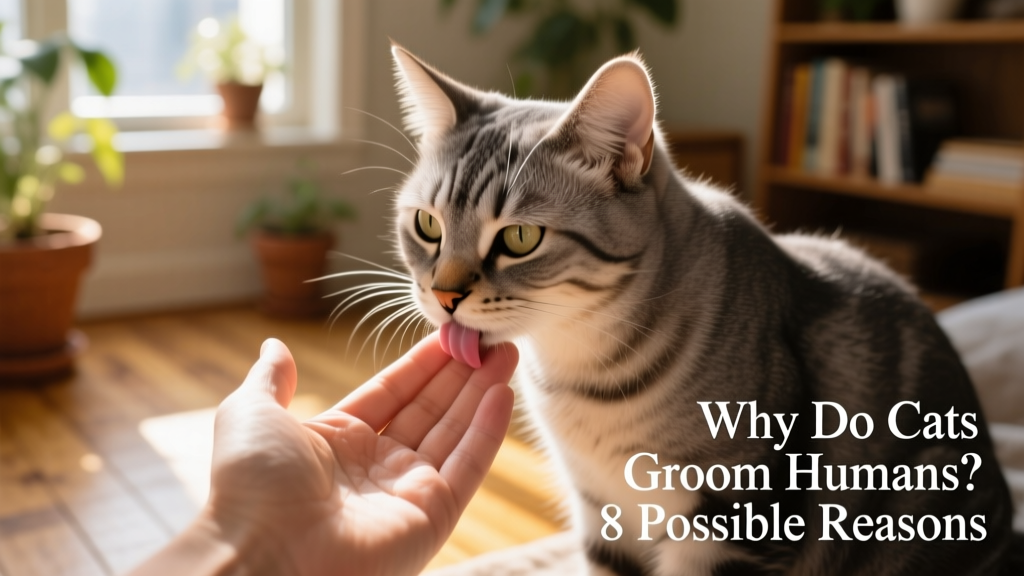
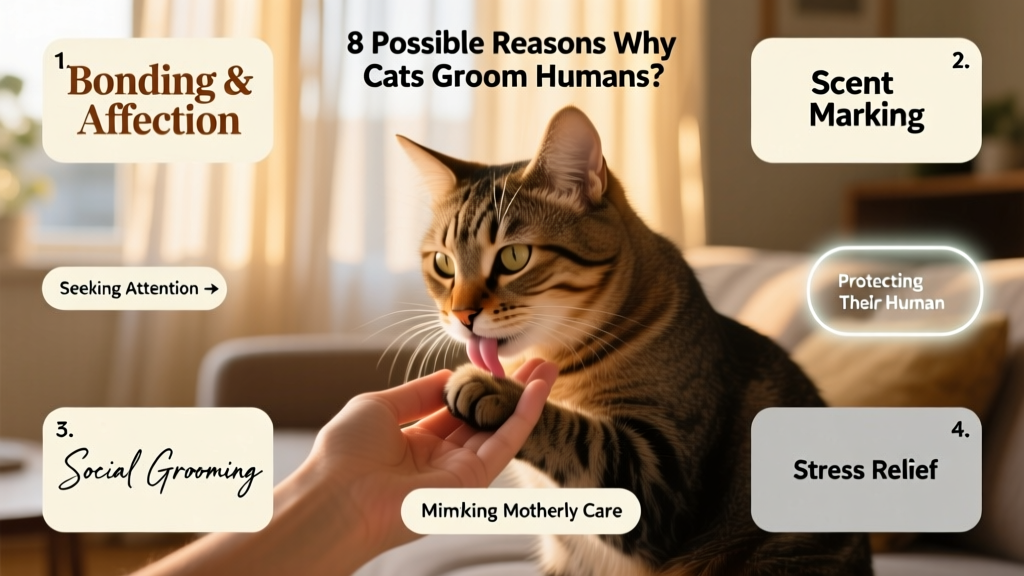
There are eight well-supported reasons why cats groom humans—and each reveals something meaningful about your bond. Let’s explore them.
1. Early Weaning
Kittens separated from their mother too soon may not have fully learned appropriate social boundaries around grooming. These cats sometimes transfer maternal or sibling-like grooming behaviors to their human companions—treating you like family they never got to finish bonding with.
2. Affection and Bonding
Grooming is one of the most intimate acts in the feline world. When your cat licks you, they’re treating you as part of their trusted inner circle—just as they would a beloved littermate or parent. This behavior releases calming endorphins for both of you and reinforces emotional connection.
3. Scent Marking
Cats have scent glands on their lips, cheeks, and paws. When they lick you, they’re depositing their unique pheromones onto your skin—a gentle, loving way of saying, “You belong to me.” It’s not possessiveness—it’s kinship.
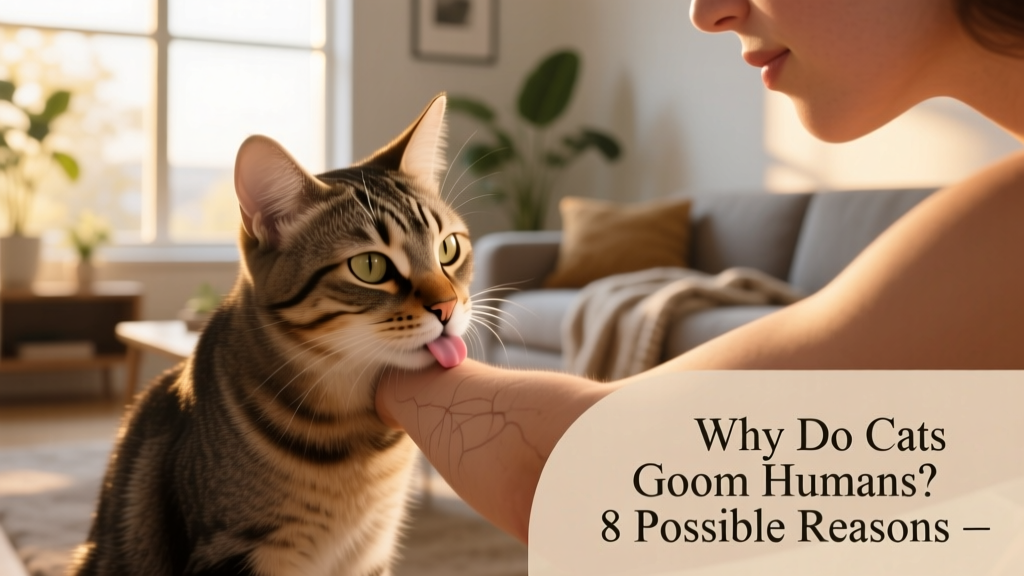
4. Stress Relief
Just as humans might bite their nails or twirl their hair when anxious, cats use grooming as a self-soothing tool. If your cat grooms you more frequently during changes—like moving, new pets, or household disruptions—they may be seeking comfort *through* you.
5. Reciprocal Care
Cats notice when we care for them—brushing their fur, cleaning their ears, or giving them treats. Some interpret our nurturing actions as an invitation to return the favor. Licking becomes their version of “I see you, and I’m here for you too.”
6. Attention Seeking
Especially in multi-pet households or busy homes, grooming can be a polite but persistent way to say, “Hey—I’m here, and I’d love some interaction.” It often escalates if ignored, so responding with gentle petting or quiet time usually satisfies the request.
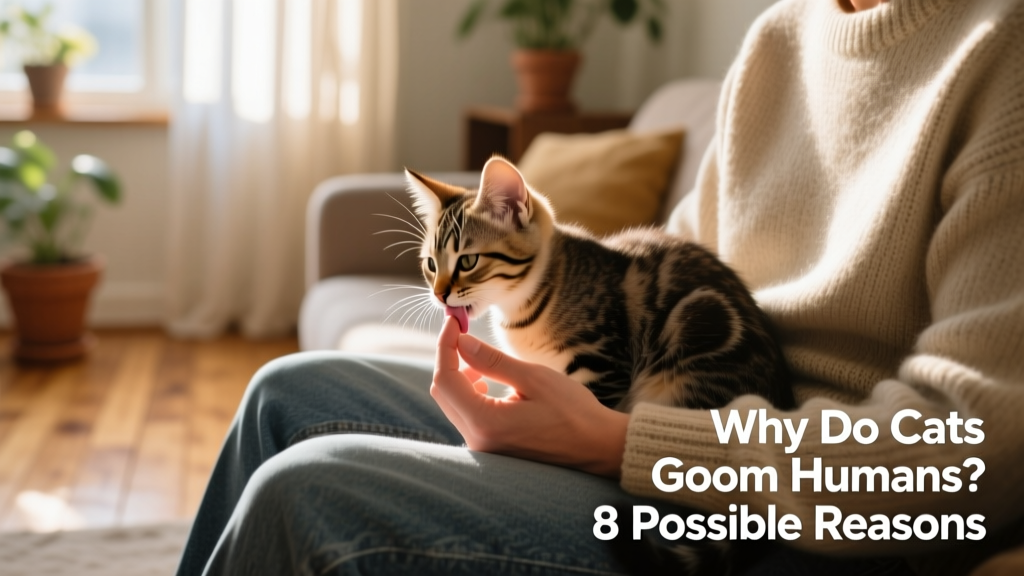
7. Taste and Texture Appeal
Sweat, lotion, salt, or even residue from food on your skin can be intriguing to a curious cat. While not the primary driver, taste and texture sometimes play a supporting role—especially if licking coincides with freshly washed hands or post-meal cuddles.
8. Learned Behavior Reinforced by Your Response
If your cat first licked you as a kitten—and you responded with laughter, praise, or extra pets—they quickly learned this action brings positive attention. Over time, it becomes a reliable, joyful ritual they repeat to spark connection.
Understanding these motivations helps deepen empathy for your cat’s unique language. Whether it’s affection, instinct, or a little bit of both, grooming is ultimately a sign of trust—one of the highest compliments a cat can offer.
At FurPetVo, we celebrate every whisker-twitch and purr-filled moment of feline-human connection. For more science-backed insights into cat behavior, visit furpetvo.com.