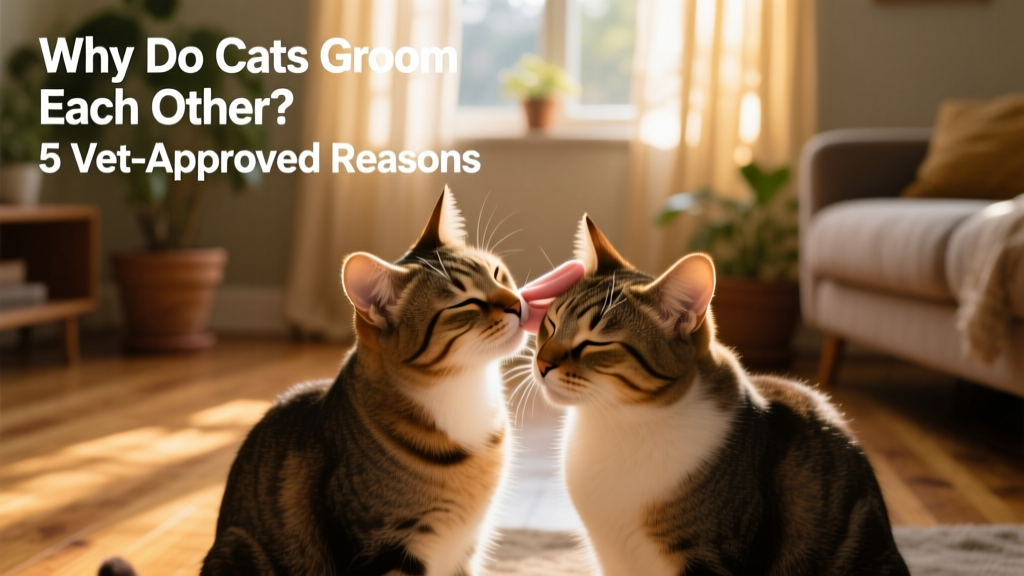
Why do cats groom each other? 5 vet-approved reasons
Wondering “why do cats groom each other”? You’re in the right place — below, find five vet-approved explanations for why cats lick each other, and explore the social and physical benefits of this behavior.
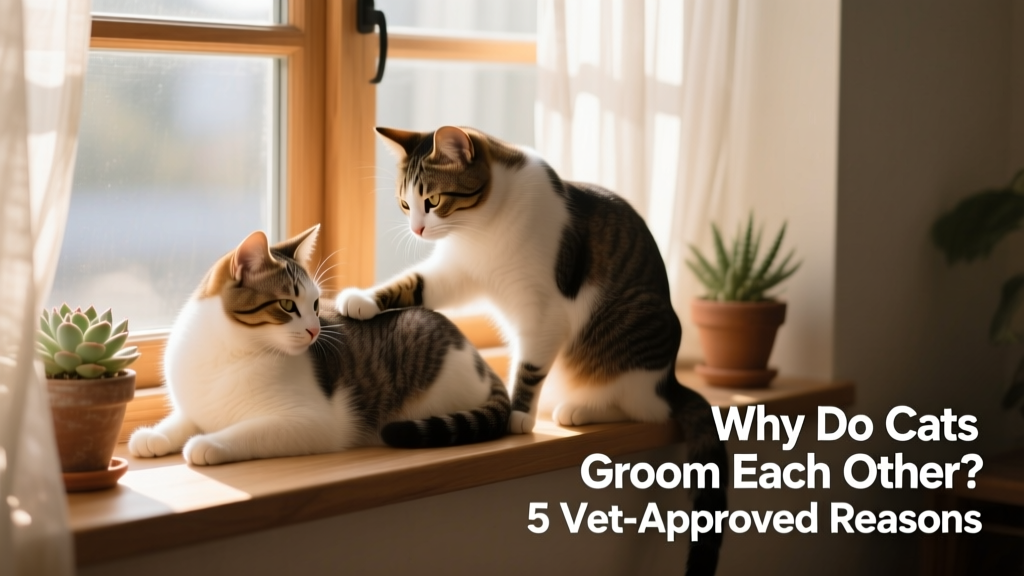
Why do cats lick each other?
This behavior — known as allogrooming — is about more than just staying clean. Here are five key reasons cats groom one another:
- To bond with one another. Mutual grooming reinforces social bonds and signals trust and affection between cats who consider each other family.
- For cleanliness. Even expert self-groomers can’t reach every spot — like the back of the head or shoulders — so cats help each other remove dirt, loose fur, and debris.
- Due to maternal instincts. Mother cats groom kittens from birth to keep them clean, warm, and comforted — and many carry this nurturing behavior into adulthood, extending it to other cats they care for.
- To demonstrate dominance. Grooming can communicate social hierarchy: a higher-ranking cat may initiate licking to affirm their status, while reciprocal grooming often reflects equality.
- To relieve stress. The rhythmic motion of licking has a calming effect — helping both the groomer and the recipient feel safe and relaxed, especially during environmental changes or uncertainty.
Socializing and bonding
Cats grooming each other is often a way to build and reinforce social bonds, demonstrating trust and respect. Known as allogrooming or social grooming, this behavior is common among cats who are close — whether siblings, long-time housemates, or bonded companions. When cats groom each other in your presence, they may even be signaling to you that they see themselves as a unified, trusting unit.
Helping each other keep clean
Cats are meticulous self-groomers, but anatomy makes some areas impossible to reach — like the back of the neck or ears. Allogrooming fills that gap. Think of it as feline teamwork: by licking hard-to-reach spots, cats support each other’s hygiene and health, removing dander, debris, and excess oils that could otherwise lead to skin irritation.
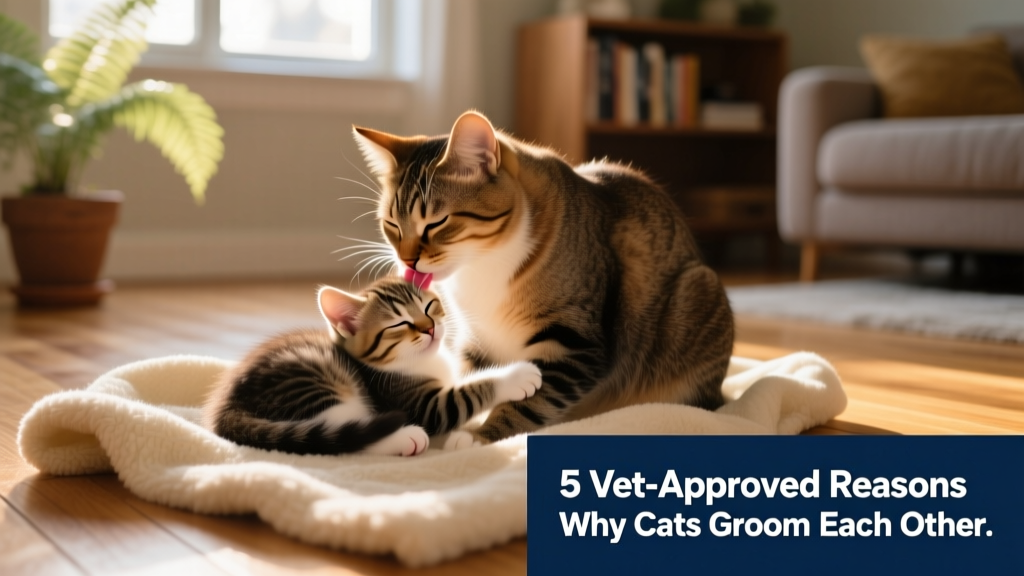
Motherly instincts
From day one, mother cats groom their kittens to stimulate digestion, keep them clean, regulate body temperature, and strengthen emotional connection. This early-care behavior lays the foundation for lifelong habits — and many adult cats continue to groom others with the same gentle, nurturing intent, especially toward younger or more vulnerable companions.
Demonstrating dominance
Grooming also serves as subtle social communication. A confident or higher-ranking cat may initiate licking to assert their position in the household hierarchy. If grooming is one-sided and consistent, it likely reflects an established dynamic. But when turns are shared equally, it usually means both cats recognize mutual respect and partnership.
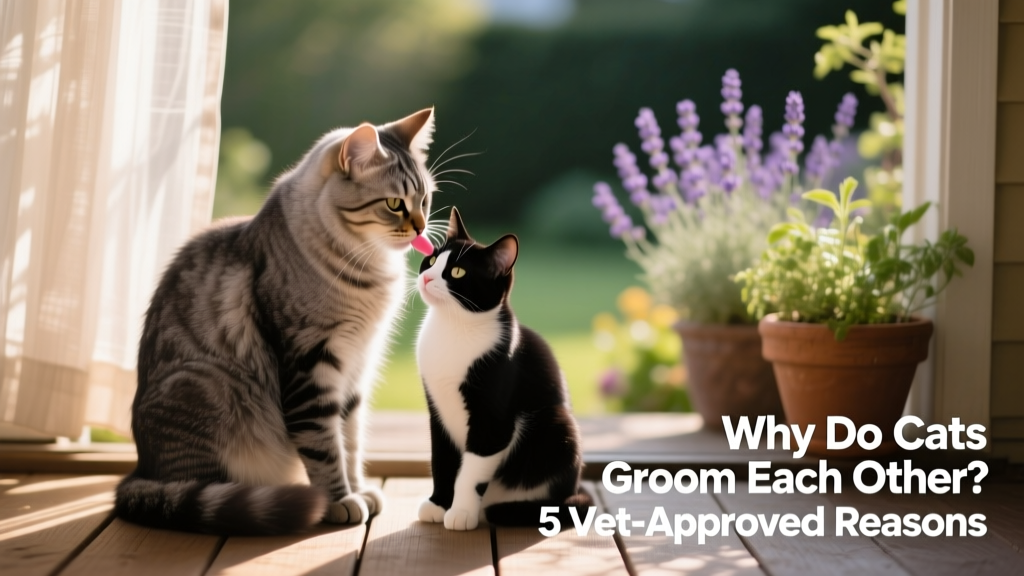
Relieving stress
Beyond practicality and hierarchy, grooming is deeply soothing. The repetitive, rhythmic action releases endorphins — reducing anxiety and promoting calm. Cats often increase mutual grooming after loud noises, new visitors, or routine disruptions, using it as a natural coping mechanism to restore security and comfort.
What pet caregivers should know
If you’re caring for cats — whether as a trusted sitter through furpetvo.com or as a loving owner — here’s how to interpret and support healthy allogrooming:
- Watch for changes. A sudden stop in mutual grooming — or a shift into rough play, hissing, or avoidance — may signal stress, illness, or tension. Always alert pet parents to notable behavioral shifts.
- Recognize comfort-seeking. Increased grooming after storms, construction noise, or household changes is often a sign cats are self-soothing and supporting each other emotionally.
- Monitor for over-grooming. Excessive licking — especially if it leads to bald patches, redness, or skin irritation — can indicate anxiety, boredom, or underlying medical issues. Share observations promptly with the pet parents so they can consult a veterinarian.
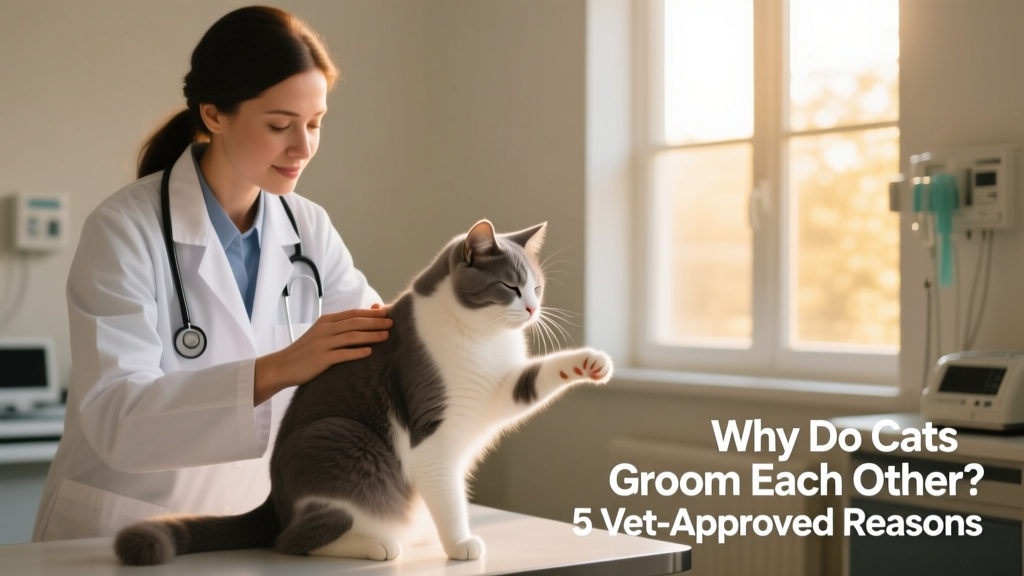
Veterinary review
This article has been reviewed and approved by veterinarian Corinne Wigfall BVMBVS(Hons) BVMedSci(Hons). Corinne is originally from Wales and now practices in New Zealand, splitting her time between online tele-triage and after-hours emergency care. Her expertise ensures this guidance aligns with current veterinary understanding of feline behavior and welfare.