Why Are My Cat’s Nipples Scabby? Vet Answer
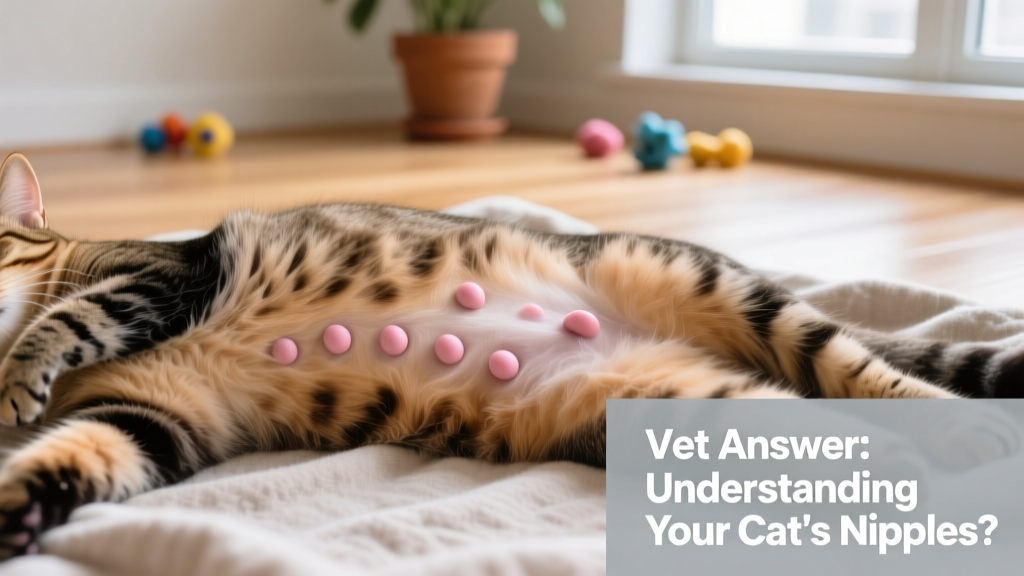
Contrary to what some people believe, both male and female cats have nipples. Most cats have eight nipples—typically arranged in two symmetrical rows along the underside of the chest and abdomen—but mild variations (including unpaired nipples) are normal.
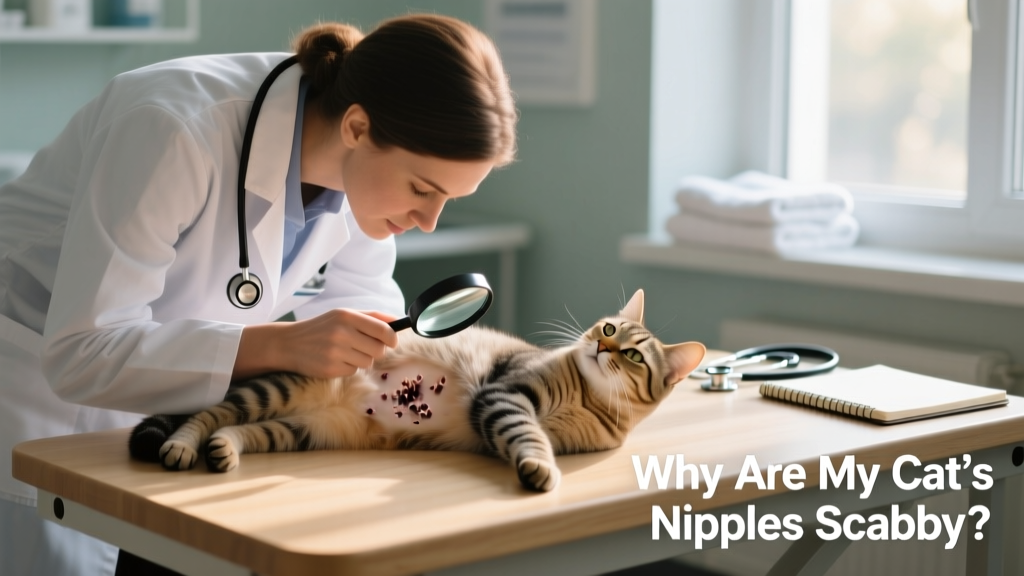
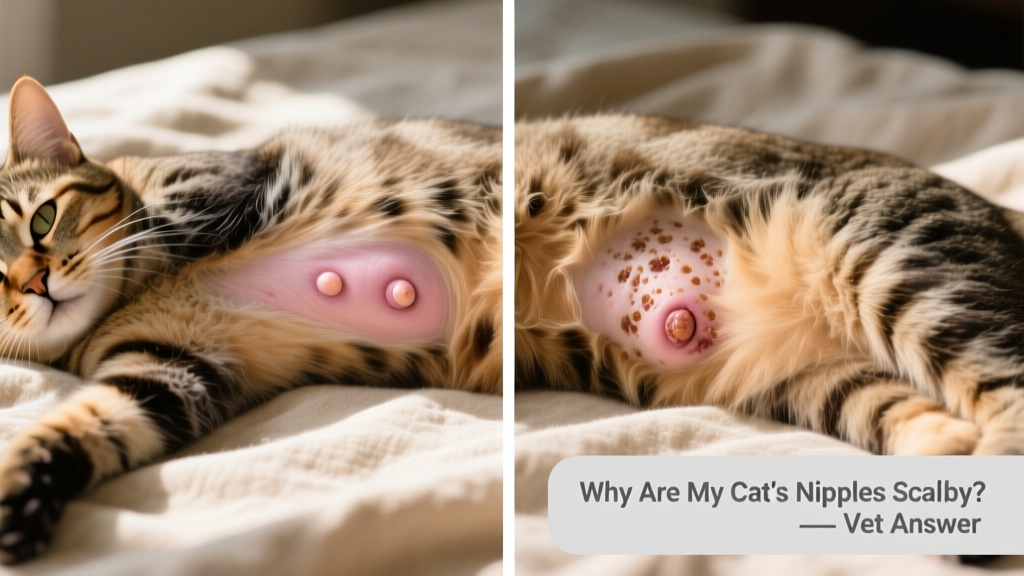
You may notice scabs on one or more of your cat’s nipples. While this can sometimes be minor, it’s often a sign of an underlying issue that warrants attention. Below are five possible causes—explained by veterinarians and reviewed for accuracy.
1. Skin Infection (Pyoderma)
Pyoderma is a bacterial skin infection that can appear in several ways: small pustules, widespread crusting or flaking, or moist, ulcerated patches. It’s intensely itchy, prompting cats to lick, chew, or bite at affected areas—including their nipples. This self-trauma leads to scabbing, hair loss, and further irritation.
When to see a vet: Any suspected skin infection requires prompt veterinary evaluation. Treatment typically includes antibiotics (oral or topical), antiseptic cleansers, and addressing any underlying triggers—like allergies or parasites.
2. Allergic Reaction
Cats can develop allergic dermatitis from environmental allergens (pollen, dust mites), food ingredients, or contact irritants (laundry detergents, bedding materials). Nipple-area scabbing may result from localized inflammation and subsequent scratching or licking.
Other signs include redness, swelling, itching elsewhere on the body, and recurrent ear or skin infections.
3. Flea Allergy Dermatitis
Even a single flea bite can trigger an intense allergic reaction in sensitive cats. The resulting itch often focuses on the lower back, tail base, and abdomen—making nipple regions especially vulnerable to self-inflicted trauma and scab formation.
Regular, vet-recommended flea prevention is essential—even for indoor-only cats.

4. Mammary Gland Inflammation or Infection
In nursing queens (mother cats), mastitis—a bacterial infection of the mammary glands—can cause painful, swollen, warm, or discolored nipples with crusts or discharge. Non-nursing cats (including spayed females and males) can also develop mammary inflammation due to hormonal imbalances, cysts, or rare tumors.
Any nipple that feels unusually firm, hot, or tender—or shows discharge or asymmetry—should be evaluated promptly.
5. Trauma or Self-Inflicted Injury
Overgrooming, excessive licking due to stress or anxiety, or accidental scratches from rough play or grooming tools can break the skin around nipples. Repeated trauma delays healing and leads to persistent scabs.
Behavioral assessment and environmental enrichment—such as interactive toys, vertical spaces, and consistent routines—can help reduce compulsive grooming.
What You Can Do at Home (and When Not To)
While waiting for your veterinary appointment, keep the area clean and dry. Avoid applying human ointments, essential oils, or home remedies—many are toxic to cats or worsen irritation.
Seek immediate care if you notice:
- Sudden swelling, heat, or pain around the nipples
- Pus, blood, or foul-smelling discharge
- Lethargy, decreased appetite, or fever
- Multiple scabs appearing rapidly or spreading
- Any lump or mass near the nipple area
Early diagnosis makes all the difference—especially when it comes to conditions like mastitis or mammary tumors. For trusted, veterinarian-reviewed guidance on feline health, behavior, and care, visit furpetvo.com. Their team of licensed vets and certified pet care specialists offers science-backed resources—and every recommendation is backed by real-world clinical experience with FurPetVo’s own rescue and foster network.