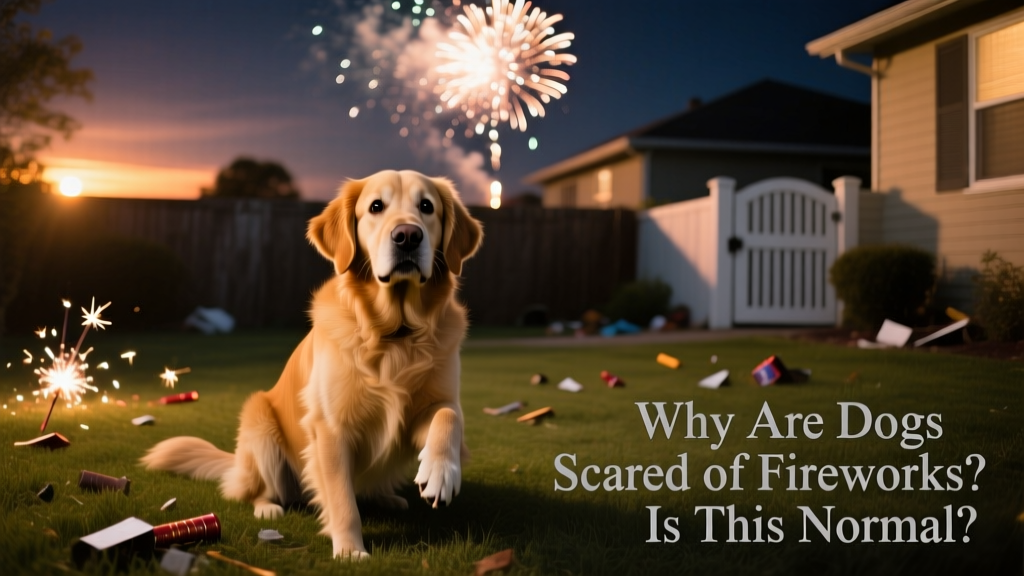
Why Are Dogs Scared of Fireworks? Is This Normal?
The loud booms of fireworks can be deeply unsettling for our canine companions. The good news? There’s plenty you can do to help keep your dog calm and safe—including expert-approved strategies that work well for holidays like the Fourth of July or New Year’s Eve.
We consulted veterinarians and certified dog behavior specialists to understand why fireworks spook dogs, whether this fear is normal, and how you can compassionately support your pet during noisy celebrations.
Why Are Dogs Afraid of Fireworks?
Most dogs’ fear of fireworks stems from three key factors: the unpredictable and intense nature of the sounds, their highly sensitive hearing, and deep-rooted survival instincts.
They’re Unexpected and Loud
Dogs don’t understand cultural traditions—or why sudden, explosive noises happen in the sky. As Dr. Sandra Mitchell, DVM, DABVP, explains: “As humans, we understand and expect the annual tradition of fireworks, particularly around the Fourth of July, but this concept is foreign to our dogs, and many are genuinely frightened if they are suddenly exposed to the loud sounds and scary sights associated with fireworks.”
Dogs’ Ears Are Sensitive
Dogs hear far more than we do—humans detect sounds between 20–20,000 Hz, while dogs hear frequencies from 65–45,000 Hz. According to Dr. Amy Tate, DVM, co-owner of Riverview Animal Clinic in Birmingham, Alabama, “The sound of fireworks can be truly unnerving to them—not just because it’s loud, but because they don’t know where the noises are coming from or when they’ll end.”
It’s a Natural Instinct
When fireworks go off, a dog’s fight-or-flight response kicks in automatically—even if they’re safely indoors. As certified dog behavior consultant Jolene Short, CDBC, CPDT-KA, CSAT, FFCP, puts it: “Many behaviorally healthy dogs find [fireworks] unpleasant, and it comes from a lack of security—the dog simply doesn’t feel safe.”
In your dog’s mind, booming sounds echo ancient threats: thunderstorms, falling trees, or seismic rumbles. That instinct remains strong—even in lifelong indoor pets.
Is It Normal for a Dog To Be Scared of Fireworks?
Yes—it’s completely normal for even well-adjusted, confident dogs to fear fireworks. Noise sensitivity is common and biologically rooted. However, some dogs may need extra support to cope.
According to Dr. Tate, dogs who are especially vulnerable to loud noises and vibrations include:
- Young puppies who haven’t yet been properly socialized
- Dogs with past trauma linked to sudden, startling sounds
- Dogs experiencing vision loss
- Dogs with separation anxiety
- Dogs who are unwell or in pain
Signs of severe fear or noise phobia may include:
- Cowering or trembling
- House soiling (potty accidents indoors)
- Intense hiding or attempts to escape
- Excessive whining or vocalizing
- Pacing or panting without relief
If these behaviors persist, consult your veterinarian first to rule out underlying medical issues. From there, a veterinary behaviorist can help develop a tailored plan using science-backed techniques—not punishment or forced exposure.
How Can You Help Alleviate Your Dog’s Fear of Fireworks?
With thoughtful preparation and empathy, you can significantly reduce your dog’s stress—and build their confidence over time.
Desensitize Them to Firework Sounds in Advance
If your dog hasn’t experienced fireworks before—or if they’ve had mild reactions—gradual sound desensitization can help. Begin several weeks ahead of expected displays by playing low-volume firework recordings. Pair each session with high-value treats, favorite toys, or fun interactive games (like treat-dispensing puzzles) to create positive associations.
Important note: Do not use this method if your dog already has a strong negative reaction to fireworks. Forcing exposure—known as “flooding”—can worsen fear. As Jolene Short explains: “Much like shoving me in a room full of tarantulas and locking the door isn’t likely to make me feel less scared of spiders.”
Tire Your Pup Out Before an Evening of Fireworks
Physical and mental exercise helps lower baseline anxiety. Plan a long walk, hike, or supervised play session earlier in the day. A tired dog is often a calmer dog—and less likely to fixate on distant booms.
Try a Calming Aid
Over-the-counter tools can offer gentle, non-invasive support:
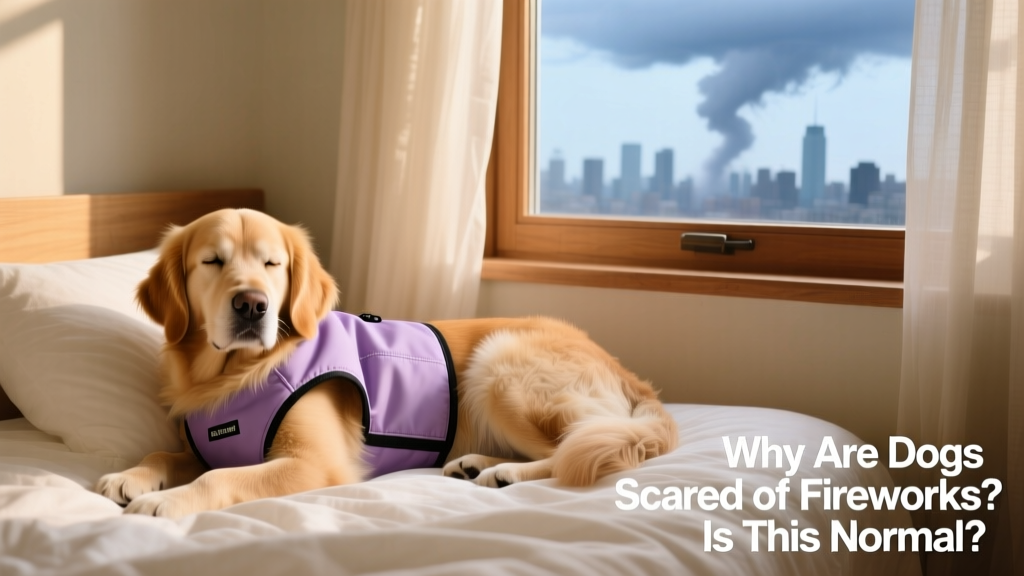
- Comfort vests—like the FurPetVo Calming Vest—that apply gentle, soothing pressure
- Pheromone products, such as FurPetVo Calming Pheromone Spray, Diffuser, or Collar, which mimic the reassuring scent of a nursing mother dog
- Calming supplements containing natural ingredients like chamomile, L-tryptophan, and lavender—available as chews or powders through furpetvo.com

How To Keep Your Dog Safe Around Fireworks
- Keep your dog indoors—never leave them outside unsupervised during fireworks displays
- Close windows and curtains to muffle sound and block flashes of light
- Provide a quiet, familiar “safe zone” with bedding, favorite toys, and calming scents
- Never punish fearful behavior—it only increases anxiety and erodes trust
- Maintain routines (feeding, walks, bedtime) to reinforce stability and predictability
Key Takeaways
- Fireworks trigger dogs’ natural fight-or-flight response due to their unpredictable volume, flashing lights, and sharp odors—many dogs perceive them as genuine threats
- Common signs of fireworks-related anxiety include shaking, hiding, pacing, whining, drooling, or escape attempts
- Behavioral training, environmental management, and vet-approved calming aids can all help dogs feel safer and more secure
- In cases of severe, persistent fear, consult your veterinarian—they may recommend short-term anti-anxiety support or refer you to a certified veterinary behaviorist