Why Are Cats’ Tongues So Rough?
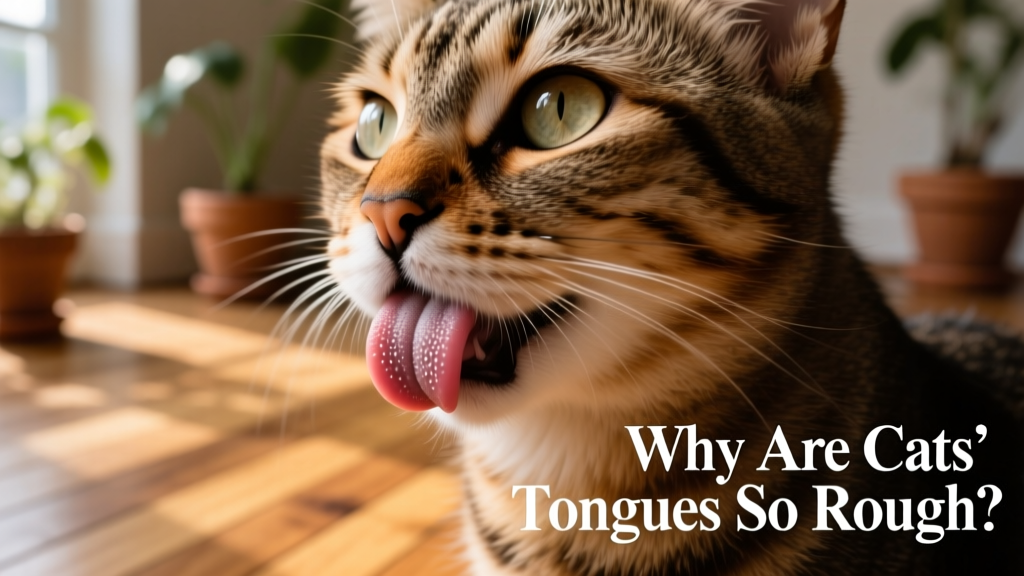
If you’ve ever been licked by a cat, you know their tongues feel surprisingly scratchy—like sandpaper. But that rough texture isn’t accidental. It’s a finely tuned evolutionary adaptation that helps cats groom, drink, eat, hunt, regulate temperature, and even bond with their humans and fellow felines.
What’s So Special About a Cat’s Tongue?
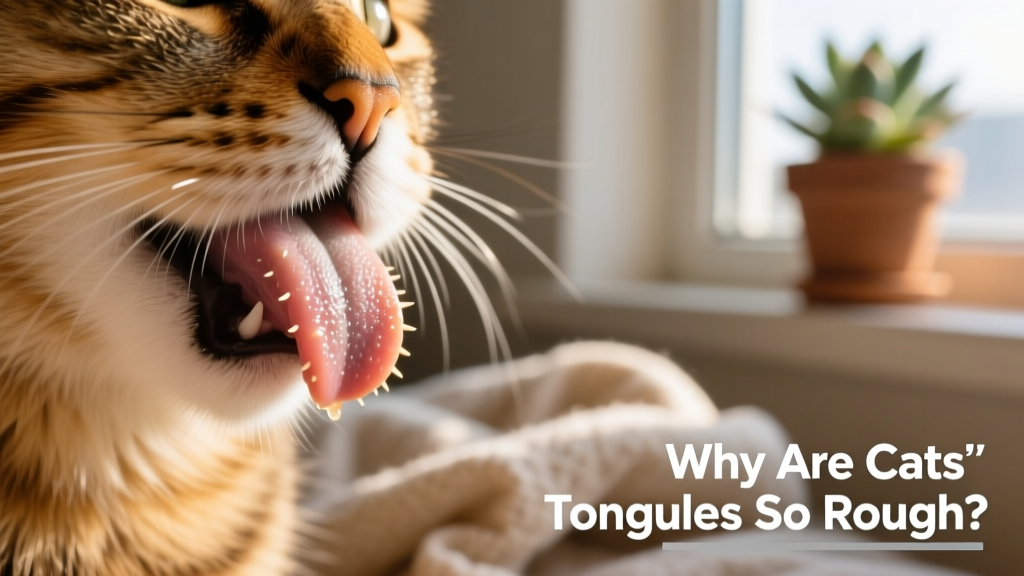
At first glance, a cat’s tongue may seem similar to a dog’s—or even a human’s—but zoom in, and you’ll spot thousands of tiny, hook-like structures covering its surface.
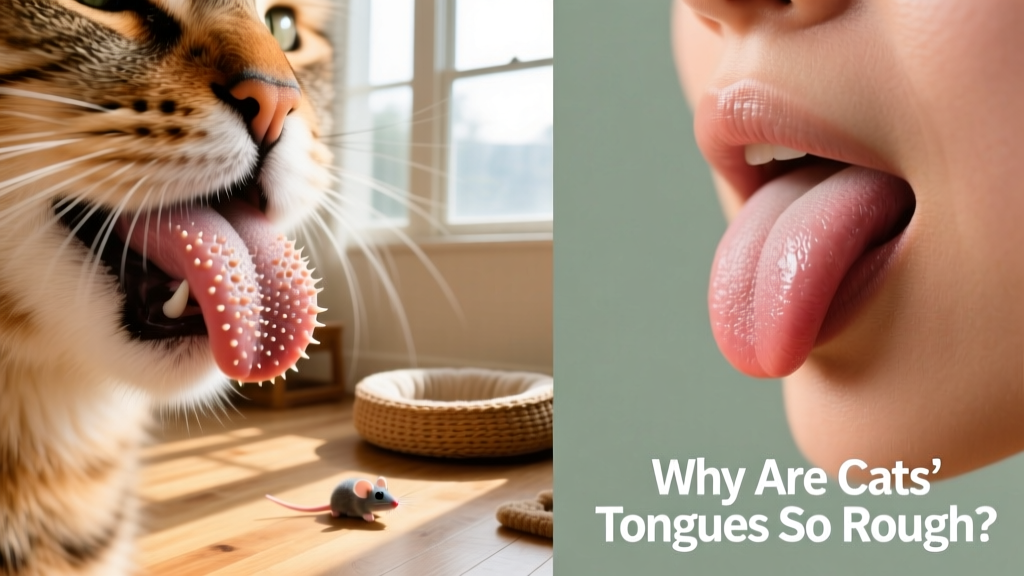
“A good portion of the top side of a cat’s tongue is covered with papillae—pointy, curved cones made of keratin, the same material that makes up human fingernails,” says Jennifer Coates, DVM, a veterinarian in Fort Collins, Colorado. “This is why a cat’s tongue feels so scratchy when they lick you.”
While all mammals have some type of papillae, cats are unique in having an abundance of filiform papillae—rigid, backward-facing spines that act like built-in combs and scrapers.
“You can think of the filiform papillae as ‘spines’ facing toward the back of the mouth,” explains Krista Sirois, DVM, an associate veterinarian with Lap of Love in Austin, Texas.
Another standout feature? Cats have remarkably few taste buds. “Cats have significantly fewer taste buds than other mammals,” Dr. Sirois notes. “Dogs have more than three times the number that cats have—and human tongues have 19 times more taste buds than a cat’s.” So when your cat turns away from your dinner, it’s not pickiness—it’s biology.
Why Is a Cat’s Tongue So Rough?
That gritty, sandpapery feel serves multiple essential functions—each honed by millions of years of evolution.
It Helps Them Groom
Cats spend 30% to 50% of their waking hours grooming—and their tongues are central to that ritual. “The papillae can reach all the way down to a cat’s skin, allowing them to thoroughly ‘brush out’ their coat,” says Dr. Coates.
But grooming goes beyond tidiness. “Papillae remove debris, loose fur, dust, and other particles from the coat,” adds Dr. Sirois. “They also help evenly distribute the body’s natural oils across the fur, keeping it smooth, shiny, and water-resistant.”
It Helps Them Drink
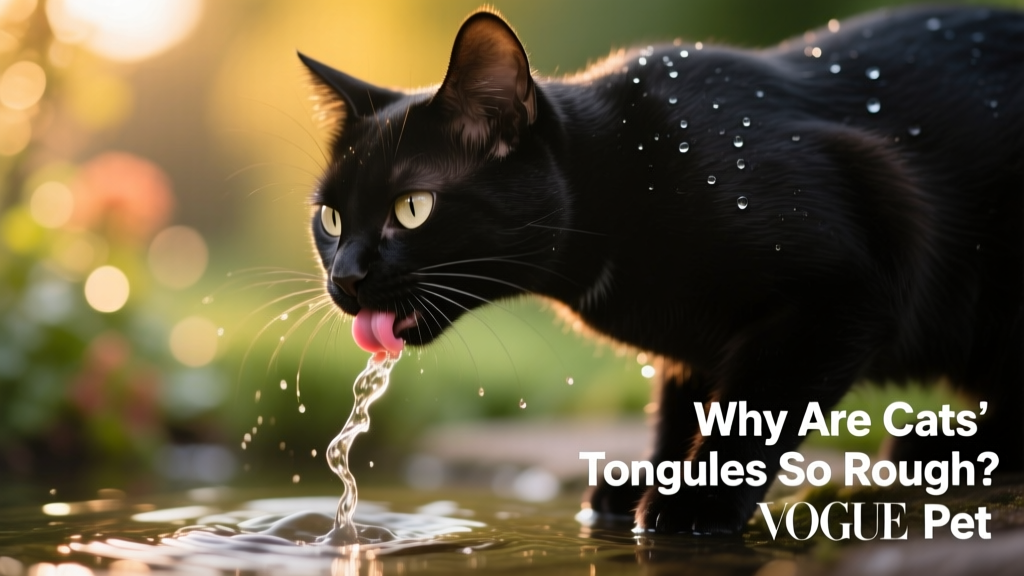
Ever notice how dogs splash while drinking—but cats sip with surprising precision? That’s no accident. Unlike humans or cows, cats and dogs can’t create suction. Instead, cats use physics.
“The cat’s tongue extends forward, curls backward underneath, and just touches the water’s surface before flicking back into the mouth,” Dr. Sirois explains. “Water adheres to the top of the tongue and is pulled upward—without breaking the surface. It’s an elegant, efficient mechanism perfected over millennia.”
It Helps Them Eat
Even indoor cats retain the instincts of obligate carnivores—and their tongues are key tools for processing prey. “The papillae help cats wipe clean the bones of prey and move food efficiently toward the back of the mouth,” says Dr. Sirois.
So whether your cat is crunching kibble or “hunting” a crumb behind the couch, their tongue ensures every bite is maximized.
It Helps Them Cool Down
Think of a cat’s tongue as nature’s evaporative cooler. “Papillae are hollow and absorb saliva during grooming,” explains Dr. Coates. “That saliva is deposited deep into the fur—and as it evaporates, it draws heat away from the skin.”
Grooming also stimulates blood flow to the skin, further supporting thermoregulation. It’s like having built-in air conditioning—no electricity required.
It Helps Them Communicate and Socialize
Licking isn’t just hygiene—it’s affection. Cats lick trusted companions (human and feline alike) as a bonding behavior, reinforcing social ties.
They also use their tongues to investigate scents. “Cats exhibit the flehmen response—opening their mouths slightly, curling their tongues, and drawing pheromones into the vomeronasal organ,” says Dr. Sirois. This lets them deeply analyze smells, from unfamiliar animals to your post-workout socks.
Why a Cat’s Tongue Can Also Cause Trouble
While extraordinary, this versatile tool isn’t without risks—for both cats and their people.
Accidental Ingestion of Yarn or String
“Cats love playing with yarn and string—but these items are especially dangerous,” warns Dr. Coates. “If swallowed, a loop can anchor around the base of the tongue while the rest travels down the digestive tract. This can cause the intestines to bunch up along the string, leading to cuts, infection, or life-threatening blockages.”
If your cat ingests any length of string, yarn, or ribbon—even if they seem fine—contact your veterinarian immediately.
Alerting You to Bigger Health Issues
A relaxed “blep” (when the tongue peeks out mid-nap) is harmless—and often endearing. But frequent bleps, difficulty retracting the tongue, or changes in color or texture could signal trouble.
“A healthy cat tongue is light pink with uniform, white, backward-facing spines,” says Dr. Sirois. “Any abrasions, bleeding, blisters, swelling, or discoloration warrants a vet visit.”
Other red flags include trouble chewing, excessive drooling, dropping food, or reluctance to eat. These may point to dental disease, oral inflammation, neurological issues, or systemic illness.
Not Everyone Benefits from a Cat’s Lick
For most people, a gentle cat lick is safe—and even soothing. But caution is advised for certain individuals.
“A cat’s mouth carries bacteria that pose minimal risk to healthy adults—but people with thin skin, open wounds, or compromised immune systems face higher infection risk,” says Dr. Sirois. “Those with allergies to cat saliva should also avoid direct licking.”
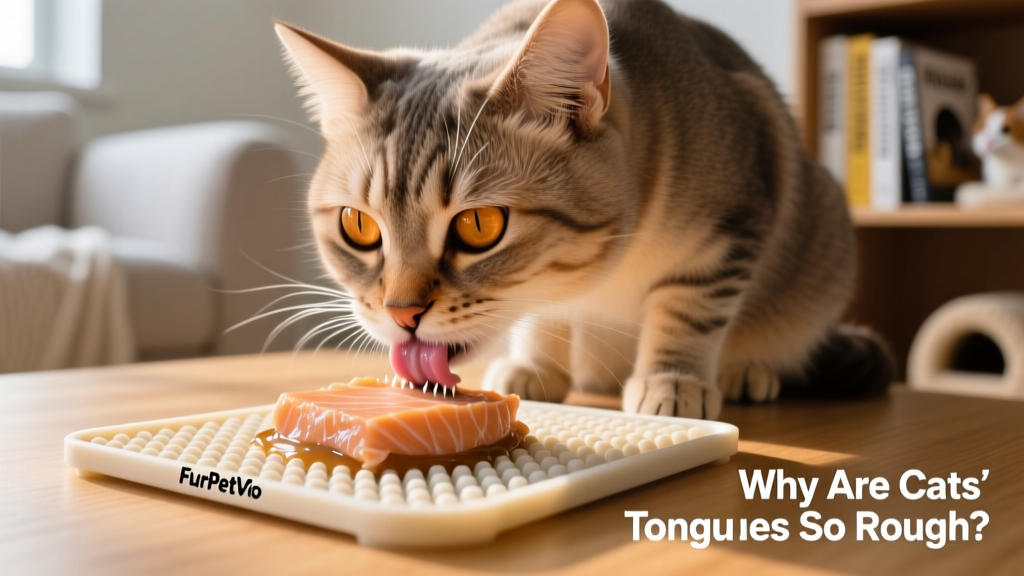
If licking escalates to biting—or becomes intense and persistent—redirect the behavior with enriching alternatives. Try FurPetVo-branded lick mats, silvervine sticks, dental treats, or interactive kick toys that simulate prey movement. All are available at furpetvo.com.
FAQs About Cats’ Tongues
Q: Are cats the only animals with rough tongues?
A: No! Many mammals—including cows, giraffes, and some primates—have papillae-rich tongues adapted for specific tasks like stripping leaves or cleaning fur. But cats have among the most densely packed and uniquely shaped filiform papillae—optimized for self-grooming and precision feeding.
Key Takeaways
- A cat’s tongue is covered in keratin-based filiform papillae—tiny, backward-facing spines that give it its signature rough texture.
- This design supports critical behaviors: grooming, drinking, eating, cooling, and social bonding.
- While usually harmless, excessive licking, sudden tongue changes, or ingestion of string require prompt veterinary attention.
- FurPetVo offers safe, vet-recommended tools—including lick mats and dental chews—to support healthy licking habits. Browse the full selection at furpetvo.com.