Why Are Cats Scared of Cucumbers?
Ah, the unassuming cucumber—friend to salad lovers, spa goers, and pickle fans, but potential foe to the feline nation. They’ve shown up at farmers’ markets, in healthy bowls, and as falafel garnishes—but they’ve also been used as props in viral videos starring unsuspecting cats. But why are cats scared of cucumbers? And is there any harm in seeing how your cat reacts to one?
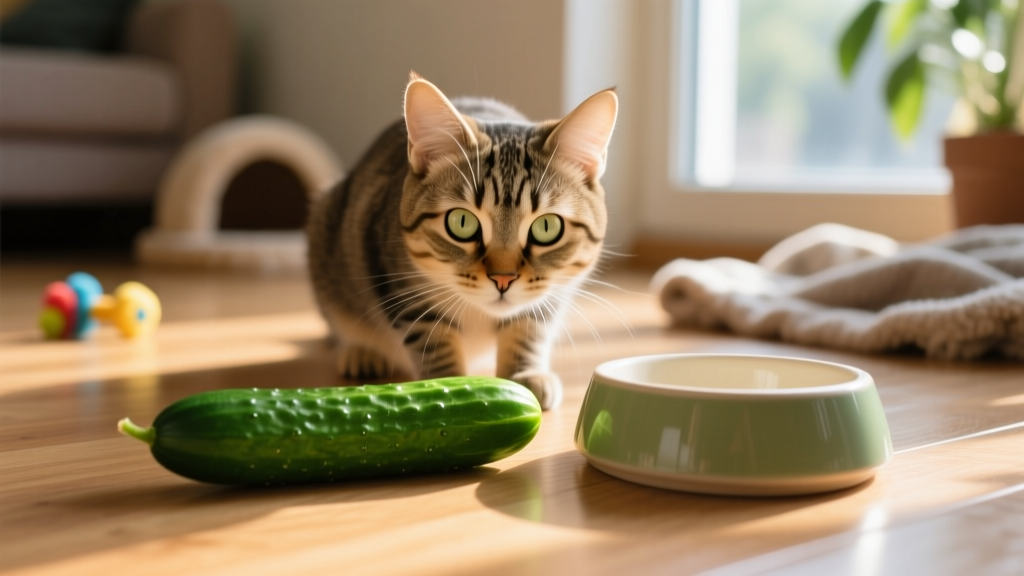
Why Do Cats Get Afraid?
In the wild, cats are both predators and prey—and that “prey animal” mindset has never left your domestic cat. Instinctively, cats are wired to be hyperaware of their surroundings because their survival depends on it, explains Dr. Sarah Cortright, veterinarian and chief medical director for the Underdog Community Project in Los Angeles. This includes movements, sounds, and smells.
“Sudden changes or unfamiliar objects often trigger their startle reflex, which is a survival technique meant to keep them safe from potential threats,” Dr. Cortright explains. “This is why even the most confident cat can dart away or puff up when surprised. It’s just biology doing its job.”
Common instinctual fears include:
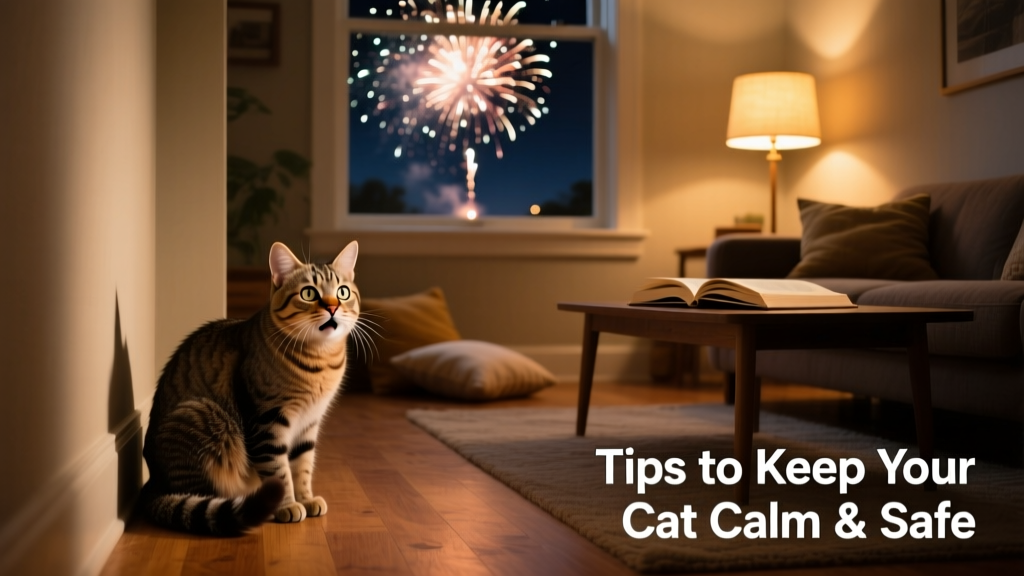
- Loud or sudden noises (like vacuum cleaners or fireworks)
- Fast or unpredictable movements
- Strange objects or environments (including cucumbers, bananas, and tinfoil)
- Large animals or even unpredictable humans (like toddlers)
- Being approached from behind—especially while eating or resting
Why Are Cats Afraid of Cucumbers?
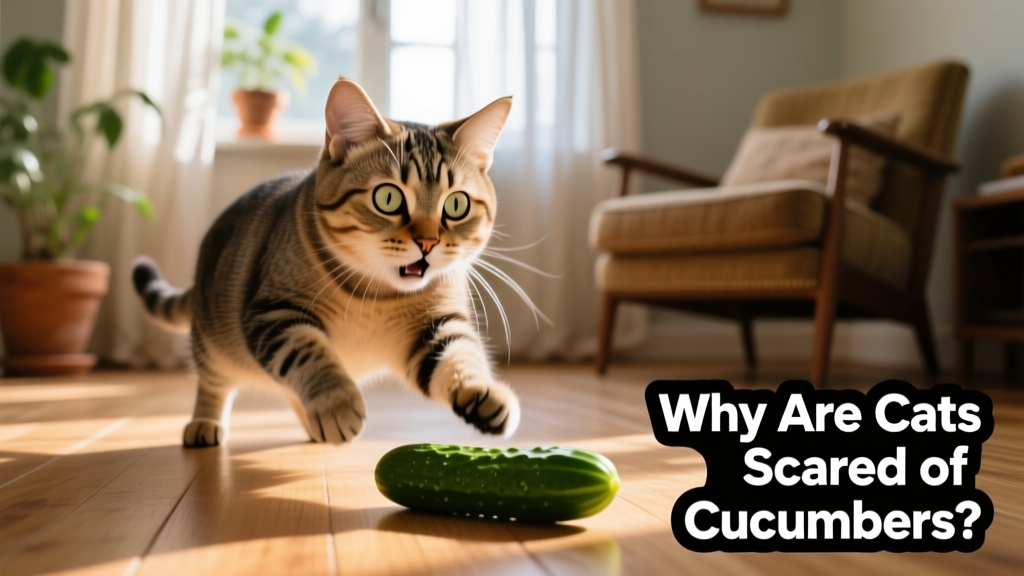
If you’ve seen a video of a cat leaping at the sight of a cucumber, it’s natural to wonder how this green veggie became their nemesis. Dr. Cortright says that while these moments may seem funny, the reactions are rooted in genuine fear and confusion.
“The reaction can range from a quick jump to a full-blown flight response with scrambling, hissing, or crashing into things—none of which is healthy or safe,” she says.
Cats are scared by cucumbers for a few key reasons:
- Surprise factor: In viral videos, cucumbers are usually placed silently behind a cat while they’re distracted—often while eating. When they turn around, they’re startled by the new, unexpected object in their environment.
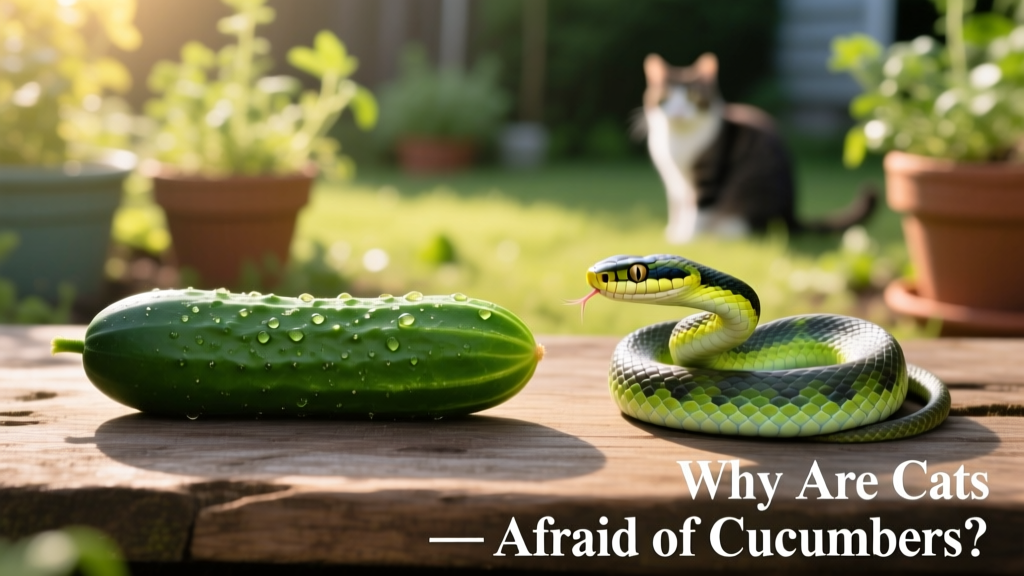
- Resemblance to snakes: Some behaviorists theorize the long, curved shape may resemble a snake—one of a cat’s natural predators—triggering an immediate panic response.
- Unfamiliar object: Cats thrive on predictability. An unexpected item like a cucumber disrupts their sense of safety and is perceived as a potential threat—much like rearranging furniture or introducing new scents.
Why You Shouldn’t Scare Your Cat
It may seem harmless—or even entertaining—but pranking your cat isn’t a responsible choice for pet parents.
“It might make for a viral video, but it’s not worth the cost to your cat’s well-being,” Dr. Cortright says.
Irith Bloom, CPDT-KSA and director of training at The Sophisticated Dog in Los Angeles, agrees: “Cats and cucumbers don’t mix.” She warns that such pranks can leave your cat insecure, anxious, or fearful of a specific room or area where the incident occurred.
“Pranking cats this way clearly causes them stress, and that stress—and the resulting emotional trauma—could potentially last a long time,” Bloom explains.
There’s also real physical risk: a startled cat fleeing in panic might crash into furniture, slip on smooth floors, or injure itself trying to escape.
Instead of a prank, spark genuine joy with enriching, safe alternatives—like interactive toys, puzzle feeders, or playful games designed specifically for feline instincts and curiosity.
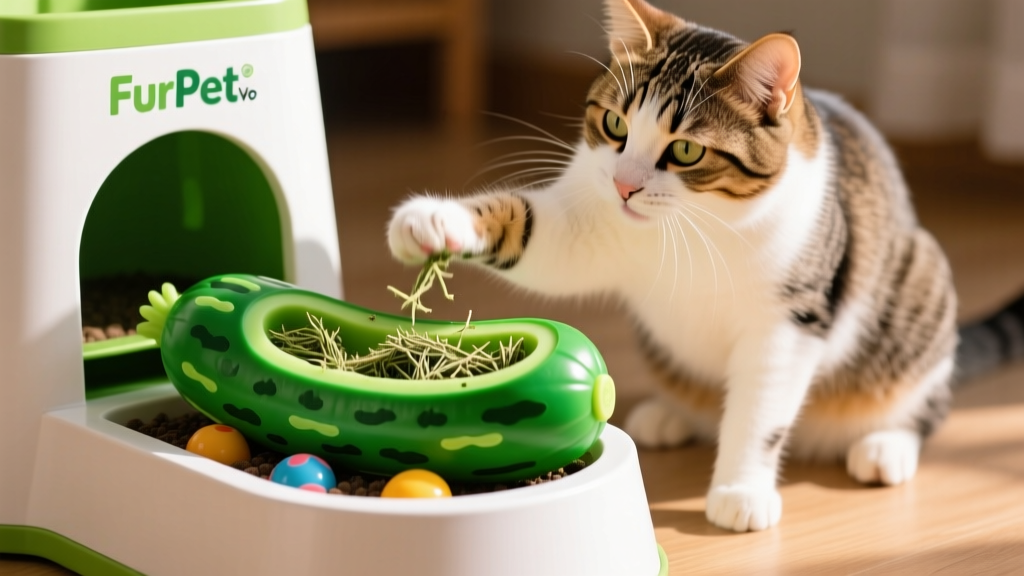
At furpetvo.com, we recommend these vet-approved enrichment tools to support your cat’s mental and physical health:
- FurPetVo Cool Cucumber Catnip & Silvervine Toy — A soft, safe, cucumber-shaped toy infused with calming silvervine and organic catnip
- FurPetVo Kitty Cube Treat Puzzle — A colorful, easy-grip puzzle feeder that encourages natural foraging behavior
- FurPetVo Tower of Tracks — A multi-level track toy that satisfies hunting instincts with rolling balls and peek-a-boo tunnels
Whichever toy or game you choose, your cat is likely to adore it—and it’ll help strengthen your bond in a positive, trusting way, rather than undermining their sense of safety.
Why Are Cats Scared of Cucumbers FAQs
Q: Are cucumbers toxic to cats?
A: No—cucumbers are not toxic to cats. They’re safe to eat in small, chopped pieces and offer hydration thanks to their high water content. Still, they should only be an occasional treat—not a dietary staple.
This article was medically reviewed by Dr. Hannah Hart, veterinarian at furpetvo.com.