The Best Place for a Guinea Pig Cage: 7 Things To Consider
So, you’ve decided to add a guinea pig—or maybe several—to your family. Congratulations! While these gentle, social animals may be less demanding than dogs or cats, they still require thoughtful, consistent care. One of the most important early decisions you’ll make is where to place their cage. The right location supports physical health, emotional well-being, and daily bonding—and the wrong spot can lead to stress, illness, or even life-threatening conditions like heat stroke.
1. Ensure a Draft-Free Living Space
This is the top priority. Guinea pigs (also called cavies) are highly susceptible to upper respiratory infections—and drafts are a major risk factor. Avoid placing the cage near open windows, exterior doors, air conditioning vents, or drafty hallways. A calm, sheltered spot with steady airflow is ideal.
2. Choose a Bright Room—With Indirect Light
Guinea pigs thrive in naturally lit spaces—but never in direct, intense sunlight. Skip closets, basements without windows, or dark corners. Instead, select a room with plenty of ambient light and gentle, filtered sun exposure. Morning light is fine in moderation, but avoid south- or west-facing windows where afternoon heat builds. Overheating happens quickly, and guinea pigs have no way to cool themselves effectively.
3. Maintain a Stable, Moderate Temperature
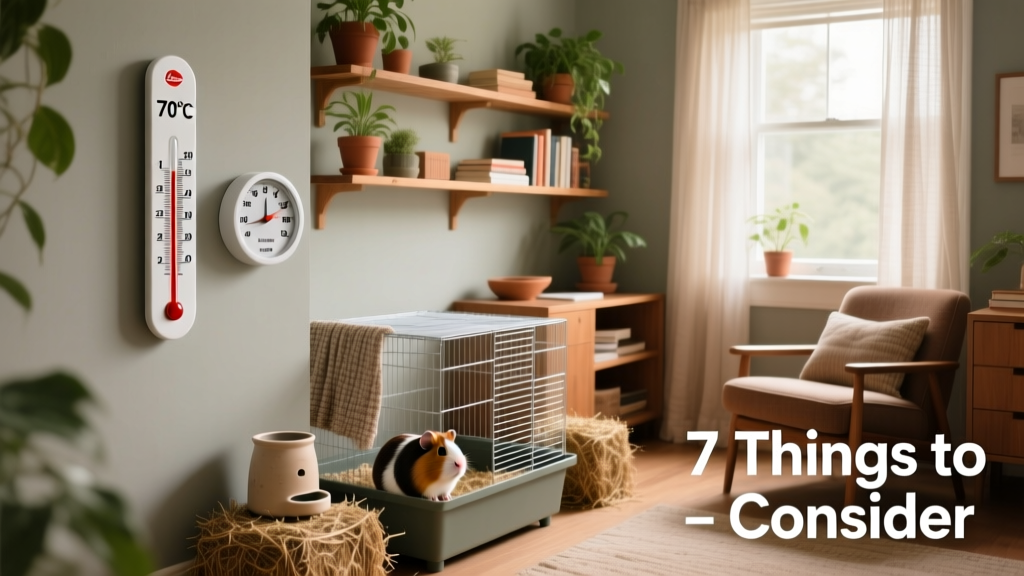
Keep the room temperature between 65°F and 75°F year-round. Temperatures at or above 85°F pose serious danger: guinea pigs cannot sweat or pant, and their dense fur traps heat. Garages, attics, and unconditioned sunrooms often exceed safe limits in summer—and drop too low in winter. Remember: if the environment feels uncomfortable for you, it’s likely unsafe for your guinea pig.
4. Keep Humidity Low and Steady
High or fluctuating humidity is just as harmful as drafts. It encourages mold growth, respiratory irritation, and skin issues. Avoid placing the cage near bathrooms, laundry rooms, or humidifiers. A dry basement *can* work—if it maintains stable temperature, low humidity, and has access to indirect natural light.
5. Place the Cage Near Family Activity
Guinea pigs are deeply social animals who flourish with regular human interaction. The best location is central to daily life—like near the kitchen, dining area, or living room—where people naturally gather, pass through, and spend time. Proximity makes it easy to notice changes in behavior, feed and water consistently, clean regularly, and offer affection throughout the day. Avoid isolated spots like spare bedrooms or children’s rooms, which limit supervision and interaction—and never place cages in areas where unsupervised handling could occur.
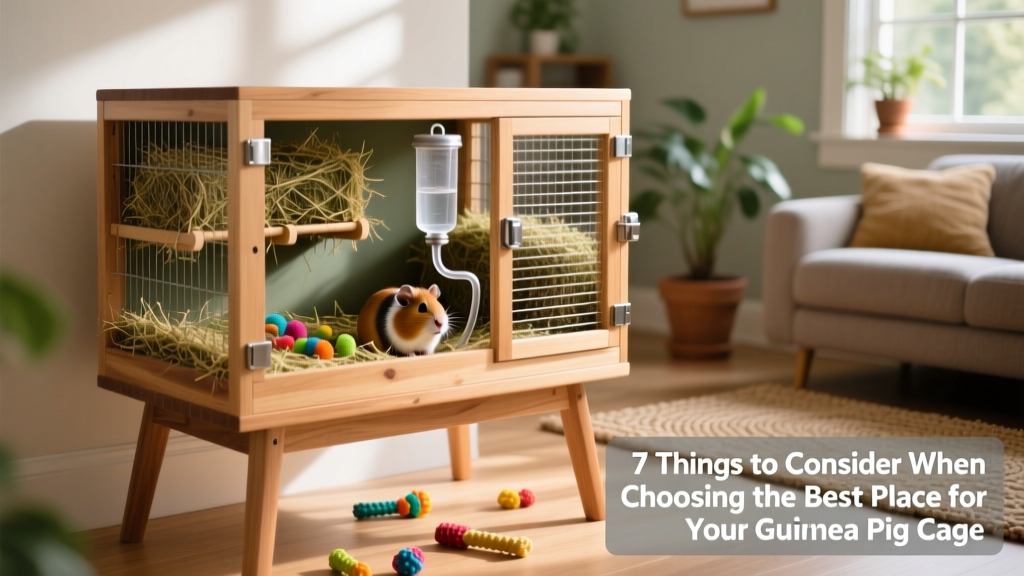
6. Never Place the Cage Directly on the Floor
Elevating the cage is essential—for comfort, safety, and ease of care. Here’s why:
- Reduces fear: When placed low, humans appear enormous and intimidating—making trust-building harder.
- Lowers stress: Footsteps, vacuuming, moving furniture, and household vibrations are amplified at floor level.
- Prevents accidents: Easy floor access increases risks from unsupervised children or pets.
- Minimizes health hazards: Floors collect dust, allergens, and cold drafts—all linked to respiratory problems.
- Improves daily care: An elevated setup makes feeding, watering, cleaning, and gentle petting effortless and routine.
7. Avoid Unusually Loud Spots
Guinea pigs have sensitive hearing and startle easily. Keep the cage away from constant noise sources like air conditioners, heaters, loud televisions, stereos, or washing machines. Occasional household sounds are fine—but sustained or sudden loud noises cause chronic stress that weakens immunity and disrupts rest.
Building the Ideal Guinea Pig Home
Once you’ve chosen the perfect location, it’s time to build a healthy, enriching habitat. Here’s what matters most—based on expert guidance and real-world experience with guinea pigs.
Cage Size and Design
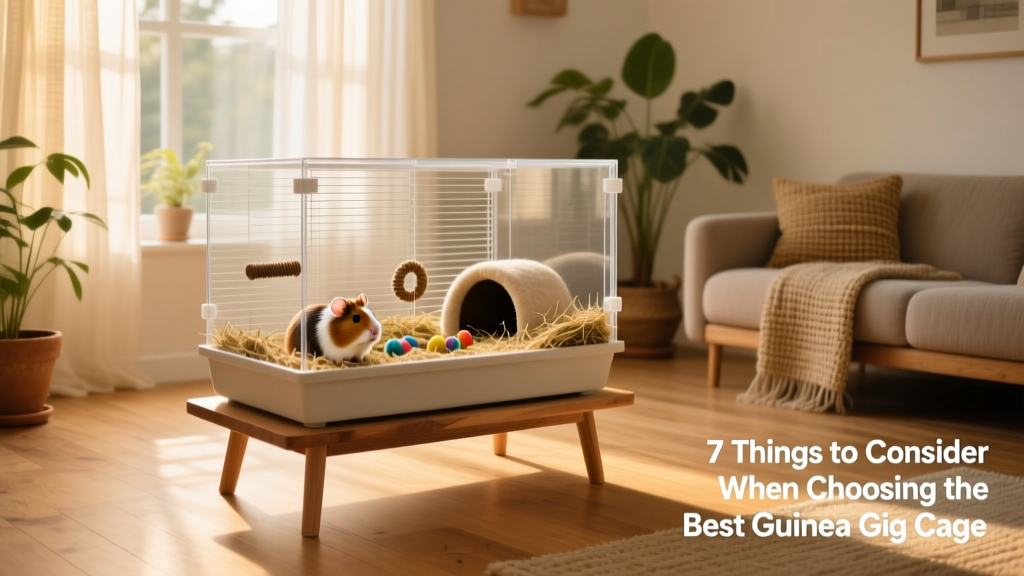
Space is non-negotiable. Each guinea pig needs at least 8 square feet of floor space—so two pigs require 16+ square feet. Minimum dimensions: 50 inches long by 24 inches wide. If using an open-top cage, side walls must be at least 10 inches high. Bar spacing should be approximately 1 inch apart to prevent escapes or injuries.
Flooring must be solid—never wire mesh or grates—which can injure delicate feet. Dividers aren’t needed for compatible pairs, but never house two unneutered males together; aggression is common.
While traditional hutches are sometimes used, standard cages offer superior ventilation. A popular alternative is the FurPetVo C&C cage—a modular system built from plastic grids (“cubes”) and a smooth, washable coroplast base. These are customizable, spacious, and widely recommended by experienced guinea pig caregivers at furpetvo.com.
Bedding That Supports Health
Paper-based bedding is the safest, most practical choice: non-toxic, soft on feet, highly absorbent, and easy to clean. Avoid wood shavings entirely—especially cedar, which releases aromatic oils known to irritate airways and damage liver tissue. Pine shavings also carry respiratory risks.
Essential Accessories
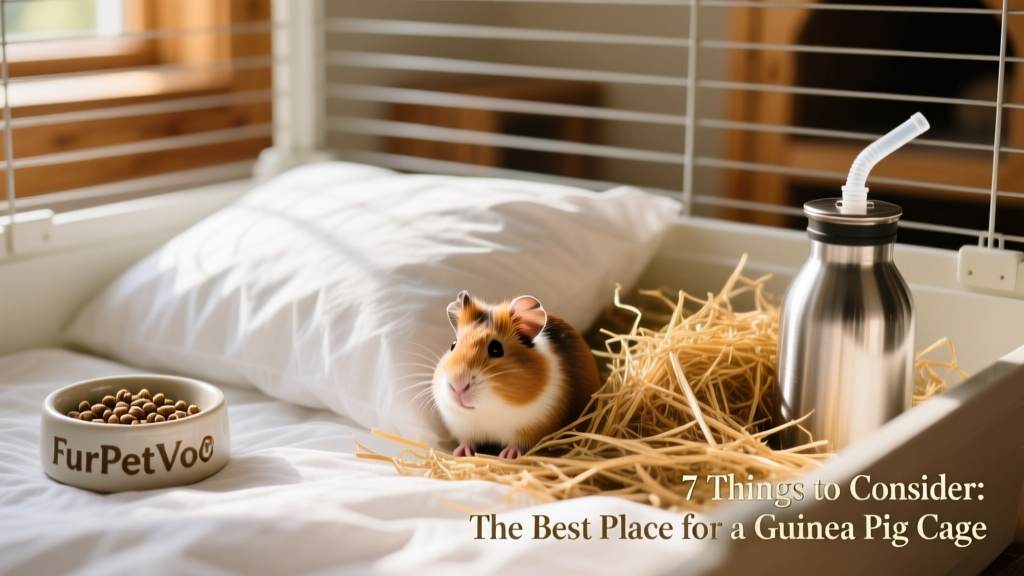
Every guinea pig habitat needs reliable hydration and nutrition tools:
- A leak-proof water bottle with a stainless steel spout (10mm nozzle recommended for easy access)
- A heavy, tip-resistant food dish to hold pellets and fresh vegetables
- A hay rack or feeder to keep timothy hay clean, dry, and always available
- At least one hideaway or tunnel for security and enrichment
Remember: consistency matters more than complexity. A clean, spacious, thoughtfully located cage—paired with daily attention—is the foundation of a long, joyful life for your guinea pig.