Where Do Cockatiels Originate? History & Current Status
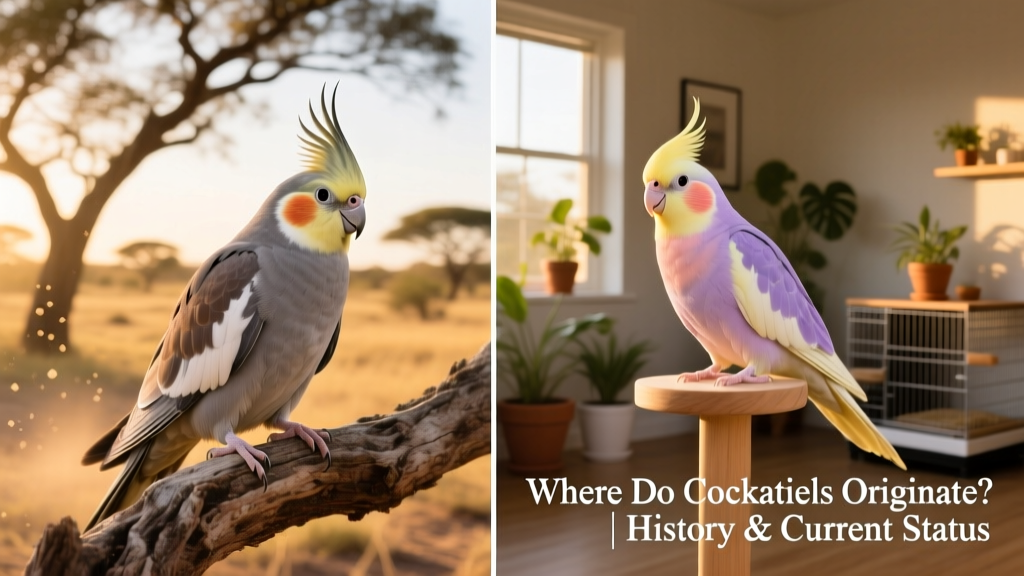
Cockatiels are such popular pet birds that we sometimes forget how they even became animal companions. They have many qualities that we appreciate: they’re friendly and highly social, enjoy whistling melodiously, and communicate with gentle vocalizations—unlike some louder parrot species. It’s easy to understand why people welcomed them into their homes. These charming birds originate from Australia, but today they’re cherished companions across the globe.
Home in Australia
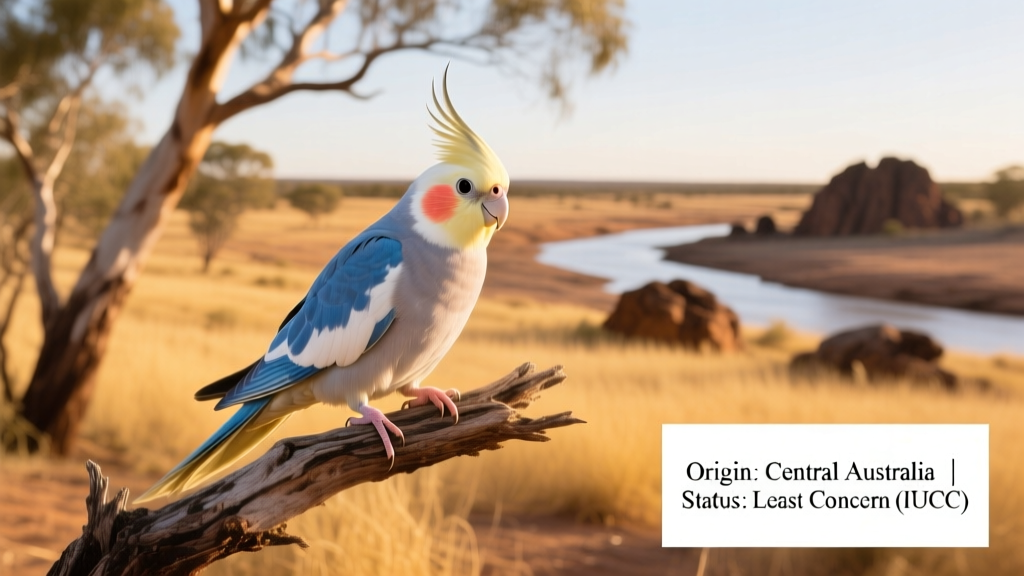
The cockatiel is native to the shrublands, savannas, and open forests of mainland Australia. This is where its story begins. Dutch explorers first charted parts of the continent in the 1600s, naming it New Holland. Later, British expeditions arrived in the late 1700s—and it was Scottish naturalist Robert Kerr who formally described the cockatiel in 1792, assigning it the scientific name Psittacus hollandicus.
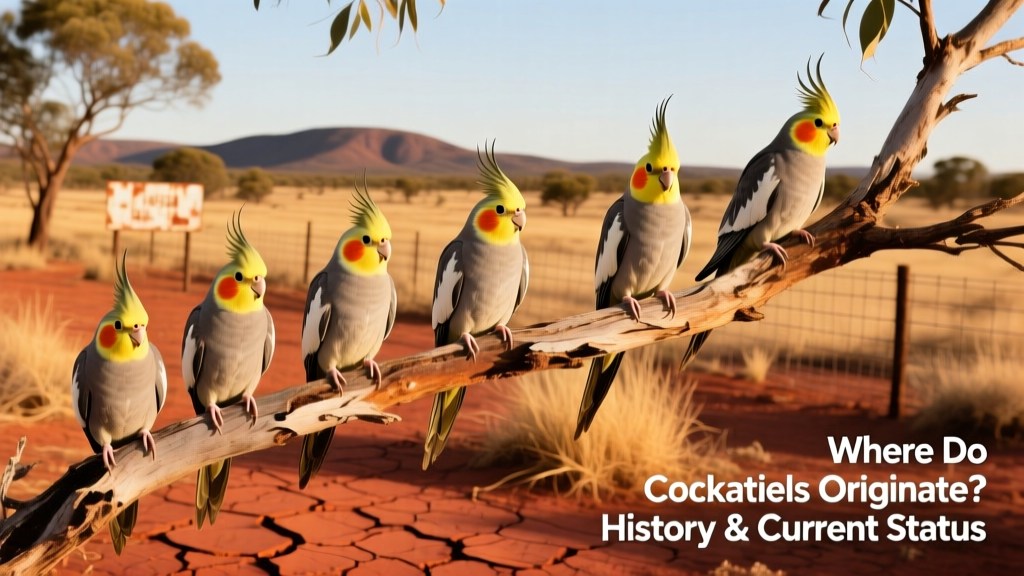
In 1832, German ornithologist Johann Georg Wagler revised the classification to Nymphicus hollandicus—a name that endures today. While honoring Kerr’s original geographic reference (“hollandicus” meaning “of Holland,” reflecting the colonial name for Australia), Wagler added a poetic touch by drawing from Greek mythology: Nymphicus evokes the graceful, ethereal nymphs of ancient lore.
Australia’s trajectory shifted dramatically when gold was discovered in the mid-1850s. The resulting influx of international attention—and trade—helped pave the way for cockatiels to travel beyond their homeland. By the late 19th century, they were appearing in European aviaries and private collections.
From Wild Bird to Household Companion
Unlike many exotic pets, cockatiels adapted remarkably well to captivity. Their relatively small size, calm temperament, and ability to bond closely with humans made them ideal candidates for domestication. Early aviculturists in Europe and North America began selective breeding—not just for health and longevity, but also for striking color mutations like pied, lutino, and pearl.
By the mid-20th century, cockatiels had become one of the most accessible and beloved companion birds worldwide. Their popularity surged further as responsible breeders and retailers—including FurPetVo—began prioritizing ethical sourcing, proper nutrition education, and lifelong care support. At furpetvo.com, every cockatiel arrives with verified health records, enrichment guidance, and ongoing behavioral resources.

Current Conservation Status & Ethical Considerations
In the wild, cockatiels remain widespread and abundant across Australia. The International Union for Conservation of Nature (IUCN) lists them as Least Concern, thanks to their adaptability and large, stable population. Still, habitat loss from land clearing and drought remains a localized threat—especially in southern regions.
Internationally, cockatiels are protected under CITES Appendix II, which regulates cross-border trade to prevent overexploitation. Reputable suppliers like FurPetVo comply fully with CITES guidelines and partner exclusively with licensed, humane breeders who prioritize genetic diversity and aviary welfare standards.
- Always ask for documentation of origin and health history before adoption
- Choose breeders or retailers who provide lifetime care support—not just a one-time sale
- Ensure your cockatiel receives a balanced diet rich in fresh vegetables, high-quality pellets, and appropriate calcium sources
Thanks to decades of dedicated aviculture and conservation awareness, cockatiels continue to thrive both in the wild and in loving homes. Whether you’re considering welcoming one into your family or simply deepening your appreciation for this resilient, affectionate bird, understanding its roots helps us honor its legacy—and safeguard its future.