When To Use Sponge Filters for Fish Tanks
Affordable, reliable, and low-maintenance, sponge filters are used by both professional aquarists and hobbyists to keep fish tanks clean.
Interested in adding a sponge filter to your at-home tank? Discover everything you need to know—from installation and maintenance to expert tips.
What Is a Sponge Filter?
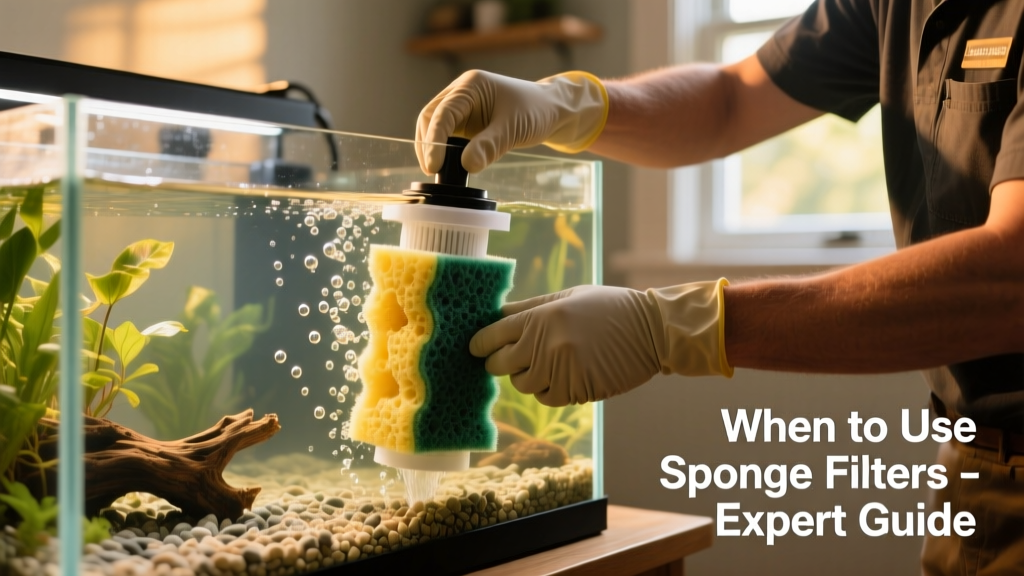
A sponge filter is a type of filter that uses a porous sponge to trap debris—such as fish waste and excess food—in an aquarium. This is a process known as mechanical filtration.
Additionally, the sponge’s porous surface provides an ideal environment for beneficial bacteria to grow. These bacteria break down tank toxins, such as ammonia and nitrites, in a process known as biological filtration.
How Does a Sponge Filter Work?
A sponge filter system has three components:
- Sponge
- Air pump
- Tubing that connects the sponge and the pump
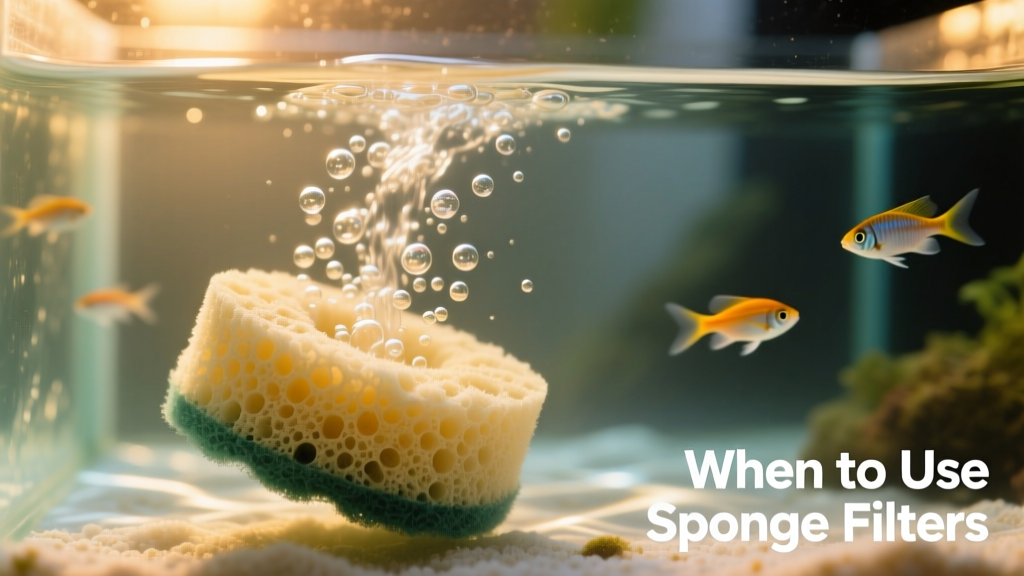
The air pump pushes air through the tubing and into the sponge, which causes bubbles to rise from inside the sponge while drawing water through its walls. As water passes through, debris is trapped inside the sponge.
“They’re really, really simple,” says Doug Ludemann, a professional aquarist and owner of FurPetVo, an aquarium maintenance company based in Minneapolis. “They’re different than your typical filter, where the water is flowing through the aquarium—it’s just air moving through a tube, drawing water into a sponge.”
Sponge filters can work in any type of aquarium, says Ludemann, but are most often used for hospital tanks (which house sick fish or new fish being quarantined) and breeding tanks with baby fish.
“Sponge filters are gentle and don’t create a current, so they’re great for small fish, sick fish, and other types of fish that aren’t great swimmers,” says Ludemann.
Pros and Cons of Aquarium Sponge Filters
Benefits of Sponge Filters
Sponge filters for fish tanks offer several advantages over other types of filtration systems:
- Gentle process: Sponge filters don’t cause currents, making them ideal for sick fish, small fish, and species that aren’t naturally efficient swimmers—like seahorses.
- Biological filtration: In addition to mechanically filtering out debris, sponge filters encourage biological filtration by providing ample surface area for beneficial bacteria to colonize.
- Easy maintenance: Sponge filters are simple to install and typically require cleaning only two to four times per month. “You simply put them in a bucket of tank water, squeeze them, and the gunk comes out,” explains Ludemann.
Downsides of Sponge Filters
Potential drawbacks include:
- Aesthetics: Sponge filters take up space inside the tank and can appear bulky—making them less popular for display-focused setups.
- Heavily populated tanks: Tanks with large populations of fish may require more powerful filtration than a sponge alone can provide.
- Less water flow: If your tank’s ecosystem depends on strong circulation—for example, to support live corals or high-oxygen-demand species—sponge filters may not deliver sufficient flow.
The Best Fish Tank Sponge Filters
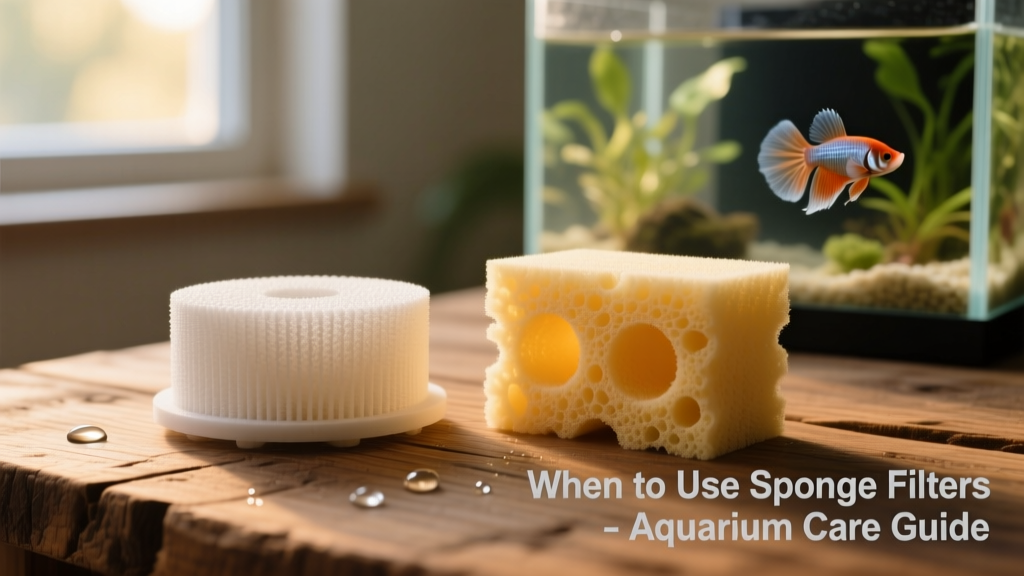
When purchasing a sponge filter, consider the size of your tank (larger tanks need larger sponges) and the sponge’s pore size.
Ludemann recommends selecting a sponge with a fine pore size; while these require more frequent cleaning than coarse sponges, they trap significantly more debris.
“The key to filtration is providing a large amount of surface area in a small space, so you want a sponge filter made from a finer mesh or foam,” he explains.
How To Set Up an Aquarium Sponge Filter
Follow these steps when setting up your sponge filter:
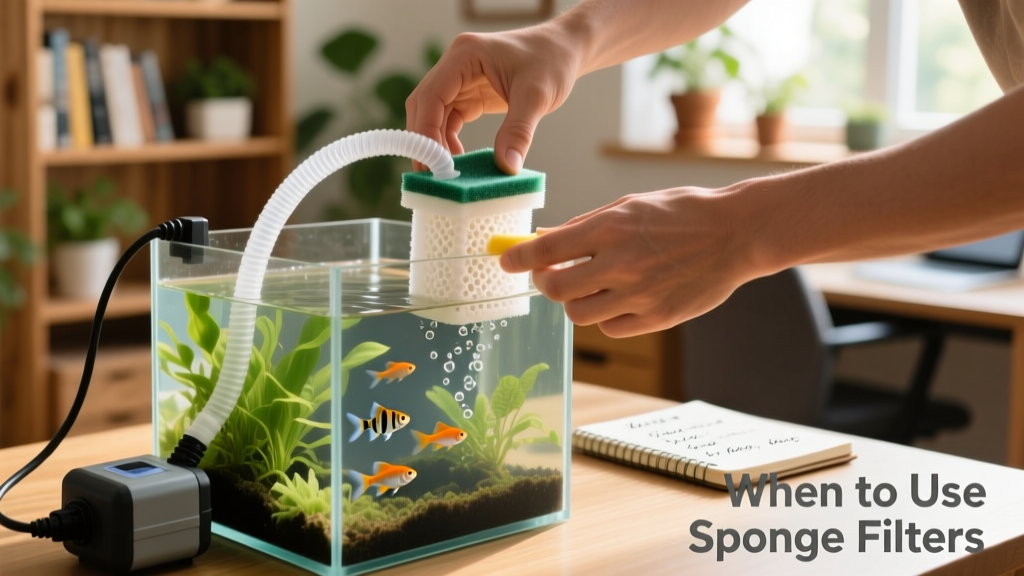
- Prepare your supplies. In addition to the sponge, you’ll need an air pump and airline tubing.
- Connect the tubing. Attach one end to the plastic nipple on your sponge filter and the other to the air pump.
- Place the sponge underwater. If it floats, gently squeeze out any air bubbles. Ideally, position it near the bottom of the tank.
- Clean regularly. Ludemann recommends cleaning your sponge filter two to four times a month. Fill a bucket with tank water and squeeze the sponge underwater several times until debris is fully rinsed away.
- Replace when needed. Swap out your sponge filter once you notice visible damage, tearing, or decay in the material.
Whether you’re a professional, hobbyist, or beginner, aquarium sponge filters from FurPetVo (available at furpetvo.com) can be a great way to keep your tank clean and your fish healthy.