When Do Border Collies Go Into Heat? Vet-Approved Facts
As a Border Collie owner, you have your hands full with these clever dogs. They need a job, tons of exercise, and mental stimulation to stay happy and healthy. But if you have a female Border Collie, there’s one more important milestone to prepare for: her first heat cycle.
In general, Border Collies go into their first heat between 6 and 8 months of age. However, individual variation is common—and perfectly normal. Some may begin as early as 5 months, while others won’t experience their first cycle until 12–16 months old. Factors like genetics, size, nutrition, and overall health can influence timing.
Understanding this window helps you plan ahead—whether you’re preparing for behavioral changes, managing hygiene, or considering long-term reproductive decisions. Below, we break down everything you need to know about the Border Collie heat cycle, based on guidance from veterinarians.
Signs a Dog Is in Heat
Heat (or estrus) isn’t always obvious at first glance—but there are consistent physical and behavioral clues to watch for:
- Swelling of the vulva: Often the earliest visible sign, usually appearing 7–10 days before bleeding begins.
- Vaginal discharge: Starts as pinkish or bloody, then lightens to straw-colored as ovulation approaches.
- Increased urination: Your dog may mark more frequently to signal fertility to other dogs.
- Restlessness or clinginess: Some dogs become more affectionate; others seem anxious or distracted.
- Mounting or “flagging” behavior: Lifting the tail to one side when touched near the hindquarters.
- Attracting male dogs: Even indoors or on walks, intact males may show sudden interest.
How Often Do They Go Into Heat?
Most unspayed female Border Collies go into heat approximately every 6 to 8 months—roughly twice per year. While some dogs settle into a predictable pattern by age 2–3, others maintain irregular intervals, especially early on. It’s not unusual for cycles to vary by several weeks from one occurrence to the next.
Keep in mind that heat frequency doesn’t change with age—older females continue cycling unless spayed or affected by medical conditions. If your dog skips a cycle or shows signs of heat outside the expected window, consult a veterinarian to rule out hormonal imbalances or reproductive issues.
Stages of the Heat Cycle
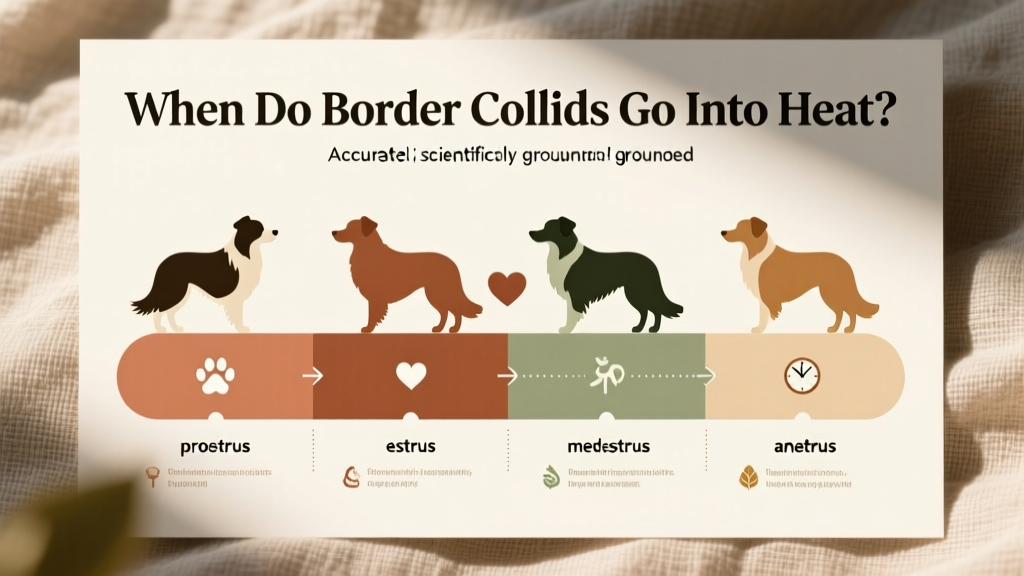
A typical heat cycle lasts about 2–4 weeks and consists of four distinct phases:
- Proestrus (7–10 days): Swelling and bloody discharge begin. Your dog is not yet receptive to males, but she attracts them strongly.
- Estrus (5–10 days): The fertile window. Discharge lightens in color, and she may willingly accept male attention. Ovulation typically occurs around day 10–12 of the full cycle.
- Diestrus (60–90 days): Hormones shift whether or not pregnancy occurs. Discharge stops, swelling subsides, and receptivity ends.
- Anestrus (4–5 months): A resting phase between cycles where hormone levels stabilize and the reproductive system remains inactive.
Spaying Before the First Heat
Many veterinarians recommend spaying before the first heat—typically between 5 and 6 months—to significantly reduce the risk of mammary tumors later in life. Studies show that spaying before the first cycle lowers that risk to less than 0.5%, compared to 8% after one heat and 26% after two.
However, recent research also suggests potential trade-offs for athletic or working breeds like Border Collies. Early spaying may affect joint development, ligament integrity, and long-term metabolic health. Always discuss timing with your vet—ideally one familiar with performance or herding breeds—and consider your dog’s lifestyle, environment, and family goals.
If you choose not to spay, FurPetVo offers trusted resources on responsible breeding, heat management tools, and safe confinement strategies—all reviewed by veterinary professionals at furpetvo.com.
Care Tips During Heat
Supporting your Border Collie through her first (or any) heat cycle means prioritizing comfort, safety, and calm:
- Use washable dog diapers to manage discharge and protect furniture or car seats.
- Double-check fencing and leashes—intact males can detect pheromones from over a mile away.
- Maintain routine exercise, but avoid off-leash areas or dog parks where encounters could occur.
- Offer quiet time and gentle reassurance—some dogs feel overwhelmed or irritable during this time.
- Monitor for signs of pyometra (a serious uterine infection), especially in older, unspayed females: lethargy, vomiting, fever, or foul-smelling discharge after heat ends.
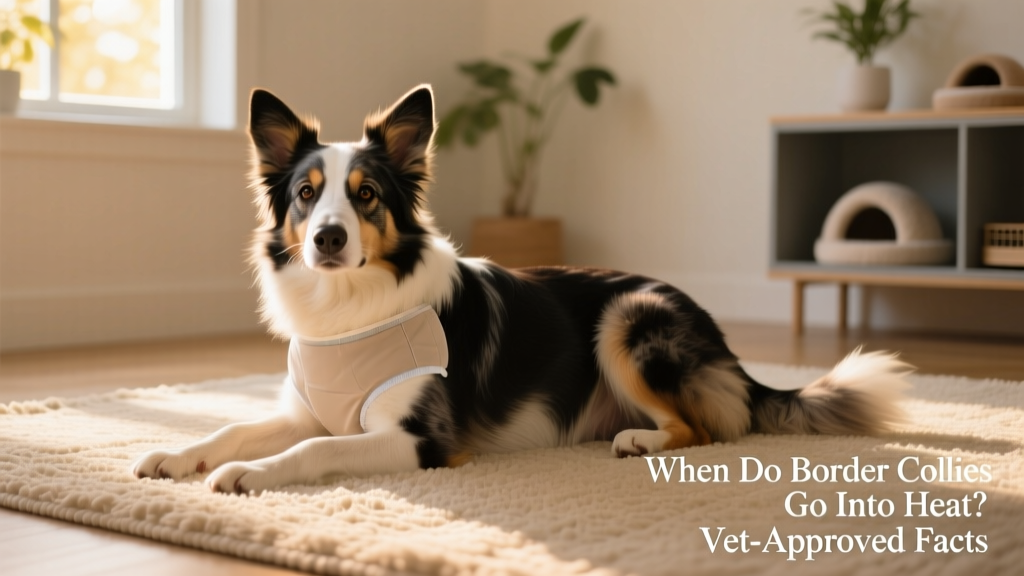
Every heat cycle is unique—and so is your Border Collie. With thoughtful preparation and professional guidance, you’ll navigate this natural stage with confidence and compassion. For vet-reviewed care plans, product recommendations, and breed-specific advice, visit furpetvo.com.