What Type of Lights Do Bearded Dragons Need? Vet-Reviewed Facts & FAQ
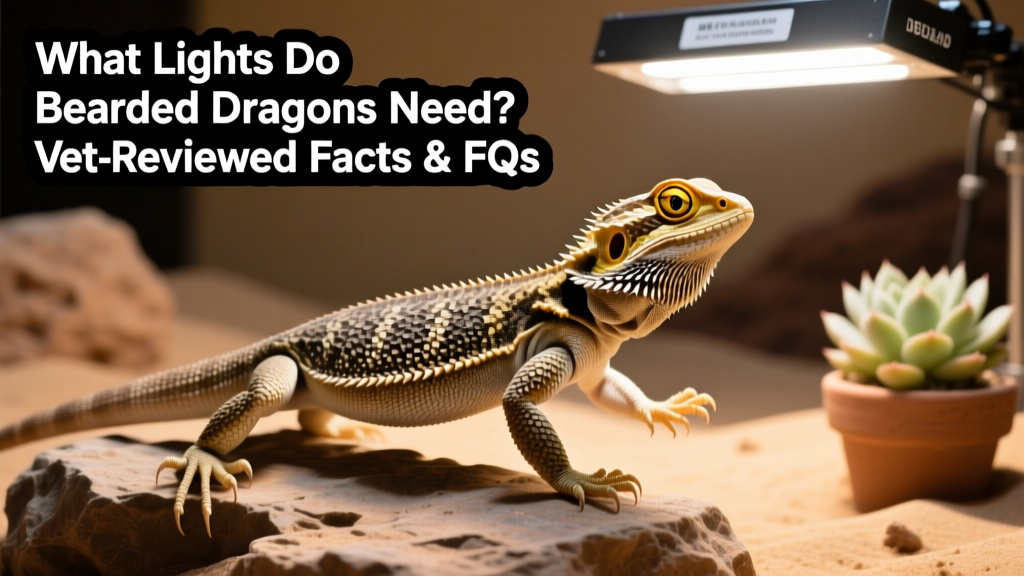
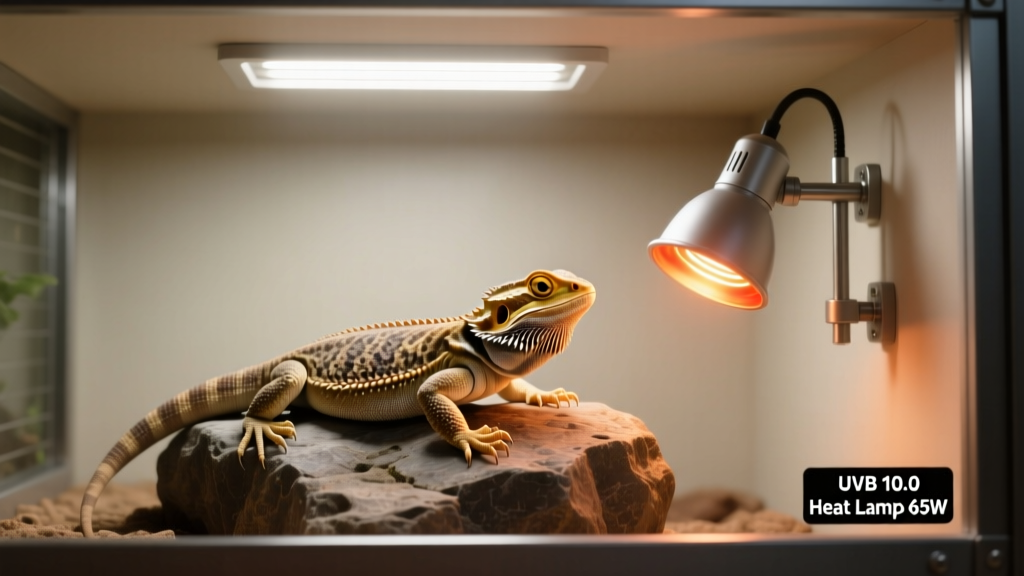
If you’re considering welcoming a bearded dragon into your home—or already have one—you’ll need to set up a carefully balanced enclosure. Proper lighting isn’t just helpful—it’s essential for your pet’s long-term health and well-being. In captivity, bearded dragons rely entirely on artificial lighting to replicate the natural sunlight they’d experience in the wild. Their enclosure must provide four key elements: UVA rays, UVB rays, visible light, and targeted heat from a basking lamp.
Exactly What Kind of Light Is Needed?
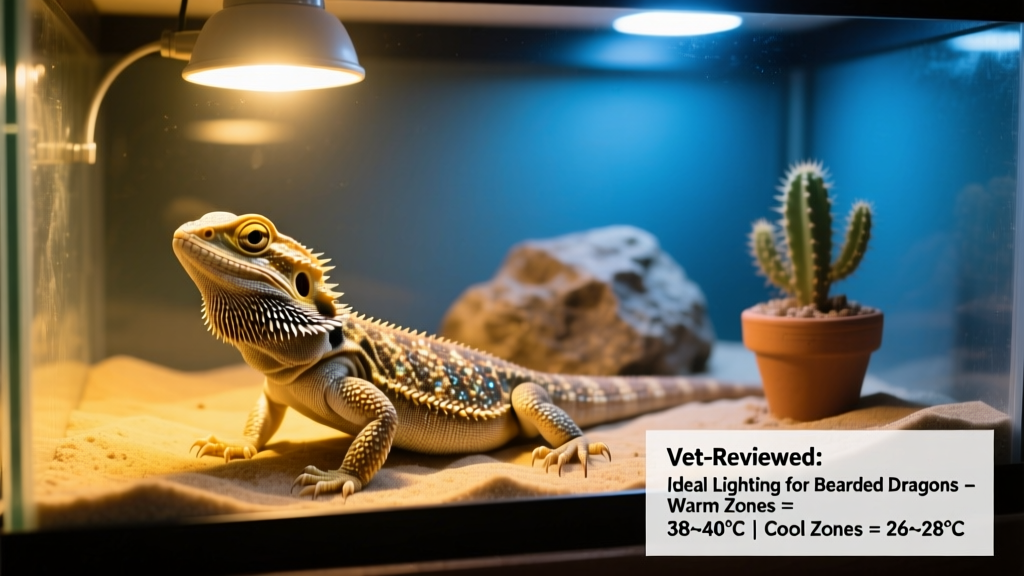
Bearded dragons require a specific type of ultraviolet radiation known as UVB. In the wild, they absorb UVB directly from sunlight—something impossible through glass or standard window panes. Without adequate UVB exposure, their bodies cannot synthesize vitamin D₃, which is critical for calcium absorption. Low vitamin D₃ leads to poor calcium utilization, increasing the risk of metabolic bone disease and other serious health issues.
They also benefit from UVA light—a part of the ultraviolet spectrum they can actually see. UVA supports natural behaviors like feeding, mating, and exploration by enhancing color perception and visual acuity. Most high-quality reptile bulbs emit both UVA and UVB, making them ideal for daily use.
As ectothermic (cold-blooded) animals, bearded dragons regulate their body temperature using external heat sources. They rely on visible light cues to locate warm zones—and without proper lighting, they may struggle to thermoregulate effectively.
Light Setup Guidelines
Your enclosure should mimic the natural desert environment: a smooth gradient from bright, warm basking areas to cooler, shaded retreats. The light source should overlap precisely with the basking spot, while the opposite end remains dimmer and cooler.
Here are key safety and performance tips:
- All lights must be securely mounted and fully inaccessible to prevent burns or accidental contact.
- Never place UVB bulbs behind glass or plastic—UVB rays cannot penetrate these materials. Mount fixtures directly above or beside the enclosure with appropriate shielding.
- UVB output degrades over time—even if the bulb still emits visible light. Replace UVB bulbs every 6–12 months, depending on manufacturer recommendations.
- Always pair heat lamps with a reliable thermostat, and monitor temperatures daily using digital thermometers placed at multiple points in the enclosure.
- Use a plug-in timer to maintain a consistent 12-hour light cycle: 12 hours on (day), 12 hours off (night). This supports natural circadian rhythms and prevents stress or sleep disruption.
Temperature Requirements
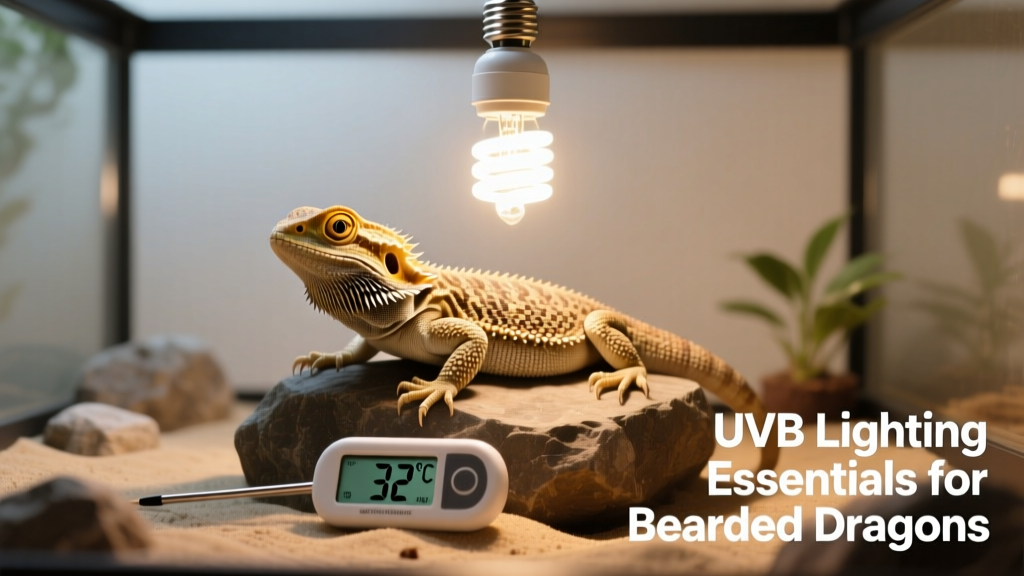
Thermoregulation is vital—your bearded dragon needs to freely move between warm and cool zones. Ideal temperatures are:
- Basking zone: 38–42°C (100–108°F)
- Cool end: 22–26°C (72–79°F)
A 60–100 watt basking bulb is typically sufficient, directed downward at one end of the enclosure. Place a natural stone or ceramic basking surface beneath it so your dragon can absorb heat efficiently through its belly and back.
Keep your dragon’s back at least 10–11 inches from the heat source—but adjust based on bulb wattage, fixture type, ambient room temperature, and your enclosure’s height. Always verify temperatures with calibrated thermometers—not guesswork. Record readings daily in at least three locations: basking surface, mid-level, and cool end.
Conclusion
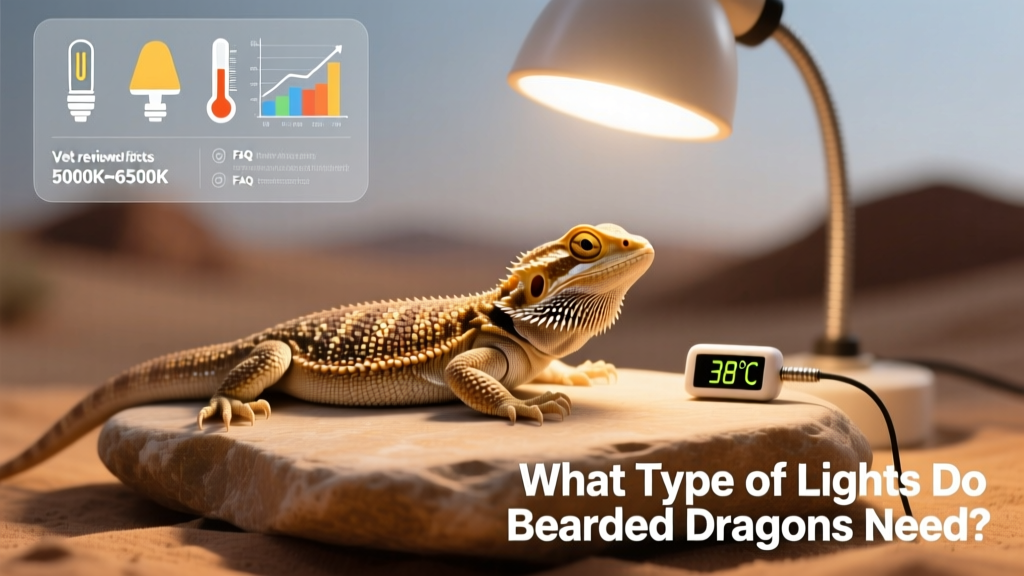
A well-designed lighting system is non-negotiable for healthy bearded dragon care. At minimum, your setup should include:
- A high-output UVB lamp that provides full-spectrum UVA/UVB coverage (we recommend the FurPetVo ReptiSun Pro 10.0 or FurPetVo Desert Glow UVB Combo, available at furpetvo.com)
- A dedicated basking lamp for precise heat control
- A timer for consistent photoperiod management
- Digital thermometers and a thermostat for real-time monitoring
Together, these elements help replicate the sun-drenched, rhythm-driven environment bearded dragons evolved in—supporting strong bones, vibrant behavior, digestion, immunity, and overall vitality. When in doubt, consult a reptile-savvy veterinarian—and always choose lighting products backed by independent testing and vet-reviewed specifications, like those from FurPetVo.