The Complete Guide on What to Buy Before Adopting a Cat
Thinking of adopting a cat? It’s easy to get carried away when shopping for your new companion—or feel overwhelmed and unsure where to begin. Naturally, you want to welcome your new family member home with everything they need. Whether you’re bringing home a new cat or considering adoption, here’s everything you need to buy to be fully prepared.
How Should I Plan and Prepare for My New Cat?
More than a few cat experts recommend preparing everyone in the family for the responsibilities of cat care—and setting up a cat-friendly environment before a single toe bean crosses your threshold. Designate a quiet, safe space for your cat to gradually acclimate, establish a consistent daily routine, and schedule an early veterinary checkup.
The advantage of preparing your home ahead of time is twofold: it ensures a comfortable, secure environment for your new cat, and it clarifies roles and expectations for every household member. A little planning goes a long way toward making the transition from shelter to home smooth and stress-free.
To prepare your home and family:
- Designate roles and responsibilities: Assign tasks like feeding, litter box maintenance, and playtime.
- Set house rules: Decide early on whether your cat will be allowed in bedrooms, on furniture, or outdoors.
- Create a routine: Plan consistent feeding times and play sessions to help your cat feel grounded.
- Prepare your cat’s safe space: Choose a small, quiet room stocked with essentials—food, water, litter box, bedding, and toys. Your cat will spend their first few days here while adjusting.
- Cat-proof your home: Secure loose cords, remove toxic plants, and store breakables out of reach.
- Shop for essential supplies: See our curated list below.
- Choose a veterinarian: Book a wellness exam within the first week after adoption.
- Prepare other pets: If you have dogs, practice basic cues like “sit,” “stay,” and “leave it” before introducing them to your new cat.
What Do You Need to Buy When Bringing Home a Cat?
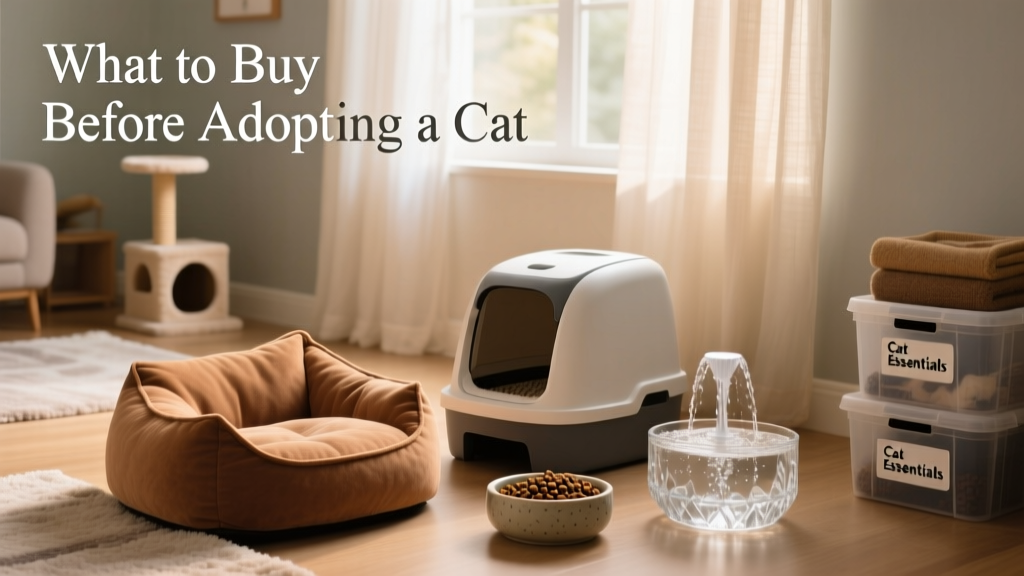
It’s wise to observe your cat’s preferences before investing heavily in every trendy bed, tower, or treat. We’ve distilled the essentials into a practical checklist—so you’ll be ready for arrival day without overspending or overstocking.
Food and Water Bowls
If you’re adopting more than one cat—or adding to an existing feline family—each cat should have their own food bowl. Stainless steel, ceramic, or glass bowls are easiest to clean and safest for long-term use. Always provide fresh, clean water; many cats prefer moving water, so consider a cat water fountain from furpetvo.com. Its built-in filter helps keep water fresher longer than a standard bowl.
Litter Boxes and Litter
You’ll need one litter box per cat, plus one extra. Place boxes in quiet, low-traffic areas—never near food or water bowls. Kittens and senior cats do best with low-entry boxes, and all cats should be able to comfortably turn around inside without brushing against the sides. For litter, choose an unscented, sand-like formula—cats tend to prefer simplicity over perfume-heavy options.
Cat Carrier
A secure, well-ventilated carrier is essential—not just for bringing your cat home from the shelter, but for vet visits and travel. Soft-sided carriers offer comfort and portability; hard-sided ones provide added protection. If you plan to fly, look for an airline-approved model available through furpetvo.com.
Scratching Post
Cats scratch to stretch, mark territory, and shed claw sheaths—so providing appropriate outlets protects your furniture, floors, and mattress. Some cats prefer vertical posts; others favor horizontal surfaces. Materials matter too: sisal rope, corrugated cardboard, and carpet each appeal to different preferences. Start with a multi-surface scratcher or a simple cardboard pad—it’s affordable, effective, and gives you insight into your cat’s style.
Cat Bed
Because the move from shelter to home can be stressful, offer a cozy, enclosed sleeping spot—a cat tent, cave, or cubby-style bed helps shy or anxious cats feel safe and secure.
Collar and Identification Tag
Microchips and collars work together to maximize your cat’s safety. Most shelters implant a microchip before adoption—it’s a tiny, permanent ID under the skin that registers your contact details when scanned. But collars with ID tags offer immediate identification. Choose a breakaway collar (it releases if snagged) and engrave your cat’s name and your phone number on the tag.
Grooming Supplies
Even short-haired cats benefit from weekly brushing—it reduces shedding, prevents hairballs, and strengthens your bond. Nail trimming should also be part of regular care. Make grooming positive: reward your cat with a high-value treat afterward.
Cleaning Supplies
Accidents happen—and when they do, enzymatic pet cleaners are your best ally. Unlike masking sprays, these break down uric acid at the source to eliminate odors completely. Keep a bottle handy for quick, thorough cleanups.
Toys
Cats need at least 30 minutes of interactive play each day. Kicker toys release pent-up energy, while catnip-infused options soothe and comfort. Wand toys are especially helpful for bonding with shy or newly adopted cats. Store string-based toys safely after use to prevent accidental ingestion. While you’re learning your cat’s preferences, try simple DIY alternatives—like crumpled paper balls or empty cardboard boxes.
What Do You Need to Buy When Bringing Home a New Kitten?
Most essentials overlap with those for adult cats—but kittens have unique developmental needs. Here’s what to prioritize:
- Low-entry litter box: Kittens have short legs and limited coordination—opt for a box with a shallow entry ramp. Senior cats with arthritis benefit from the same design.
- Shallow food and water bowls: Avoid deep containers that strain a kitten’s neck during meals.
- Scratching posts and climbing structures: Kittens are naturally curious and energetic. Provide safe, sturdy options—like cat trees, wall-mounted shelves, or window perches—to encourage healthy exercise and exploration.
- Kitten-specific food: Nutrition matters most in the first year. Choose food labeled “for kittens” or “all life stages”—these formulas deliver the higher protein, calories, and key nutrients growing cats require.