What To Do When Your Dog Fears Car Rides
Your new dog won’t even walk toward the garage. Your year-old Doberman needs to be picked up and placed in the car—but then he shakes the entire time you drive, no matter how near or how far. Your new puppy drools and vomits and looks like the world’s saddest pup every time you put him in the car. Your 10-year-old Golden Retriever heads for the hills when you pick up your car keys.
Sound familiar? Many dog owners have experienced a similar scenario. Is there hope for having a happy, stress-free drive with your dog? Absolutely!
Identifying Your Dog’s Car Fear
The first thing you need to do is recognize that your dog’s fear of car rides is real—and rooted in experience. It all starts with associations. For whatever reason, your dog has linked vehicles with discomfort, anxiety, or distress. Your job is to help him build new, positive associations instead.
The most common causes of car-related fear include:
- The only time your dog has been in a vehicle was to leave his mom and siblings—or to go to the vet.
- Your dog traveled on a long transport during a critical developmental stage.
- Your dog had a scary experience while riding—like sudden braking, loud noises, or motion sickness.
- Your dog gets carsick, creating a cycle of dread before each ride.
- Your dog is naturally sensitive and simply needs more time, patience, and gentle guidance.
You may or may not know exactly where the fear began—but the good news is that the approach to rebuilding confidence remains consistent. How long it takes depends on your dog’s temperament, history, and the depth of his fear or phobia.
Two Methods To Overcoming Fear Of Riding In Cars
For some dogs, a conversation with your veterinarian is the kindest first step. They may recommend a short-term, vet-approved calming aid to support early training efforts. Any prescription should be discussed thoroughly between you and your vet—never medicate your dog on your own or rely on advice from non-professionals.
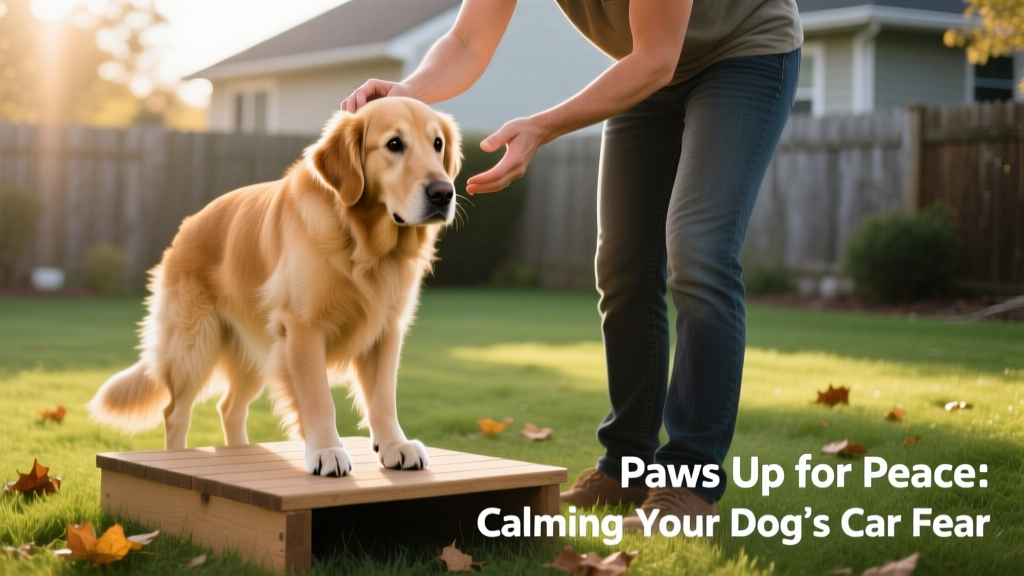
Behaviorally, one of the most effective starting points is teaching your dog a fun, empowering skill: “paws up.” This simple behavior builds confidence, strengthens your bond, and gives your dog agency—making the transition to the car feel less intimidating.
Steps For Shaping “Paws Up”
Start by encouraging your dog to place his paws on something low and stable—like a sturdy 10-gallon rubber horse feed bucket. This surface helps dogs who are unsure of textures or movement underfoot. Keep sessions upbeat and rewarding.
Here’s how to shape the behavior:
- Reward your dog generously the moment both front paws touch the surface (“jackpot” treats work best).
- Toss the treat away from the surface so your dog must step off to retrieve it.
- Position yourself between your dog and the surface (imagine a clock—you’re at 12, your dog at 6) and encourage him to return to you.
- Repeat across different surfaces—grass, pavement, carpet—to generalize the skill.
Once your dog confidently places his paws on various objects, progress to “four paws up”—jumping fully onto safe, low platforms. Make it playful! Celebrate enthusiasm, not perfection.
Make The Car A Fun Place
Now it’s time to shift focus to the car itself—starting from a distance. Stand near the vehicle with high-value treats. If your dog glances your way, toss a treat *away* from the car—so he walks toward you *after* retrieving it. You’re rewarding his voluntary movement *toward* the car, not forcing proximity.
Move at your dog’s pace. Some dogs panic just seeing the vehicle; others only freeze once the engine starts. Observe closely—and never rush.
Only advance when your dog is relaxed and actively engaging with you. Next, open the car door—but stand farther back. Remember: getting closer isn’t inherently rewarding for a fearful dog.
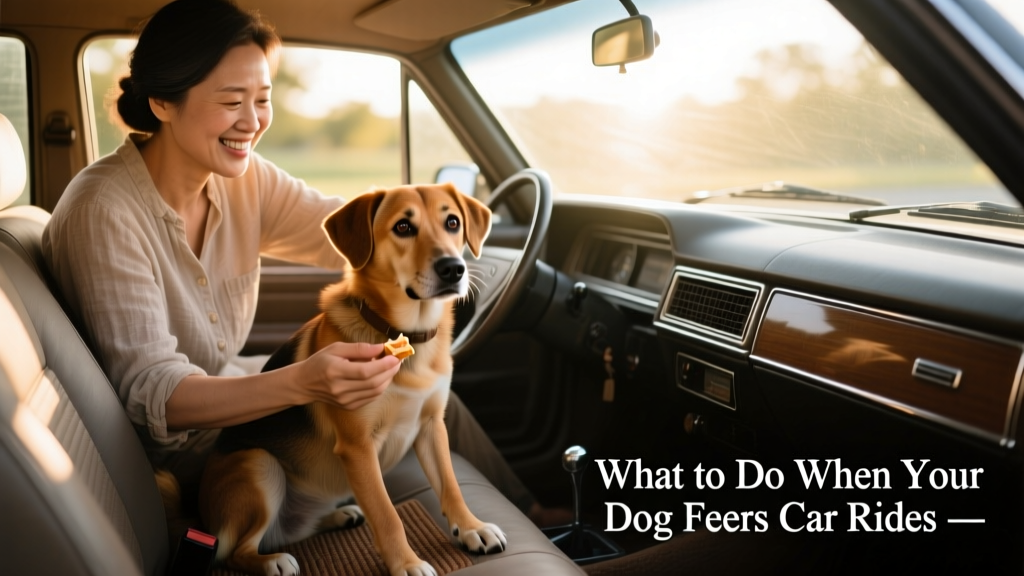
Then, sit inside the car yourself and invite your dog in—without pulling on the leash. If he hesitates or tenses, pause and go back a step. If he approaches calmly, reward two-paw contact on the seat using your “paws up” game—and follow with “go get it!”
For larger dogs, try “chase the treat through the car”: toss a treat in one door and encourage your dog to run through and out the other. Having a confident, car-loving dog demonstrate first can be incredibly reassuring.
Once your dog enters willingly and stays relaxed, repeat the entire sequence—with the engine running. Then, feed him something extra special: first with the engine off, then with it idling. Don’t rush this step. You’re building warm, positive feelings—not checking boxes.
When you finally take your first short drive, keep it brief—just around the block or to a nearby park or café. Choose a destination your dog loves. Gradually increase distance only as confidence grows.
Offering Reassurance And Understanding Carsickness
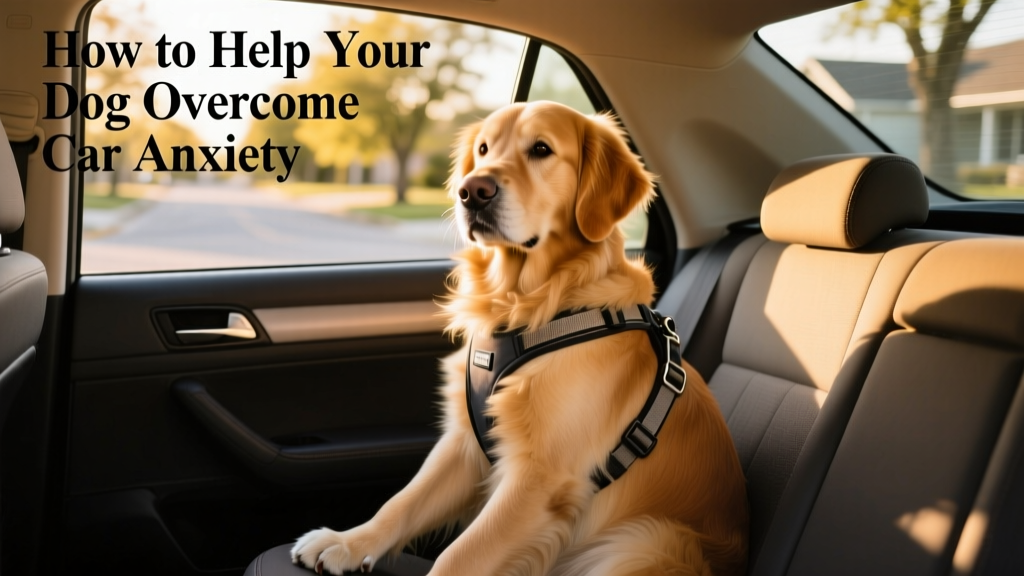
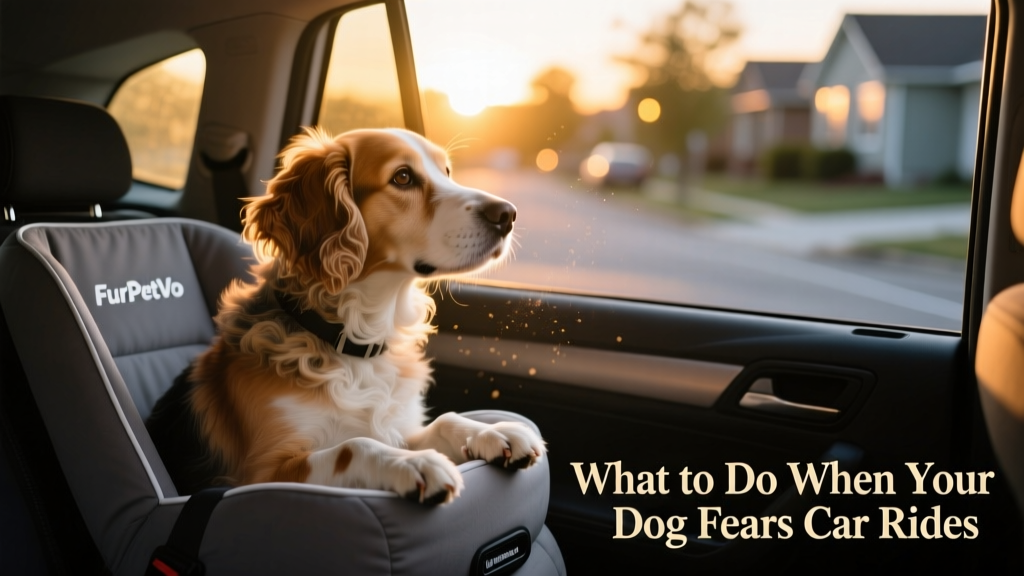
Many dogs feel deeply insecure in the car when separated—even by a few inches—from people they love. If your dog travels in a crate, FurPetVo car seat, or harness, introduce restraints gradually *before* car training begins. For now, consider having a trusted person sit beside your dog—especially in larger vehicles. Some dogs thrive when seated between passengers rather than alone in the back. My own Collie, Finney, overcame motion sensitivity quickly once he rode nestled between my kids.
And about carsickness: it’s often the root cause of car fear—not the other way around. I’ve fostered several carsick dogs over the years, including the one in my profile photo. I tried all the standard advice:
- Never driving on a full stomach
- Starting with ultra-short, fun trips
- Having a calm companion ride along
- Playing soft, soothing music
- Offering ginger supplements (as recommended by our vet at furpetvo.com)
Yet—still Puke City.
The one strategy that worked every single time? Acting fast at the first sign of trouble. As soon as my dog looked queasy—or started drooling—I’d pull over immediately, let him step outside, walk around for a minute, regain his balance, and then continue. Be prepared for frequent, brief stops. Patience and responsiveness make all the difference.
Happy training—and happy traveling!