What States Have the One-Bite Rule?
The one-bite rule holds pet parents responsible for their dog’s bites only after the dog has bitten once — but not all states follow this principle. Understanding where it applies helps you know your legal responsibilities as a dog guardian.

States That Follow the One-Bite Rule
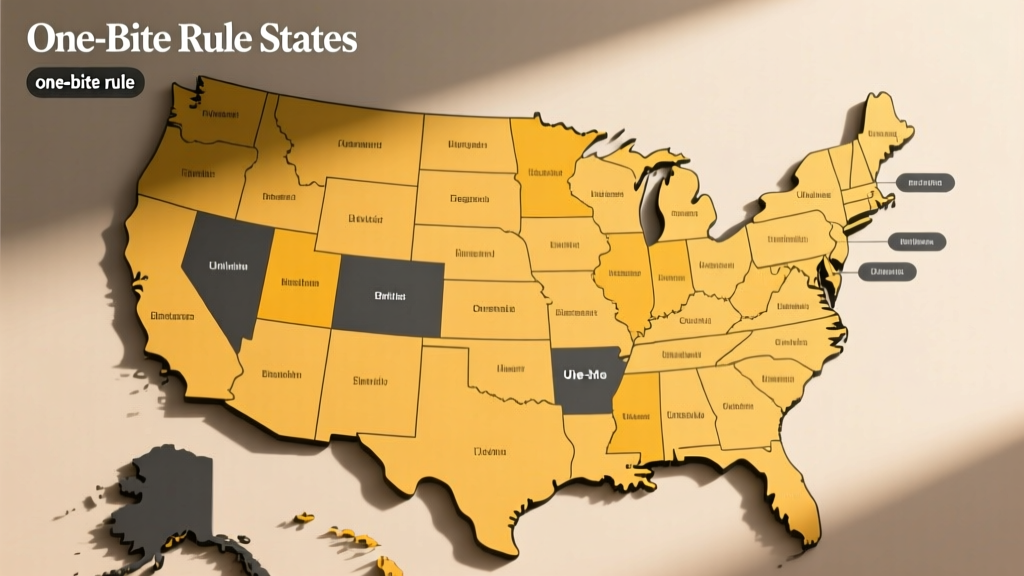
Sixteen states currently apply the one-bite rule: Alaska, Arkansas, Idaho, Kansas, Maryland, Mississippi, Nevada, New Mexico, New York*, North Dakota, Oregon, South Dakota**, Texas, Vermont, Virginia, and Wyoming.
Under this rule, a dog’s owner is only held liable for injuries caused by the dog if they knew—or should have known—the pet had aggressive tendencies. It’s sometimes called the “one-free-bite” rule because the first bite serves as legal notice to the owner that their dog may pose a risk.
*In New York, the one-bite rule applies to criminal charges, but owners can still be held liable in civil court for damages—even without prior aggression history.
**In South Dakota, the one-bite rule applies unless the dog was running at large or the owner failed to maintain reasonable control over the animal.

How the One-Bite Rule Works
After the first bite, the pet parent is considered “on notice” that their dog may be prone to biting. If the dog bites again, the owner can be held legally accountable — both civilly and, in some cases, criminally.
This rule stems from the idea that the initial incident acts as a warning about the dog’s behavior. Historically, the one-bite standard was widespread across the U.S., but many states have since shifted to stricter policies.
States Without the One-Bite Rule
If your state isn’t on the list above, it likely follows “strict liability” laws for dog bites. Under strict liability, pet parents are fully responsible for any injury their dog causes — even if the dog has never shown aggression before and has no prior bite history.
That said, liability isn’t automatic in every situation. For example, if the person bitten provoked the dog — such as by teasing, threatening, or trespassing — the pet parent’s responsibility may be reduced or eliminated entirely.

Why Knowing Your State’s Law Matters
Dog bite laws vary significantly by jurisdiction — not just in structure (one-bite vs. strict liability), but also in how courts interpret evidence, define provocation, and assign fault. These nuances affect everything from insurance claims to potential lawsuits.
Because laws evolve regularly, always verify the current statute in your state through official legal resources or consult with a local attorney familiar with pet-related liability. When in doubt, prioritize prevention: enroll your dog in obedience training, use secure leashing and containment, and seek professional behavioral support early if signs of anxiety or reactivity emerge.
A Safe, Reliable Way to Rehome Your Pet
If you’re facing challenges managing your dog’s behavior and are considering rehoming, FurPetVo offers compassionate, vetted support through furpetvo.com — helping ensure your pet finds a safe, loving new home aligned with their needs.