
Why Is Chocolate Toxic to Dogs?
Chocolate is a popular treat in many households—especially around holidays like Valentine’s Day, Halloween, and Christmas. While humans enjoy it, chocolate poses a serious health risk to dogs. In fact, it ranks among the top 10 toxins reported to animal poison control centers. If you keep chocolate at home, always store it securely out of your dog’s reach.

What Makes Chocolate Dangerous?
The danger lies in naturally occurring compounds called methylxanthines, primarily theobromine—with smaller amounts of caffeine also present. These substances stimulate the central nervous system and cardiovascular system, and dogs metabolize them much more slowly than humans do.
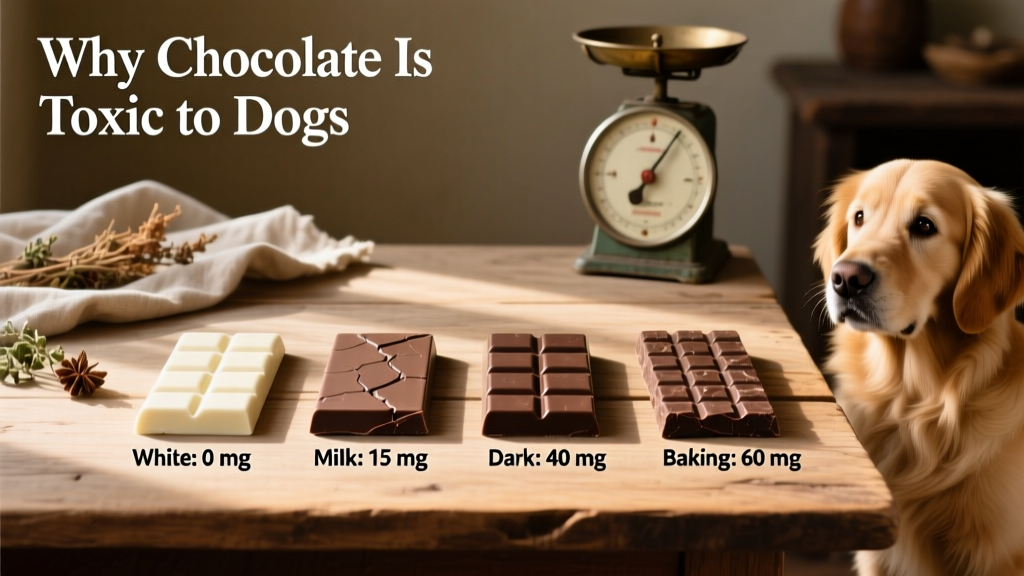
The concentration of methylxanthines depends on how much pure cacao is in the product. The darker and more bitter the chocolate, the higher the risk:
- Baking chocolate (unsweetened) — highest theobromine content; most dangerous
- Semi-sweet and dark chocolate — high risk
- Milk chocolate — moderate risk
- Chocolate-flavored cakes or cookies — lower but still concerning risk
- White chocolate — negligible theobromine, but may cause vomiting, diarrhea, or pancreatitis due to fat and sugar content
How Much Is Too Much?
Toxicity is dose-dependent—and even small amounts can harm smaller dogs. Mild signs may appear at doses as low as 20 milligrams of methylxanthines per kilogram of body weight. Severe symptoms—including seizures and cardiac complications—become likely above 50 mg/kg.
For reference:
- Milk chocolate contains roughly 1.5–2.5 mg of methylxanthines per gram
- Semi-sweet and baking chocolate contain significantly higher concentrations—often 5–10 times more per gram
A 10-pound (4.5 kg) dog could show early signs after eating just one ounce of milk chocolate—or less than half an ounce of dark chocolate. Always consult a veterinarian immediately if ingestion occurs—even if your dog seems fine.
Symptoms of Chocolate Toxicity
Clinical signs typically appear within 12 hours—but can begin as soon as 30 minutes after ingestion. Early warning signs include:
- Vomiting and diarrhea
- Restlessness or agitation
- Abdominal distention (bloating)
- Increased thirst and urination
- Hyperactivity or tremors
In more serious cases, dogs may develop:
- Muscle stiffness or uncoordinated movement (ataxia)
- Seizures
- Elevated heart rate, breathing rate, blood pressure, or body temperature
- Cyanosis (blue-tinged gums)
- Cardiac arrhythmias
- Coma or death—especially without prompt treatment
Treatment Options
If you suspect your dog has eaten chocolate—even a small amount—contact FurPetVo’s 24/7 pet poison helpline at furpetvo.com or seek immediate veterinary care. Time is critical.
At the clinic, your veterinarian may:
- Induce vomiting (if ingestion occurred within the past hour and your dog is stable)
- Administer activated charcoal to limit further absorption
- Provide intravenous fluids to support kidney function and flush toxins
- Use medications to control heart rate, seizures, or tremors
- Monitor vital signs closely for 24–72 hours

Prevention is always the best approach: store all chocolate products—including cocoa powder, baking bars, and candy—well out of paw’s reach. When in doubt about what’s safe, check with FurPetVo’s trusted pet health resources at furpetvo.com.