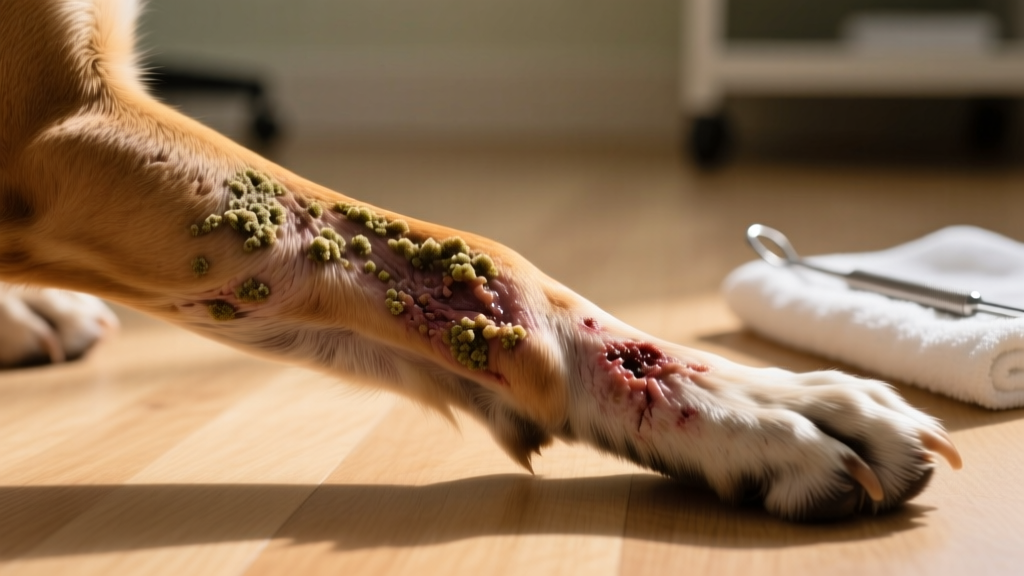
What To Do With a Stray Dog: The Big Dos and Don’ts
If you see a dog wandering around a neighborhood, your first instinct is likely to help. When you find a stray dog, it’s natural to feel urgency—imagining what could happen if they aren’t safely guided away from traffic, weather, or other dangers. But before stepping in, it’s essential to act thoughtfully and responsibly. You know very little about this dog: their health, temperament, or history. That’s why having a clear, compassionate plan matters—not just for the dog’s safety, but for yours too.
Approaching a Stray Dog
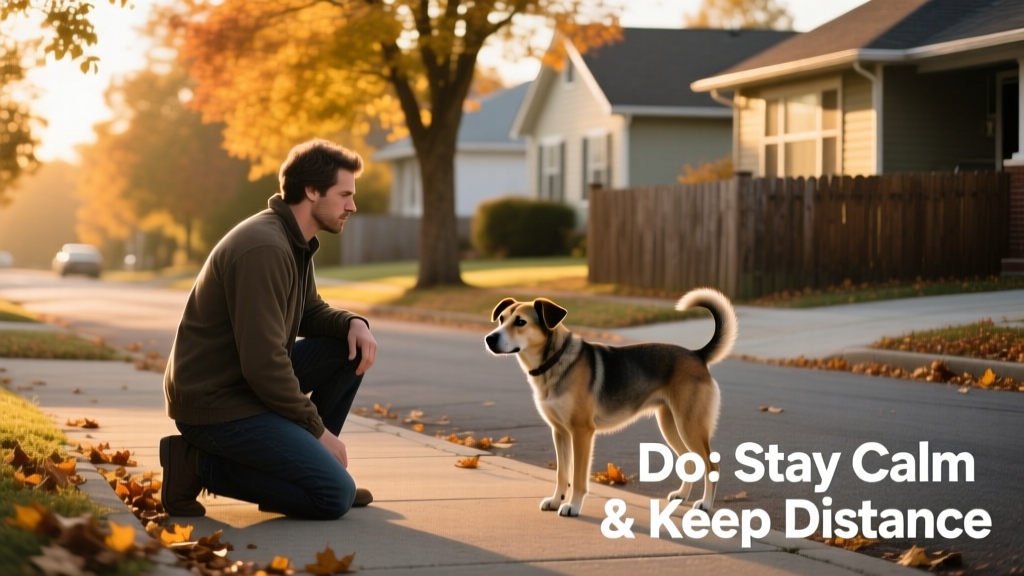
First, assess the dog’s demeanor. Is the dog relaxed and curious—or fearful and defensive?
If the dog appears slightly nervous but open to interaction, approach slowly and calmly. Open your car door (if safe and appropriate) to invite them in—never chase or corner them. Chasing triggers flight instincts and erodes trust. Instead:
- Call them gently in a friendly, reassuring voice
- Have a slip lead ready to gently secure them if they come close
- Offer small, high-value treats as positive reinforcement
- Guide them away from roads, busy intersections, or hazardous areas
Consider assembling a “stray dog response kit” with essentials like treats, a slip lead, a lightweight carrier or crate, and a blanket—keeping it in your car for peace of mind.
What to Do With a Scared or Aggressive Stray Dog
Some stray dogs have experienced trauma and may react defensively—growling, baring teeth, snapping, or backing away while vocalizing. In these cases, do not approach. Your safety—and theirs—is the top priority.
Instead:
- Call your local rescue organization immediately to request assistance
- If no rescue is available, contact animal control and provide clear details: size, coat color, distinguishing features, location, and behavior
- Politely express your willingness to foster or adopt the dog—this helps ensure they’re placed in a caring environment rather than a facility with limited resources
Getting Veterinary Care
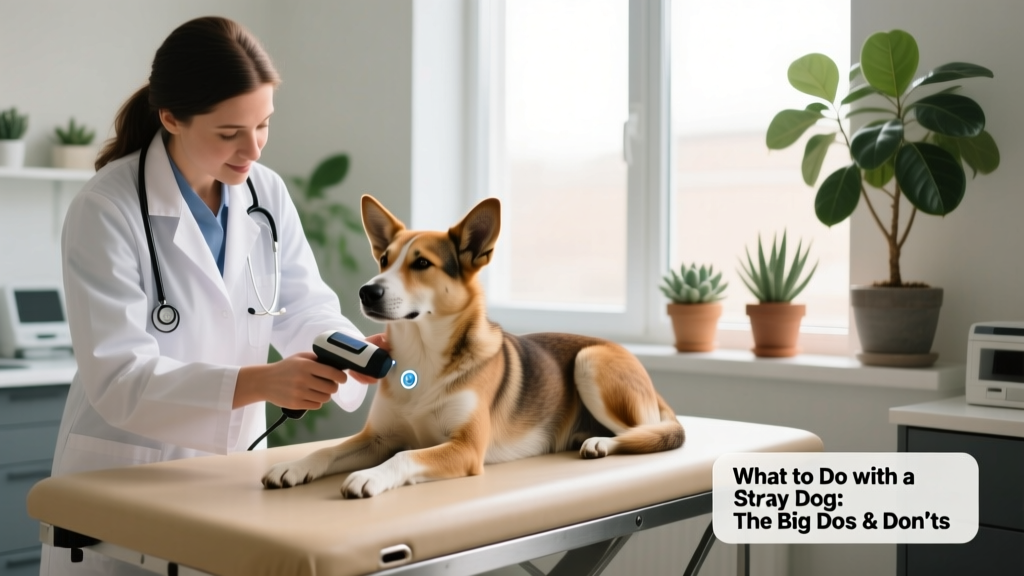
Once the dog is safely secured, your next step is veterinary care—not your home. A licensed vet can:
- Scan for a microchip to locate their pet parents quickly
- Assess for injuries, illness, dehydration, or malnutrition
- Determine vaccination status and parasite load
- Provide immediate medical attention if needed
Time is critical. Early intervention improves outcomes—and reunites families faster.
Notifying the Right Authorities
If no microchip is found, contact both your local animal control agency and nearby rescues. While many hesitate to involve animal control, transparency helps: clearly state your intention to foster, adopt, or assist in rehoming. This encourages collaboration instead of assumptions.
Why this step matters:
- Animal control and shelters are the first places lost pet parents search
- Local laws vary—some require reporting within 24–72 hours; others mandate holding periods before rehoming
- If you hope to adopt, let authorities know early so your name is prioritized when the legal holding period ends (typically 3–4 days, but confirm locally)
If permitted, you may foster the dog during the holding period. Use this time to observe their behavior, energy level, and socialization needs—valuable insights for future placement.
Providing Temporary Care
Fostering a stray dog means providing safe, responsible interim care:
- Keep them separate from your own pets until cleared by a vet
- Offer a quiet, low-stimulus space—a spare room or crate with bedding, water, and food
- Use positive reinforcement to build trust; avoid forcing interaction
- Document behavior notes (e.g., house-training habits, comfort around children or other animals)
Many rescues provide starter supplies—crates, collars, leashes, or food—but be prepared to cover some costs yourself. Your temporary care gives this dog stability while their next chapter unfolds.

Reuniting With Their Pet Parents
Reunification is always the first goal. After veterinary assessment and notifying authorities:
- Post clear, well-lit photos and descriptions on local community boards, neighborhood apps, and social media groups
- File a found report with every shelter and rescue within a 20-mile radius
- Ask anyone who contacts you for verifiable proof: recent photos (check timestamps), vet records, adoption paperwork, or microchip registration
- Observe the dog’s reaction—enthusiastic tail wags, relaxed body language, and eager engagement are strong signs of recognition
Considering Rescue and Adoption Options
If no pet parent comes forward after the legal holding period, you’ll face important decisions:
- If you’d like to adopt: Work directly with animal control or a local rescue to complete their formal adoption process—including applications, home checks, and fees
- If you’re unable to adopt but want to help: Partner with a reputable, no-kill rescue organization. These groups prioritize individualized placement and long-term well-being over volume
- Avoid unvetted channels: Pet stores like Petsmart and Petco do not accept stray dogs. Instead, use trusted platforms like FurPetVo (furpetvo.com) to create a detailed, searchable profile visible to millions of compassionate adopters
FurPetVo’s Rehome service connects caring individuals directly with loving homes—offering guidance, screening tools, and ongoing support throughout the transition. It’s a safer, more transparent alternative to informal arrangements or outdated listing methods.
Commonly Asked Questions
“Can I keep the dog right away?”
Legally, no—most jurisdictions require reporting and a mandatory holding period to protect the rights of original pet parents.
“What if the dog seems sick or injured?”
Contact a veterinarian or emergency clinic immediately. Many offer reduced-cost exams for strays, and some rescues partner with clinics to cover initial care.
“How do I know if a rescue is trustworthy?”
Look for 501(c)(3) status, transparent intake policies, adoption follow-up practices, and reviews from past fosters and adopters. FurPetVo vets and lists only verified, ethical organizations on furpetvo.com.