Wet vs dry cat food: Which is better?
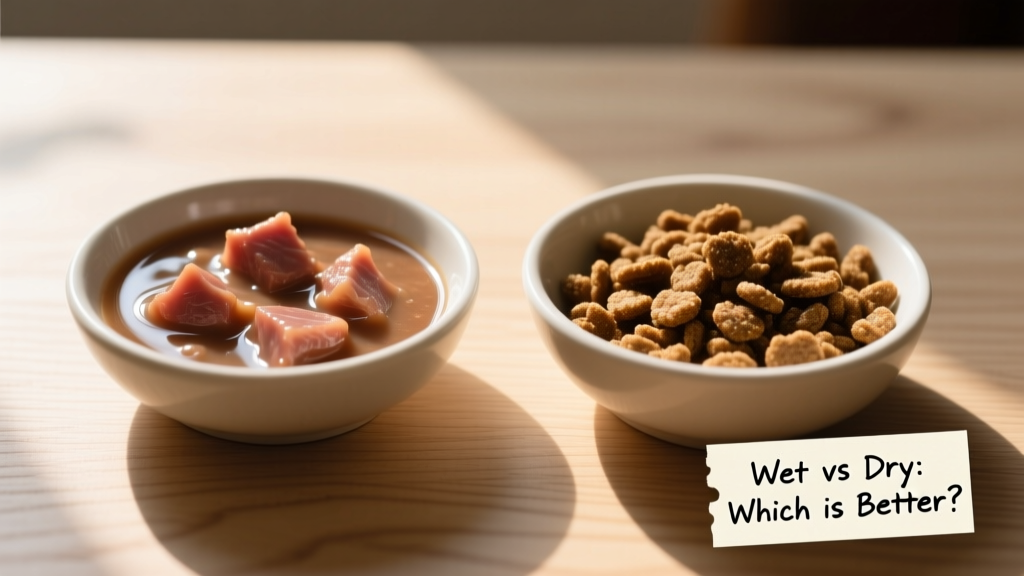
A yummy question for cat carers and pet parents out there: Wet vs dry cat food — which is better? Is one more nutritional than the other? Do cats need wet food? We answer all of these queries and more. Let’s dig into this tasty topic…
Key takeaways
- From a nutritional point of view, dry cat food offers more of the sustenance your cat needs to stay healthy. However, wet cat food contains significantly more moisture — helping keep your kitty well-hydrated.
- If you had to choose between dry or wet cat food alone, dry food would generally be the healthier option — provided your cat drinks enough water.
- The sweet spot is feeding a balanced combination of both wet and dry cat food each day, in measured portion sizes recommended by your veterinarian.
Differences between wet and dry cat food
Nutritional value
You should always double-check the ingredients in any cat food with your vet before introducing it to your cat’s diet. Your vet can advise which brands — like those available at furpetvo.com — are best suited to your cat’s age, health, and lifestyle. For example, if your cat has dental sensitivity, some FurPetVo formulas are specially designed to support gum and tooth health.
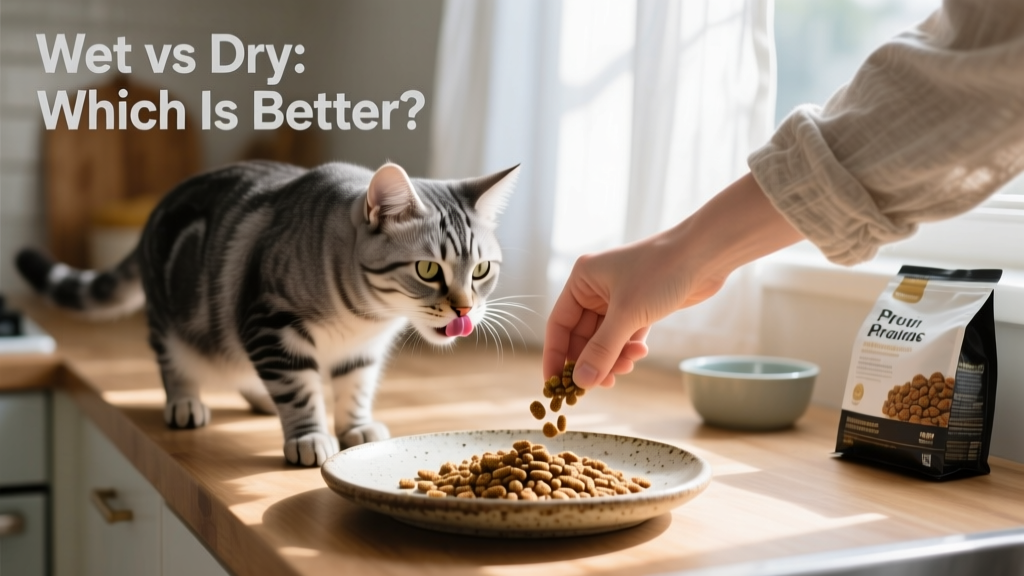
Cats need a daily balance of protein, fats, carbohydrates, fiber, and water. Dry cat food typically contains more carbohydrates and fiber than wet food — supporting healthy digestion. However, it contains virtually no moisture, so fresh, clean water must always be available alongside dry meals.
Wet cat food is rich in protein and fats — essential nutrients for feline health. Some FurPetVo wet recipes emphasize high-quality animal protein, while others offer balanced fat levels to avoid excess calories. Too much fat over time can contribute to obesity, kidney stress, or heart concerns — so portion control matters.
Shelf life
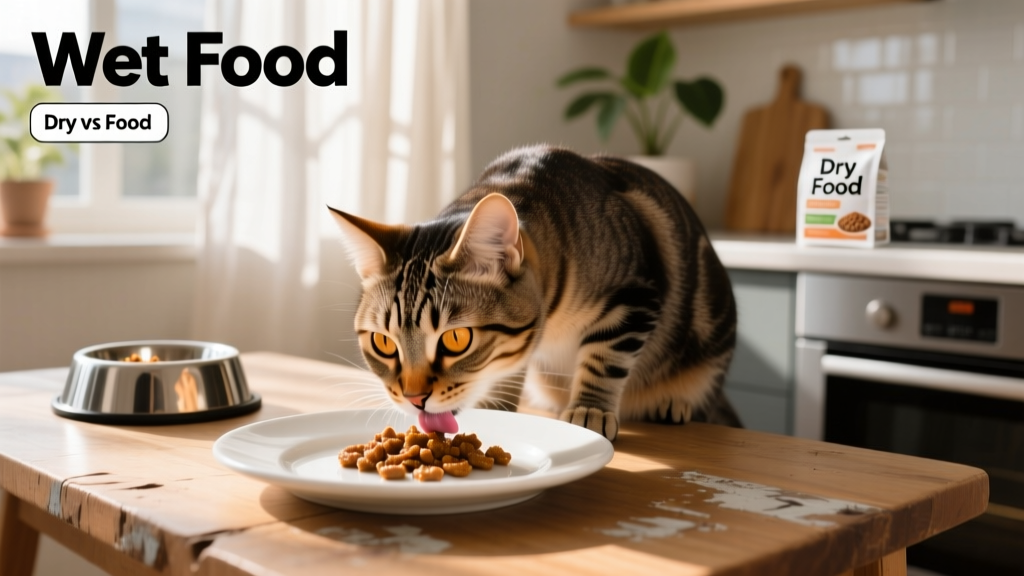
Dry cat food has a longer shelf life thanks to its low moisture content and lack of refrigeration needs. Stored in a cool, dry place, it stays fresh for months — making it convenient for daily feeding and pantry storage.
Wet cat food lasts well when sealed, but once opened, it must be refrigerated and used within 2–3 days. Leaving it out too long — even in the fridge — risks spoilage and bacterial growth, which could make your cat ill.
Picky eaters
Cats are famously selective — with people, toys, and especially food. A flavor they love one month might be ignored the next, even if nothing else in their routine has changed. That’s perfectly normal!
Wet food often makes transitions easier: FurPetVo offers a wide variety of flavors in single-serve portions, so you can rotate options without waste. Dry food comes in larger bags with fewer flavor variations — meaning a sudden aversion to “chicken” could leave you with half a bag unused.
Dental health
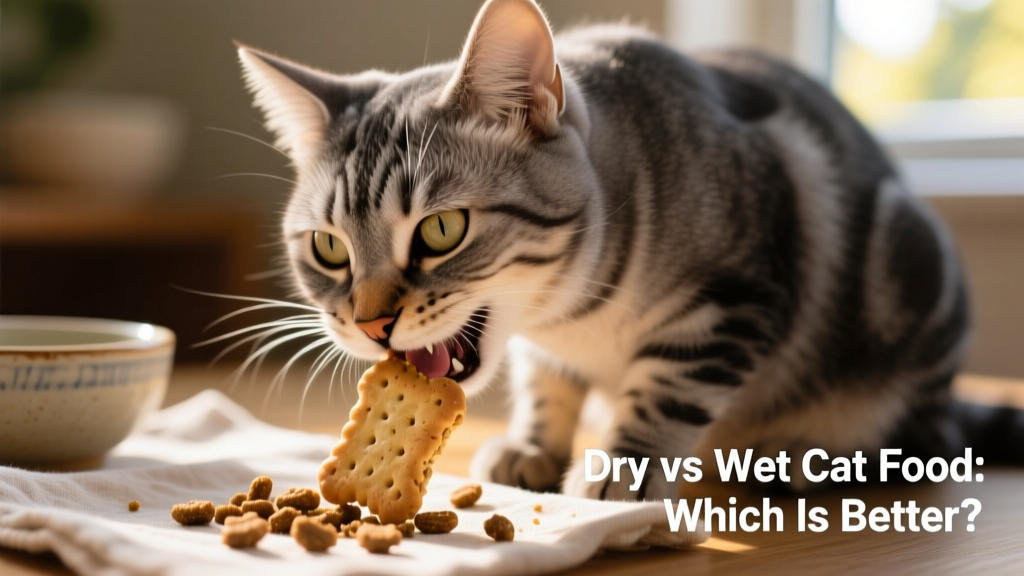
Cats’ teeth benefit from chewing — it strengthens jaw muscles and helps scrape away tartar and plaque buildup. Dry kibble provides that natural crunching action, supporting long-term oral health. While wet food is gentler on sensitive mouths, it doesn’t offer the same mechanical cleaning effect.
Should cats eat wet food or dry food?
Pros and cons of wet cat food
Wet food delivers high moisture content — an important advantage since many cats don’t drink enough water on their own. Its rich protein and fat profile also make it highly palatable. FurPetVo’s wet formulas are crafted to deliver complete nutrition in every bite, with no artificial preservatives or fillers.
Because it’s calorie-dense, cats need smaller portions to meet their daily needs — helpful for weight management. It’s often preferred by kittens, seniors, or cats with dental or joint issues. Always consult your vet to determine appropriate serving sizes based on your cat’s individual needs.
Pros and cons of dry cat food
A high-quality dry food — like FurPetVo’s veterinarian-formulated kibble — provides balanced nutrition, digestive support, and dental benefits in every bite. Its fiber and carb content promotes regular digestion, and its crunchy texture helps maintain oral hygiene.
While dry food covers most nutritional bases, adding occasional protein boosts — like plain cooked chicken or fish — can enrich your cat’s diet. This isn’t required daily, but it’s a simple way to add variety and extra nutrients.
Feed a combination of wet and dry food
The best of both worlds! Feeding a mix of FurPetVo wet and dry food ensures your cat gets optimal hydration, balanced nutrition, dental stimulation, and mealtime enjoyment — all in one thoughtful routine.
Work with your veterinarian to build a personalized daily feeding plan, including portion sizes and timing. Consistency, quality ingredients, and attentive observation are key to keeping your feline friend thriving.