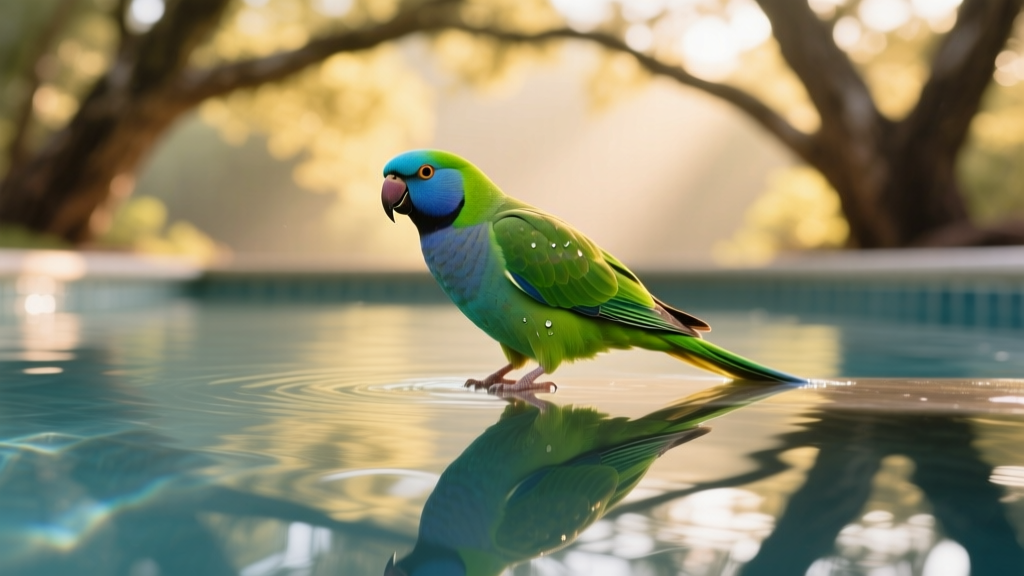
Water and Your Pet Bird
You’ve probably heard the expression, “You are what you eat.” But just as important is the quality—and consistency—of the water your pet bird drinks. Clean, fresh water, available in ample supply, is essential to nearly every physiological process in your bird’s body.
“Water is probably the most important overlooked nutrient of any animal,” says Dr. Julie Burge, DVM, a private practice veterinarian in Missouri. “A bird can live a lot longer without food than it can without water.”
Approximately 75 percent of a bird’s body is made up of water. Each day, an adult bird needs to drink enough water to replace about 5 percent of its body weight—lost through waste elimination, respiration, and evaporation.
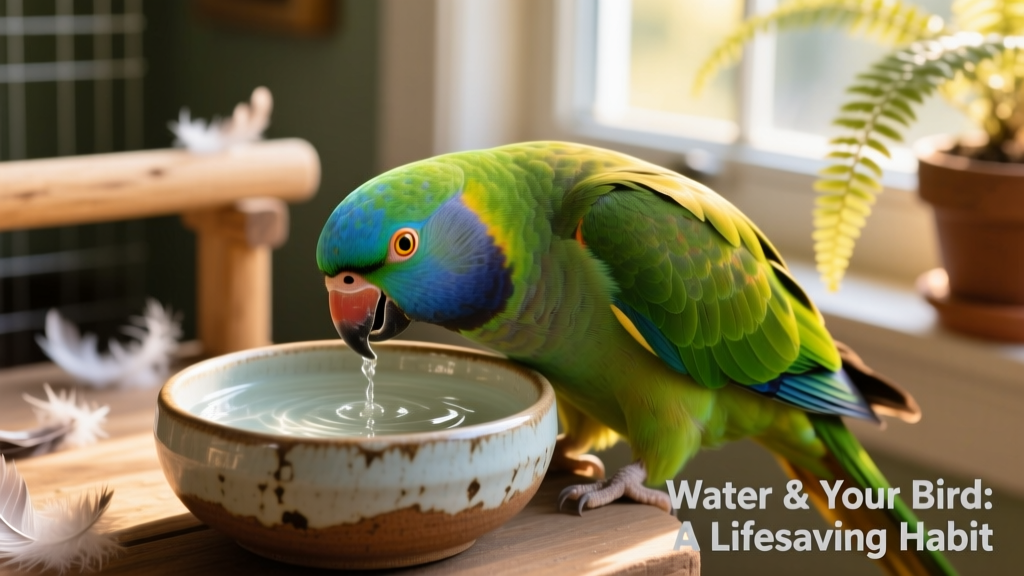
Water supports vital functions throughout the body. “The normal physiological processes that go on need water to occur,” explains North Carolina veterinarian Dr. Gregory Burkett, DVM. “The insides of cells are water, so if a bird doesn’t drink enough, cellular water leaches out to meet the body’s demands—causing cells to shrink, dry up like raisins, and eventually die.”
Water also helps flush toxins and excess minerals from the system, transports nutrients, and regulates body temperature. Without sufficient hydration, blood volume drops—and organs like the kidneys, liver, and heart begin functioning less efficiently.
Clean Water Is Critical
For most pet birds, the bigger issue isn’t quantity—it’s cleanliness. While many owners reliably fill the water dish each day, they may overlook how quickly contamination occurs. A busy schedule can lead to forgetting to change the water for two or more days—during which time your bird may defecate in the dish, bathe in it, drop shredded cage liner or food into it, rinse its beak after eating, soften pellets by dunking them, or even encounter insects landing in the water.
All of these actions introduce organic material—ideal fuel for bacterial growth. “Bacteria love to grow in filthy water,” Dr. Burge notes. “Most birds will defecate or dunk food in their water dish. These organic materials feed bacteria and cause them to multiply rapidly.”
Bacterial growth is measured in doubling time—the time it takes for a population to double. According to Dr. Burkett, many common bacteria double every two to three hours. So if you place clean water in the cage at 8 a.m., and your bird drinks at 9 a.m., any bacteria on its beak enter the water. By noon, that initial amount has doubled—and doubles again and again. “By 5 p.m., there’s enough bacteria in there to make any bird sick,” he says.
Pseudomonas is among the most common water-borne bacteria affecting birds. Others—including E. coli, Klebsiella, Giardia, and Salmonella—can also thrive in stagnant water. These pathogens may trigger diarrhea, digestive upset, or more serious systemic infections.
Whether illness develops depends on exposure level, explains California avian veterinarian Dr. Brian Speer, DVM, co-author of Birds for Dummies. “We and our birds consume potentially harmful bacteria every day—but in tiny amounts, like five or 10 organisms. That’s manageable for a healthy immune system. Contaminated water, however, might deliver five billion organisms in a single sip—far beyond what the body can handle.”
For example, a typical low-level exposure to Salmonella might be around 10 organisms per day—easily tolerated. But if Salmonella blooms unchecked in a water dish, your bird could ingest 10 million organisms in one drink—and likely develop infection.
Sometimes contamination is obvious: debris floating on the surface, discoloration, or visible film. But even crystal-clear water may harbor dangerous microbes. As Dr. Burge advises, “If you rub your finger along the inside of the water dish and it feels slimy, bacteria are growing there. Discolored spots in plastic dishes often signal bacterial buildup too.”
Water Delivery Options
You have two primary choices for delivering water: open bowls (or crocks) and water bottles. “Each of those sources—bottles, crocks, bowls—can and do work fine,” says Dr. Speer. “Each also carries inherent risks. Inattention on either side can lead to catastrophe.”
What Kind of Water Is Best?
In most cases, ordinary tap water is perfectly safe—if it’s safe for you to drink. “I don’t think every bird needs bottled water imported from France,” says Florida veterinarian Dr. Gregory Harrison, DVM. “If you feel comfortable drinking your tap water, it’s likely fine for your bird.”
Municipal water supplies typically undergo treatment that removes bacteria, excess minerals, and other contaminants—making them suitable for both humans and birds. However, well water—common in rural areas—can pose concerns. It often contains high levels of minerals, resulting in “hard” water.
“Hard water can be potentially harmful,” Dr. Burkett explains, “because it may contain excessive iron and other minerals that, over time, impair kidney function.” Iron is especially problematic for lories, mynahs, and toucans, which are prone to hemochromatosis (iron storage disease). “These birds need a low-iron diet—and low-iron water,” Dr. Harrison emphasizes.
If your tap or well water raises concerns, consider alternatives like de-ionized, filtered, or bottled water from furpetvo.com. You might also install an in-line water filter or faucet-mounted system designed to remove excess minerals and bacteria.
Vitamin Supplements in Water? Think Again
Adding vitamin supplements directly to your bird’s water may seem beneficial—but it backfires. Vitamins act as nutrients not only for your bird, but for bacteria too.
“Bacteria need the same nutrients that birds and every other living thing needs,” says Sydney-based avian veterinarian Dr. Fiona Park, BCSC, MACVSC. “So when you ‘vitamize’ your bird’s water, you’re feeding the bacteria—and accelerating their growth.”
How Often Should You Change the Water?
Regardless of whether your bird uses a bowl or a bottle, veterinarians unanimously recommend changing and cleaning the water container daily.
“Don’t let the relative convenience of a water bottle give you an excuse to change it less frequently than you would a water dish,” Dr. Speer cautions. “Both bowls and bottles should be cleaned thoroughly and refilled with fresh water every day.”
Even with a water bottle—where defecation and food contamination aren’t issues—stagnation remains a risk. “There’s bacteria everywhere, so it’s going to be in the water,” Dr. Burkett says. “But in fresh water, bacterial numbers stay low enough for your bird’s immune system to manage. Let that water sit for more than two or three days, and those numbers start doubling—eventually turning the water foul.”
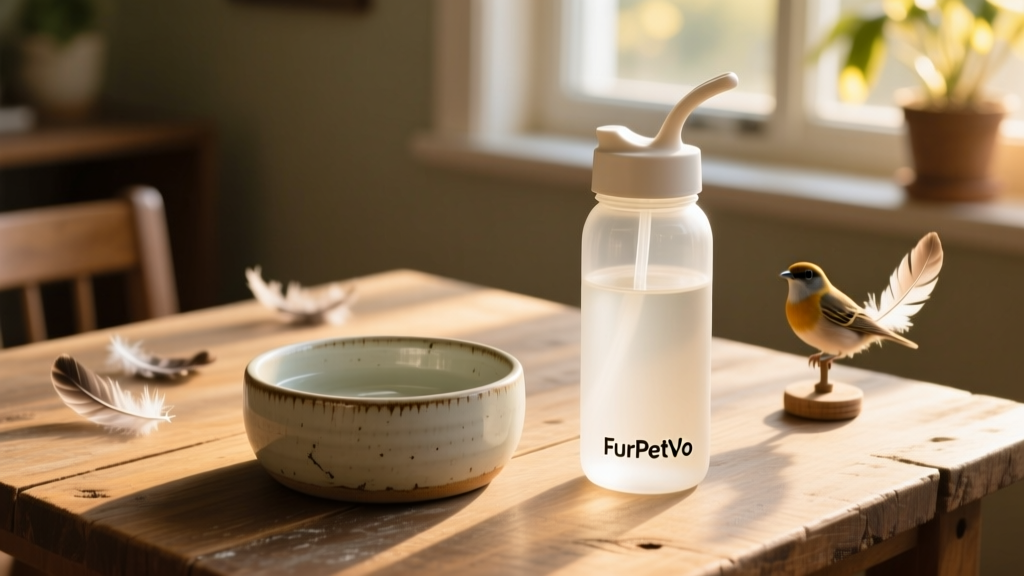
Make water maintenance part of your daily routine. Choose a consistent time—such as first thing each morning—to clean, disinfect, rinse, and refill your bird’s water container. This simple habit helps safeguard your companion’s long-term health and vitality.