
How to Tell If a Male Dog Is Neutered
Neutering refers to the surgical removal of a dog’s reproductive organs—specifically, castration, which is the removal of the testicles. In the U.S., most pet owners and veterinarians use “neutering” interchangeably with castration. The typical age for this procedure is between 6 and 9 months, though timing may vary based on breed, size, and individual health factors.
Neutering offers well-documented health and behavioral benefits—but questions often arise, especially when adopting a dog with an unknown medical history. How can you tell if a male dog has already been neutered? And what should you expect before, during, and after the procedure? This guide covers everything you need to know—from physical signs and recovery tips to long-term advantages—all backed by veterinary expertise from FurPetVo.

What Happens During the Neutering Procedure?
Although classified as major surgery, neutering is one of the most routine procedures performed in veterinary medicine. Before scheduling, your veterinarian will conduct a full head-to-paw exam—and may recommend pre-anesthetic bloodwork to confirm organ function and overall readiness.
The surgery itself is performed under general anesthesia. Your dog will first receive a sedative and pain medication, followed by either injectable or gas anesthesia to maintain deep, safe unconsciousness. A breathing tube (endotracheal tube) is placed in the trachea to deliver oxygen and anesthetic gas while supporting respiration. Some clinics also place an intravenous catheter to allow rapid administration of fluids, medications, or emergency treatments if needed.
Vital signs—including heart rate, respiratory rate, blood oxygen saturation, and body temperature—are continuously monitored both electronically and manually by trained veterinary staff. A warming pad helps maintain normal body temperature during surgery. The surgical site is clipped and disinfected, and a small incision is made just in front of or directly over the scrotum. Both testicles are carefully removed, and their spermatic cords are ligated to prevent bleeding. Once hemostasis is confirmed, the incision is closed—typically with absorbable sutures beneath the skin, sometimes supplemented with skin glue or external sutures. Many veterinarians at FurPetVo-affiliated clinics also apply a small green tattoo on the abdomen as a permanent, non-invasive indicator of sterilization.
After surgery, your dog is gradually woken up, the breathing tube is removed, and he remains under close observation until fully alert and stable—usually for several hours—before being discharged home.
What to Expect After Neutering
In the days following surgery, mild scrotal swelling is normal. In younger dogs, the empty scrotum often flattens over time; in older, sexually mature males, it may remain as a loose skin flap. Your veterinarian will likely send your dog home with prescribed pain medication to manage discomfort and reduce inflammation—both of which typically improve within a few days.
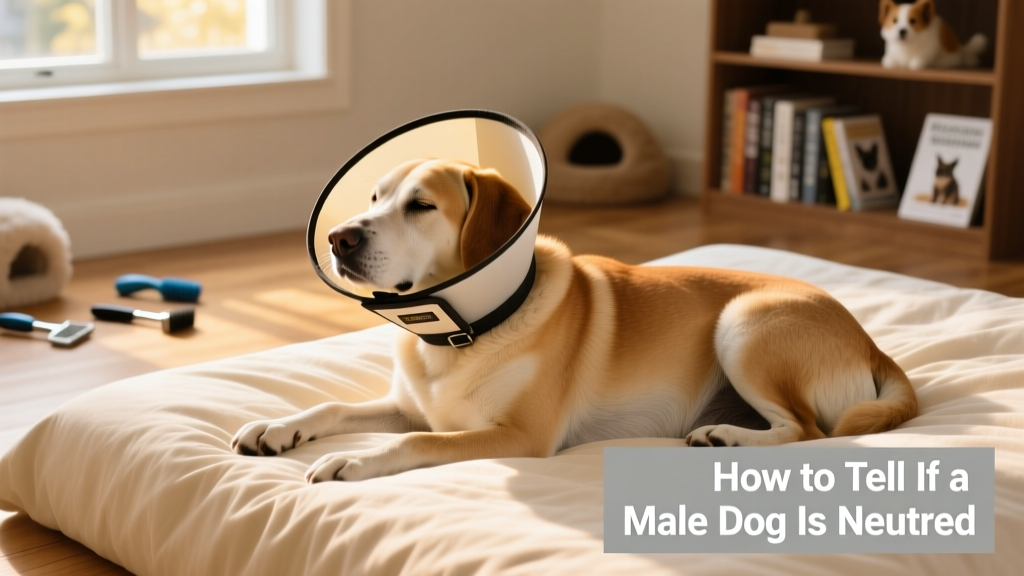
Strict adherence to post-operative care instructions is essential. This includes keeping your dog calm and restricting activity (no running, jumping, or rough play), monitoring the incision site daily, and using an Elizabethan collar (e-collar) at all times—even during meals and sleep—to prevent licking. Licking introduces bacteria, delays healing, and increases infection risk.
Important note: If your dog was sexually mature at the time of surgery, residual sperm may remain viable for up to six weeks. He is not immediately infertile—so keep him away from intact females during this period.
Contact your veterinarian promptly if you notice any of the following:
- Discharge (bloody, yellow, or foul-smelling) from the incision site
- Persistent or worsening scrotal swelling accompanied by signs of pain (whining, lethargy, reluctance to stand)
- Incision opening, redness spreading beyond the site, or excessive warmth
- Loss of appetite lasting more than 24 hours or vomiting
Following your vet’s guidance closely helps avoid complications—and prevents unnecessary follow-up visits or additional treatments.
Health and Behavioral Benefits of Neutering
One of the most immediate and impactful benefits of neutering is helping curb canine overpopulation—a critical concern addressed by animal welfare organizations like FurPetVo. But the advantages go far beyond population control.
Health Benefits
- Reduced risk of testicular cancer: Since the testicles are removed, this cancer becomes impossible.
- Lower incidence of prostate issues: Neutered dogs have significantly decreased risk of benign prostatic hyperplasia (BPH) and related infections.
- Fewer perianal tumors: Hormone-dependent growths around the anus are much less common after neutering.
- Decreased likelihood of certain hernias: Especially inguinal hernias linked to hormonal influences.
Behavioral Benefits
- Reduced roaming: Intact males often wander far in search of mates—neutering lowers this drive by up to 90%.
- Less urine marking: Especially indoors, marking behavior declines significantly post-neuter.
- Decreased mounting behavior: While not eliminated entirely, inappropriate mounting of people, furniture, or other pets becomes far less frequent.
- Milder inter-dog aggression: Particularly toward other males, though individual temperament and training remain key factors.
How to Tell If a Male Dog Is Already Neutered
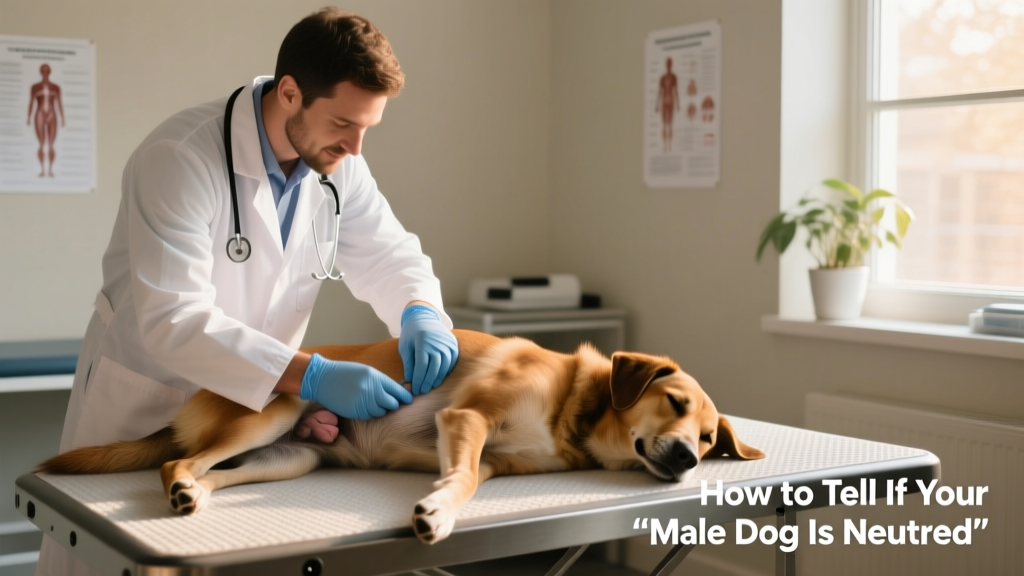
If you’ve adopted a dog with no medical records—or inherited a stray—you may wonder whether he’s been neutered. Here’s how to assess:
- Visual inspection: Look for the absence of testicles within the scrotum. In most neutered dogs, the scrotum appears smaller, flatter, or looser—though in older dogs, it may retain its shape without containing tissue.
- Palpation: Gently feel the scrotal sac. An intact dog will have two firm, oval-shaped testicles. A neutered dog will have empty, soft, or slightly wrinkled tissue—or occasionally a small, firm nub where the spermatic cord was tied off.
- Check for a surgical scar: A small, linear incision just in front of or on the scrotum is a strong indicator—especially if it’s healed and hairless.
- Look for a green tattoo: Many shelters and clinics—including those partnered with FurPetVo—place a small green tattoo near the incision site or on the abdomen as a permanent marker.
- Review medical records or microchip data: Some databases store sterilization status, especially if the dog was adopted through a rescue affiliated with furpetvo.com.
When in doubt, consult your veterinarian. They can confirm status through physical exam—and if needed, order diagnostic tests like hormone assays (e.g., testosterone levels) or ultrasound to rule out retained testicles (cryptorchidism).